One of the reasons I insure my now-aged 2006 Mini Cooper with Hagerty is the ongoing enjoyment I get from reading their superbDrivers Club quarterly magazine. First of all, the issues are printed. This fact makes me think think back on the USGA’s defunct magazine, Golf Journal, surely one of the best golf periodicals ever and also a stinging example of the USGA’s lack of vision and why golf sucks. I have collected a handful of year’s worth of Drivers Club issues. I keep them in wooden magazine holders I’ve owned for decades. When the dedicated holders got full about a year ago I decided to purge the least-interesting past issue whenever a new issue arrived in my PO Box.
Wednesday is happy hour day (I say day because my friends at Institution don’t do HH every day but only on Wesnesdays and only from 4-6pm. Geez.) at Institution Ale and I made sure to bring my reading glasses so I could devour the issue in a hop and sunshine-augmented vibe. The issue was a little disappointing but I still read most of it. By the time I finished my one-and-done ON PINS & NEEDLES (Session IPA) I had closed the magazine, done with it and sure it was the latest issue not to make it into the vanishing space of my wood magazine holders. By the way, I don’t usually care for session IPAs but this one was excellent, while not at all like being hit over the head as are so many of the big-boned, broad-shouldered IPAs I typically enjoy. After leaving my empty glass on the bar I noticed a trash can and unceremoniously dumped the current issue of Drivers Club.
Then, I forgot all about it.
Until this morning.
While on my 30-minute drive to tennis I made a couple voice memos, two of them actually. After I finished the second recording my mind flashed to the day before and the trashed magazine. And then I remembered the largely subliminal urge that caused me to throw the magazine away.
There was an article in the magazine about a guy who set out in his crappy old Mitsubishi pickup / camper to visit some of the environs of California’s own, John Steinbeck. Something about the guy’s set up irked me. I may not have appreciated the Steinbeck works he focused on, especially Travels with Charley, but there was something else that kept me from reading an essay that might have been right up my reading alley. I know Steinbeck’s work well, having read all of his works (even his superb short stories) with the exception of East of Eden. I could easily do what this guy did (absent the mini-truck camper). What afflicted me was simple road trip envy.
Yes, we recently returned from my family reunion in the midwest.
Yes, we extended our trip with a three-day visit with my dear friend MIB in south-eastern Michigan.
And, yes, we hope to make it to Sacramento sometime this fall.
And, that was enough when it comes to travel for a while.
But, a true road trip is different. I haven’t been on one of those for years. To me, road trips differ significantly from simply traveling by car. One of the main differences is a lack of advanced hotel/motel reservations. This is especially doable when on one’s home turf, which I am whenever I am in California. Unless I’m way north of Redding, I’m more than happy to head for home if I can’t find anywhere to stay. A big challenge for me is finding places in California I’ve not been before or places I’ve forgotten about or would actually like to visit. A friend of mine just got home from riding the historicSkunk Train in Fort Bragg. Fort Bragg is a weak maybe while the Skunk Train is a big probably not.
Even though I’m not excited by the prospect of riding a near-silent rail car I would like to spend some time in California in the 300+ miles from Fort Bragg to Medford, Oregon. Here I am thinking of the Trinity National Forest and the Six Rivers National Forest.
But now the calendar says September and that makes me wonder when we will have the chance to take another road trip.
I hope it’s soon.
In the meantime, I wonder if I can find a copy of the current issue of Hagerty Drivers Club on Ebay?
I am at McD watching the long, slow flow of customers who want the kind of help they’re used to but is no longer available. Phase 1 looks like confusion as it comes to the faces of the 40-something and 50-somethings, mostly males.
Do I stand at the counter and wait?
Should I call out?
Pacing across the small space can happen next followed closely by a look of exasperation.
Finally, anger shows up often with an awkward attempt to find others who are suffering similarly in their attempt to buy a Senior Coffee, even though it exists only in their memories.
Nothing works anymore.
You can’t get anything.
Then I realized that we all exist inside of a rapidly changing system. All includes the McD employees and even the people who conceived, designed and put the current system into action. Nearly all of them can remember at least a fews days before kiosks and in-app purchase came into being and fast food meant a uniformed high school kid lashed onto a computer terminal. That kid used to be the tip of the the sword, the singularity where all customer need confronted McD’s ability to accommodate or refuse it. Today, most employees are on the move and no one appears to be slacking off although some move with significantly more determination and purpose. I am talking about teenagers here.
High school age customers know the drill. A few order by app but but most seem to prefer the kiosk. That makes me wonder how they figure out who owes what and who is paying. Somehow it all evens out in the end. The creators of the new regime, and here I resist using the term corporate overlords because I realized that everyone, even the designers and engineers who created the new systems are, themselves, merely reacting to and adapting to continuously shifting sands. No one knows, before it’s tried, if self-check, in-app purchase will work and deliver us all safely to fast-food paradise.
But, back to anger, though sadly, to be sure. Being confused is dandy. I’ve been there. But, letting confusion slip into anger that’s dumped on a 17-year old making minimum wage is totally fucked up. There’s this one kid and I say kid because I honestly cannot say if the employee is a he, she or a they. Because of the employee’s voice I am going to refer to her as she. She is delightful. Big, black framed glasses with curly brown hair working its way out from under her McD baseball hat she has to wear. She seems to smile warmly at everyone, all the time. She is always pleasant. Everything is no problem while her smile goes from warm to warmer. If a smart lawyer saw her, he’d hire her simply for her pleasantness. Pick her up and drop her into a law firm and she’d be a perfect receptionist. Clients would love her. She’d make oodles more money and be on her way to whatever profession she might choose. Yet, who knows? Maybe McD is giving her a different kind of start toward the same kind of eventual destination.
I hope this.
What really bothers me, though, is the thought of some bilious adult, likely a man, being shitty toward her, the kind of shitty that takes the warm glow from her smile.
I’ve finished Part 1 of 914 and I’m pretty happy with it.
It seems our friends at Amazon’s KDP have given up on their MOBI file in favor of their new creation, KPF. For a writer, KPF is just the latest hurdle on the journey to getting what our work onto the KDP platform, but who am I to complain?
Then I thought of something. I composed 914 in my usual app, Apple Notes. Then, after reading about the demise of MOBI on March 18 I noticed that KDP will grudgingly accept an EPUB file. I recalled Apple’s Pages allowed for export to EPUB so I decided to export to Pages and then to EPUB. Part 1 of 914 is long for a short story (about 6,000 words) but simple in terms of layout. There are no sections or chapter headings and I don’t care much about widows and orphans for something that won’t appear on paper until my entire short story collection is done. So, I dumped the 914 copy into Pages, worked out pagination and a header, and now I’m down to editing. If the resulting file is really cool with the wise algos at KDP then I’m cool, too.
I had some ideas about the cover but I really don’t want to spend too much time on it. 914 is only one of a collection of short stories I decided to publish by itself. Why not? There’s no downside and it seems wise to keep up with how KDP’s machinery works as well as I can. Enter ChatGPT. Chat is all in and came up with two promising ideas in the snap of the finger. After I made a few corrections Chat said:
Great choice! I’ll modify the image to include a classic blue-and-yellow California plate with a slightly obscured number while keeping the overall aesthetic intact. I’ll get that done and share it with you shortly. I’ll start working on the modifications now. Once it’s ready, I’ll share the updated version with you.
And then, nothing. When I reached out this morning to check progress Chat said:
Good morning! I haven’t started editing the image yet, but I’ll get to work on it now. I’ll update you as soon as it’s ready!
At least he’s positive and enthusiastic. Who knew working with AI would feel exactly the same as working with a living, breathing artist?
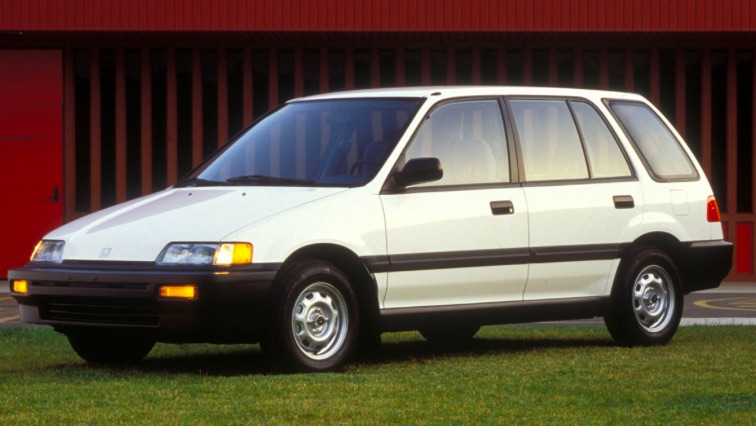
It’s been a long time since I’ve seen a Honda Civic Wagon from the mid to late 1980s. It’s it was slick and aero to the original Civic Wagon was square and boxy.
It is said that the Chrysler PT Cruiser was based on the Civic’s functionality though obviously not on the Honda’s looks.
That the Civic was a better and more practical car, there’s no doubt. And I will say no more about the PT Cruiser. It is best forgotten.
No, this is about the Civic Wagon I saw today. I wanted to take a photo of it but somehow it felt too intrusive.
It was, spectacular.
It was in Ventura and it was white. There was a single surfboard on a nicely done roof rack. I could see there had been some “modifications“ on the inside. The backseat was gone and the passenger seat had its seat back removed. I could see two long fishing poles going from the front to the back where a passenger, in a different time and place, might have sat.
I wondered to myself, who owns this?
Other than the roof rack, it appeared all original. The rims were steel Honda 13 inchers and the minuscule tires looked better suited to a golf cart.
I just had to see who owned it. I thought that I knew exactly what he looked like, but I had to see him for myself. And then there he was. He was probably a little younger than me but he managed to look older. He was lean and gray with a hat on his head and to-the-knees board shorts. He loaded something into the back before getting into the driver’s seat.
The little Honda, of course, started instantly and ran smoothly, like any Civic. As he pulled out of the driveway, I could see his rear license plate, a California plate, of course, was even more faded than the car’s paint.
Both owner and car were spectacularly OG and legit. Yes, there is a part of me that wishes I had taken a photo of the both of them. Who knows, he may have enjoyed the attention. On the other hand, it would feel, to me, like disturbing a wild animal in its natural habitat. Who knows? Maybe the windows, which were all rolled down, still rolled up? As if it matters.
They don’t make cars, or even many guys, like that anymore; full of purpose and devoid of pretense.
Great. I’m already amending my thesis. You do not suck because of your swing. If you have a handicap between 12 and +1. The fact is you don’t suck at all compared to most people who consider themselves golfers let alone those non-golfers who know you play. No, to them you’re already good. It’s only you who thinks you suck and believes that if your swing was better you’d be better.
II Your game will not be helped by a fitting session, no matter how expert.
Your game will not improve because of a new driver, fitted shaft or fresh wedges. Flightscope is not your friend or your savior. It’s a pusher. Avoid being an addict.
III If you have been playing for more than 5-7 years, and you are over 45 years of age, you are probably done improving.
Live with it. Embrace it even. Sorry to burst your bubble but you’re also not going to become a faster runner. Consciousness of limitation is not causal to a limitation on your enjoyment of golf or any pastime.
IV The rare, rare, rare exceptions to point III prove the point.
Feel free to rub my nose in it. Send me stories about all the 45+ year olds you know whose handicaps have dropped from 10 to 5 or 4-2.
I’m waiting.
V Here’s an old relationship rule that applies perfectly to golf.
If you’re in a challenging personal relationship ask yourself this: If nothing gets better, would you still continue with the relationship? The genius of this question is this: If you can hang in there with no improvement, any improvement will make the relationship (and your life) better and more enriching. Imagine how happy you would be about your golf game if you adopted this mindset.
VI The golf industry is not youand you are not the golf industry.
Why does this obvious fact matter? Because it should not matter to you how far the very best players in the world hit the ball or even the equipment they sometimes use but always endorse. Their spin rates shouldn’t matter nor should any other specification of their performance.
VII Last year I attended the Women’s US Am at Bel Air CC.
I overheard no fewer than three men muse about the distances the top four players achieved off the tee.
Each said a variation of, “You know, they’re so smooth and their clubs are totally matched to their games.”
As if…
Finally, loosened by SoCal sunshine and two on-course beers I spoke up.
“That’s totally wrong but you won’t like the truth.”
Incredulous male golf fan: “Oh really, and what’s the truth?”
“The truth is that the four players on the course today are elite athletes. You and I are not.”
VIII You suffer because of denial and a lack of honesty about your golf goals.
Today I asked a good friend who is a superb athlete about his golf goals for the rest of the year and beyond. He spoke of a battle with the course and a battle with himself. I thought to myself; what happens when we are battling ourselves? I think all of us, the yin and yang and the golfer, lose.
IX For the professional and the high-level amateur golf is a battle, with an opponent and the field.
Amateurs should celebrate their general freedom from these battles. They should celebrate the game for the sake of the game. Being outdoors for the simple joy of being outdoors and the fun of spending time with their companions.
To quote Jones, “Golf is a game best enjoyed with the convivial companionship of close friends and loved ones.”
Amen, Emperor Jones.
X Detoxing from golf is unlikely not impossible.
I’ve found my golf detox through another game that (so far) eschews unreasonable expectations, a game that emphasizes playing the game rather than a discrete athletic motion regarded in isolation. You can detox your golf game in a way that will maximize your enjoyment of the game.
It’s said that Novak Djokovic plays a tennis racket based a fifteen year old Head frame design. When I heard this and considered the fact for a few moments I thought to myself, the tech hasn’t advanced. If it had, Djokovic and the rest of the high-level players would be taking advantage.
Now this struck me as odd since tennis tech, as evidenced by string and rackets, advanced significantly sometime during the Agassi era. It’s easy to imagine how the move from wood to metal to graphite and the simultaneous evolution of strings, from gut to multifilaments, co-polys and polyester monofilaments, changed tennis forever, if maybe not for better.
I’ve come to describe tennis as an oppositional striking game, approximating some of the confrontation elements that take place between a pitcher and hitter. Other than appropriate footwear, the racket is pretty much all the equipment a player brings into battle. In high level professional tennis, rackets are quite nearly disposable. To the enthusiast they are alternately sources of fascination or confusion.
The mechanics of a tennis racket are fairly simple. This is not to say that designing or building a racket is simple. Contemporary tennis rackets are the flower of post-industrial revolution advances in materials science and mass production. In some ways they are equatable to a contemporary golf driver. Both are component devices; one comprised of racket frame and string and the other of driver head and glued shaft. A driver’s playability is determined by the integration of shaft/head/player. In tennis, it’s obviously racket/strings/player. Both golf and tennis have well-developed industries to research, manufacture and market products but what do those wildly successful commercial efforts mean to the player?
I don’t want to get too carried away by ideas about the physics or mechanics of the tennis racket or the driver for that matter. Suffice it to say both improved very rapidly a few decades ago and both, today, have reached a kind of stasis. That stasis comes from a combination of two things. The first is the theoretic maximum of coefficient of restitution (COR, hereinafter). COR is the degree to which a modern driver face can deflect thereby allowing the ball to travel further assuming a given club head speed. So, virtually every modern professional golfer is using a driver head with essentially matched technology in terms of basic mechanics. I think the same thing is true when it comes to tennis rackets. The industry has pretty much figured it out. Now, this doesn’t mean all tennis rackets perform identically. They vary by length, weight and flexibility on at least two axis. The difficult and more interesting question is this: how do changes in those qualities affect a tennis player?
TW’s drivers, 1997 on the left and 2018 on the right No, TW did not put the pop-up mark on the old driver
Let me dodge that issue momentarily by shifting back to golf. If we regard Tiger Woods career as lasting roughly two decades, we will see that he started out using a driver that was pretty much from the decade that proceeded it. In other words, the next generation drivers being used today had not yet been developed by 1997. So, Tiger Woods when he first came onto the PGA Tour, used a driver (a King Cobra Deep Face 9 degrees, True Temper Dynamic Gold X100 shaft. The X100 shaft is steel, heavy steel at that. The driver’s steel head displaced somewhere around 210cc. A few years after that the driver boom occurred. The boom was caused by the simultaneous development of aluminum titanium alloys, which allowed the head size to balloon to 460cc and also the ability to maximize the mentioned coefficient of restitution. So, by the mid 2000s Tiger Woods would be using a driver with a graphite shaft and an aluminum / titanium alloy head that rode the edge of maximum allowable COR as regulated by the United States golf Association.
By the mid 2000 driver technology for the most part had maxed out, both in terms of material and technology. Interestingly, if we make the obvious assumption that Novak Djokovic has access to the best equipment in the world, and further, that his racket of choice is based on a fifteen year old design, we can also conclude that tennis rackets, at least for the time being, have also been maxed out. So, back to the earlier question; how does this affect the average player whether a golfer or a tennis player? In both sports, I conclude that the technology advancements of the last fifteen to 20 years has been virtually irrelevant. Tiger Woods, at any point in his professional career, could have gone back to his 1997 steel-headed, steel- shafted driver with very few consequences. It is even arguable (and I have promoted the opinion) that the slight decrease in distance paired with the significant increase in control would have led him to even better play during that time of his career. As regards tennis, I doubt that any amateur player is likely to be disadvantaged by using a racket that’s even older than the one Novak Djokovic plays.
I take two lessons a week, only 30 minutes each, though for a time I added a third lesson to focus specifically on the serve. My thought was that within a month or so my serve will catch up with the rest of my game and I’ll go back to two lessons a week. It may turn out that my estimate is optimistic. We’ll see.
Serving is a blend of the toss, the swing (upwards and then outward) and managing to send the ball into the court. I think the toss is unique in sports. I can’t think of another game that asks the player to essentially throw the ball to himself to initiate a strike. The serve, at this point, is abbreviated. I start with elbow up and the side of the racket against my upper back. I’m sure it looks funny but I understand the theory. It reminds me of an abandoned golf swing theory that David Leadbetter tried to sell a few years ago called the A Swing. In the A Swing, the player started his backswing with the hands at around waist high and the club head near shoulder height.
It never caught on.
But, as I said, I do get Caesar’s idea. The entire serve motion is surprisingly tricky. The problem is that it looks so simple on TV, or when an expert like Caesar hits a serve right before my eyes. If only. Watching others is instructive in at least two ways. The first is as examples of what not to do. This is a sadly rich field. I see some pretty good tennis players with very bad serves. When I asked Caesar about this he didn’t hesitate before he answered. “Very common. The best way to practice the serve is to do it alone, and it’s boring.” This sounded similar to practicing putting.
But wait, I’m trying to forget about golf.
In addition to tossing the ball to yourself, you also have to coordinate a separate motion, that being the actual swing at the ball. There’s one more bit of fun; the ball will be (or should be) far above your head when you strike it. That strike location makes the motion all the more difficult to master.
I keep the images of three serves in my head. First and most obvious is Caesar’s. Even through he frequently reminds me that it’s been over twenty years since he’s hit a competitive serve there’s no missing the mastery of his motion. His serve makes the solid strike of the ball seem like a mere eventuality. It looks like he couldn’t miss. The motion and the pace of the serve seem very much out of step with each other. His take back is slow and smooth but once the ball is hit the other perception is of speed.
On TV I enjoy watching Maria Sakkari of Greece. She is closer to my height so length of her arc and potential extension are closer to mine. There’s a fantastic slo-mo of her serve on Instagram that I study from time to time. It reminds me a mid-1990s golf thing called Sybervision that featured continuous slo-mo loop of Bobby Jones hitting a golf ball. I never got my tempo anywhere close to Jones’ but it was a helpful reference to what was possible.
In the realm of the impossible, something I enjoy watching for its abbreviated if lurid grandeur, is the serve of Andy Roddick. I love abbreviated, explosive athletic motions like Roddick’s. It looks as if every unnecessary movement has been deleted leaving only the kinetic elements that contribute directly to the strike. This appeals to me. It makes me think that I could replicate the essence of Roddick’s serve absent, of course, the astonishing speed and power he achieved. The movement in his serve reminds me a little of watching Nick Price hit a 4-iron. Neither swing lasts long but both are awesome.
2007 Boss Tweed, CC BY 2.0 via Wikimedia Commons
The take back is the next issue. I’ve watched videos of professionals who start with the racket in the trophy position, upper arm parallel to the ground, upper arm at something like a right angle to it, racket pointing skyward. From here, they execute their racket drop, the rotation of the upward-facing racket to a position that finds the top of the racket pointing backward or, in the case of Mr. Roddick, nearly straight down. Many players coordinate the movement of the tossing arm with the racket arm, so both arms are moving upward at about the same time. I cannot say exactly why, but there’s something about this motion that feels off to me. If the tossing and swinging arm go up at the same time and the ball is tossed further upward it seems to me that the swinging arm will have to wait for the ball to apex and start falling. I understand the racket drop takes time before the forward swing gets going but it seems to me that, maybe, if the swinging arm trailed a bit the transition into the swing might be smoother and more sequential. Not to fixate on Andy Roddick, but this photo shows what I mean.
My latest book, Tennis thing is done at last. It’s a diary of sorts about my first year playing tennis. I’m going to be sharing chapters here over the next few months. Following this post is another chapter on Riggs. He is a fascinating figure to me.
In 1939, at 21, Bobby Riggs wins everything at Wimbledon. Singles… Doubles… Mixed doubles. Ever the gambler, Riggs maintained that by betting on himself he won $100,000. He was, obviously, a very different kind of amateur.
Bobby Riggs was born in 1918 and grew up in a relatively shitty working-class area of Los Angeles called Lincoln Heights. Long before his historic triumph at Wimbledon, he’d been branded a mere hustler and a gambler and was shunned by the amateur tennis scene at the Los Angeles Tennis Club and beyond.
From 1939 until 1972, he was totally off the tennis stage, such that it was back then, and living in complete anonymity. Of course, the Great Depression had something to do with this as did the fact that Riggs, like all of his contemporaries, were well-beyond their tennis primes by the time the Open Era of Tennis arrived in 1968.
Finally, Riggs or someone else, stumbled upon the battle of the sexes schtick that defined the rest of his life. I wonder who we have to thank for that? Like all schticks, it revived his fame though it did so at the cost of a great diminishment of the impact of the superb play during his earlier life. History, as it so happens, was usurped by notoriety. I wonder how that felt in Rigg’s heart of hearts? To be fair, it wasn’t like he consciously chose fame over his storied history as a player. He simply must have grabbed onto fame like the lifeline it was especially to bespectacled a tennis player in his mid-50s whom few had ever even heard of.
Something about Los Angeles helps to create hustlers and I wonder why that’s true. Trevino & Hogan would have gotten eaten alive out here. Sure, they could handle the heat and humidity of Texas but the glare and grit of Hollywood would have wilted them. Somehow, unlikely guys like Riggs & Pancho Gonzales thrived in Los Angeles, in their ways, at least for a while.
Riggs and Billie Jean King in the early 70s during the Battle of the Sexes Era
One of my first thoughts about AI is that any question based on human experience (or really any genuine experience) would have to result in either an inability to answer, think of the old reliable SciFi line, Insufficient Data, or a lie. So, early this morning I asked Google Bard my first question ever:
Me: Do you enjoy walks?
Bard not only answered in the affirmative but proceeded to give examples of why walking is enjoyable and detailed many of its benefits.
Me: Name five places you have walked in the last four days?
Bard then flatly stated that it had never walked.
Me: In light of your second answer how do you explain your first?
Then, Bard fell on its sword; admitting it was only an experiment at this point and actually apologized for its first answer.
Fascinating, but worrisome.
The first answer I ever got from AI was a lie.
Why should that be the case? It’s obviously an intentionality of programming which in an of itself is troubling. For AI programmers what benefit does the capacity or even the tendency to lie bring? Now, I can imagine the facility of AI lying when lying, as in the writing or fiction, is the goal. My guess is there could be problems further down the road and, because of the speed of AI development, those problems will likely arrive much sooner than we expect.
Not wanting to rudely focus on Bard’s lie I then asked questions asking it explain how Kant differed from utilitarianism believed about the good, what was the most prevalent form of online betting as well as a question asking Bard to explain the similarities between Socrates and Aquinas.
Interestingly, Bard was exceptionally good with the answers related to philosophy. I would say the answers were at least on the level of an undergraduate philosophy major. It was impressive. The answers on sports were less impressive and more generic with greater overtones of a Wikipedia article.
As I said, I asked my questions (prompts is Google’s preferred term) very early this morning. By the time I wanted to retrieve the conversation all that remained were the prompts themselves and the times of each. There may be a way to retrieve the original responses but I’ve not found it yet. Now that’s odd. If the system really learns from the exchanges it seems reasonable that both side of an exchange would be memorialized for both parties.
One of the best lessons I ever learned was that I don’t know can sometimes be both the best and most responsible answer. Is that too much for AI engineers to get? I hope not.
Note: It took me a while, but here are screen captures of three of my original questions and Bard’s answers.
For the last year or so I’ve been reconfiguring the way I listen to music. It’s been a gradual process but like a number of other things in my life it’s accelerated toward the end of this year. I’m doing what I can to make my collection portable. The Great LP Rip of 2022 has been a big part of that. While I have no intention of selling or giving up my LPs I also don’t have a great interest in significantly increasing the size of my collection. Those days are gone and even though I do buy an occasional LP my purchase of digital music either in CD or iTunes or Bandcamp exceeds those by at a ratio of at least 10 to 1.
Of course I own a record cleaning machine! I mean, who doesn’t? Very few people keep their records as they should and since nearly all of my newly-acquired LPs are used, proper cleaning is a necessity. I’ve owned my humble black Nitty Gritty Model 1.0 for a long time. It’s the very essence of simplicity, which I like. NG makes much larger and more elaborate models but all of them share the same vacuum. Am I really so lazy that I need something to spin the LP while I clean it? Almost, but not quite.
I was cleaning a record yesterday when I realized that I was missing my genuine NG cleaning brushes. They’ve been MIA for a minute now and I’ve been using folded microfiber cloths as a cleaning applicator. But, the LP I was cleaning was actually dirty, as in I could see dirt on it when I was at the record store. If I had not also seen the alluring sheen of what I call Inky Black vinyl underneath I would never have taken the chance on it. Come on, this is David Lindley…the only David Lindley LP I don’t own! The only question involved what to use to actually clean the grooves? I’d been reading about various new and old products, all of which promise to safely plumb the depths of the fragile grooves while removing harmful detritus. One had a crowd-funding effort that caught my eye. I’m not going to plug it here since the guy who developed it isn’t smart enough to set up a website to sell it or even to reply to an Instagram message. But, he made a good point about the diameter of bristles on most wet-cleaning brushes. He pointed out that the most popular material, goat hair (go figure) has a typical diameter that exceeds the diameter of a typical groove. Now that got my attention. He also made points of the facts that typical velvet cleaning pads lack the necessary groove-reaching length and that velvet inevitably compresses over time. Points taken. Too bad the guy won’t sell me one.
Everyone has heard of and some even do the unthinkable. They clean LPs with a combination of diluted Dawn and a toothbrush. Beyond the fact that Dawn is a detergent the surfactants of which can easily break down the PVC of an LP. Bad idea. And, a typical toothbrush would probably bring all of the disadvantages of a goat hair along with enough stiffness to create its own scratches. But, what about those super-soft, ultra-fine toothbrushes I’ve been using for the past decade or so, the ones people think are for little kids? I say sheer perfection if used carefully. The results on the LP at hand were amazing. Do I recommend their use? No way. Like I said, very few people take proper care of their records and I’m not going to be the guy to tell the careless to use something that could damage their LPs when employed by the careless. I’m still researching brands. In the end, I may buy 5 toothbrushes, cut off the heads and glue them onto a piece of wood. It’s yet another work in progress. By the way, I only use NG Pure 2 cleaning fluid. Accept no substitutes.
While I was researching brushes I came across a really entertaining blog. The guy’s in the UK and he reviewed not only a goat hair cleaning brush but also his Moth MkII cleaning machine. Even if I don’t agree with the ethos of his overly complex cleaning machine the guy wrote some great stuff about the joys of buying used records in the UK. It’s too bad that he hasn’t posted since 2017. Maybe the muse will strike him again someday.
I’d like to share an email I sent him the other day:
Dear Shelf-Stacker
I’ve been enjoying your blog for the last few days now. Some great stuff there. I’ve only returned my limited attention span to my vinyl of late. I’ve been wanting to rip them for a while but I kept stumbling on the method I would use. I finally decided on one over the summer and it’s coming along Ok. I’ve no intention of selling or disposing of my vinyl, I enjoy playing it too much. But, it’s very cool to be at my girlfriend’s house, and mention some obscure LP, and be able to play it for her using pCloud (which I highly recommend, aside from the annoying name). I don’t anticipate growing my collection much anymore. A few have survived, enough to fill my beloved Per Madsen rack. About 1,500 were lost in a flood (read: plumbing debacle) a decade and a half ago. They didn’t just get wet. I could have dealt with that. No, the flood was caused by a burst hot water line from old galvanized plumbing. So, rusty water climbed onto the records and then particles dried into the grooves. While it was possible to remove individual specks of rust it always left a scratch. Truly, each affected LP was a total loss. The idiot from the insurance company tried to offer $500 which was quickly increased to a dollar a record. I finally settled for $4.50 a record which in those days (LPs were not worth then what they are now) was not a terrible deal. Still, what a mess. Pisses me off to this day.
The first piece of yours that caught my eye was about the Tonar Goat Wet Cleaner brush. I have a beloved Nitty Gritty record cleaner but somehow all of my NG brushes have gone missing. In their absence, I have used very good quality microfiber cloths as cleaners and the NG to dry. I thought to myself that surely someone has come up with a better brush by now. The goat hair deal does not get me going, however. I had an intuitive sense that the diameter of the goat hairs themselves were unlikely to plumb the depths of the LP’s grooves, and I think I am correct about that.
I woke up with an idea. I’ve used these super soft toothbrushes for years. I mean they are SOFT. Most people who see them assume they’re for little kids but au contraire. Best of all, the actual bristles are exceptionally small, around .08mm in diameter, that’s what makes them so soft. Anyway, I bought a fairly old LP today that was genuinely dirty (as opposed to typically dusty). Even though it was dirty it had a really nice inky blackness that I always associate with good pressings (this example was from New Zealand) and then used the NG fluid and a new super-fine, super-soft toothbrush.
The results were really good. I mean, I’ve always gotten good results from the NG but this was significantly better and this record was dirty.
So, not so much a recommendation as a thought. It’s amazing that there are still Parastat brushes floating around on Ebay…used, no less. No thanks. I have uncontrollable images of someone using them on their toilet or dentures. I’m not sure which possibility is more distasteful. So, I’m a toothbrush man from here on in. My plan is to buy a 5-pack, cut the heads off, and glue them to a piece of wood or plastic and voila!
I also love your stuff on used records. It seems there is little difference from the UK to the US in this regard. However, there are even more of what I disparagingly refer to as tweak shops here in the US. Shops that put on those silly outer sleeves and charge triple what an LP is worth.
I divide my LP buying among a triad of local shops. One (Deadly Wax) is very local to me and owned by a really nice fellow. Aside from his reticence to create a Folk section his store is hard to complain about until you see his prices. They usually make me wince a little but occasionally I’ll find something and I’m glad to part with my dough since he’s such a good guy.
The second place (Canterbury Records) is in Pasadena, where my girlfriend lives. It has scads of potential but is really a disaster when it comes to browsing. The owner has literally tons of records. But, many are hidden away on mysterious shelves below the shelves.
No, you may not look through those records.
And, no, you may not buy those records under any circumstances.
You see, the genius owner has yet to evaluate those records, nor will he ever, most likely. The available stock is still huge but I seldom find anything there and usually leave muttering about pretty much every aspect of the store.
My favorite is CD Trader (unfortunate name, I know) in nearby Tarzana. Yes, that part of Los Angeles is really named after Tarzan. Hey, it was Hollywood! Anyway, it’s big but well organized and has a nice blend of the costly and the not-quite-so-costly. Plus, the guys at the counter are always kind and know their shit. When one of them saw the LP I had he called out, “Cool! Only pressed in New Zealand, right?” “Right,” said I, impressed with the latest example of the legend of record store clerk wisdom.
They do, also, have a lot of new vinyl and I’m sad the young little dipshits who buy them think the prices are acceptable. On the other hand, perhaps they are. The first LPs I bought back in the 1970s cost $3.99 and I was making a little less than $3.00 an hour at the time. Now, I see new LPs starting at around $18.99 with some inexplicably priced at $24.99 and above. Minimum wage in California is right around $15-16 today so I guess the inflation is not totally insane, but it seems like it is.
Finally and most importantly I am wondering what caused you to stop posting, if in fact you have? This vinyl resurgence can’t (or at least I don’t think it can) last forever. It’s a great time for guys like you to shepherd the clueless to happiness or at least away from the kind of confused foolishness they will suffer in other corners or the internet, especially as regards vinyl. None of my business. I’m just asking blogger to blogger. While I still blog I know the self-imposed pressure to post and I, like perhaps you do, chafe against it.
Anyway, I think you bring a wise and entertaining voice to something near and dear to my heart. Thanks for making the effort!