
Here is Part 4 of Kingdom of Dreams:
You can buy the ebook here: Kingdom of Dreams for Kindle.
Thanks for listening and please drop by again soon to hear Part 5.
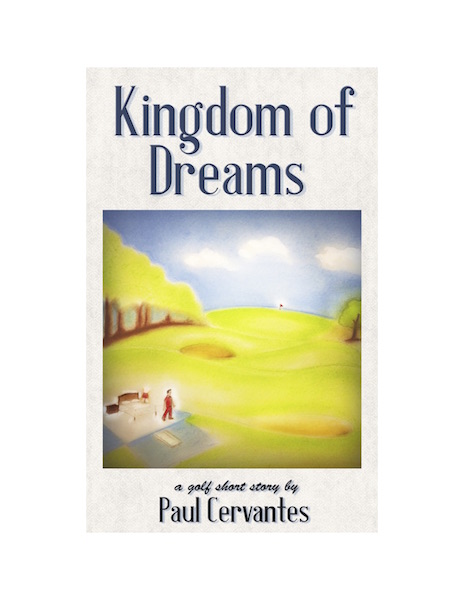
Here is Part 4 of Kingdom of Dreams:
You can buy the ebook here: Kingdom of Dreams for Kindle.
Thanks for listening and please drop by again soon to hear Part 5.
This is Part 3 of Kingdom of Dreams, my 2014 golf short story.
Part 4 will be available soon so please check back.
I hope you enjoy it and thanks for having a listen.
By the way, you can buy the ebook here: Kingdom of Dreams ebook at Amazon.
After a lengthy delay, the print-version of my novel, John J. McDermott & the 1971 U.S. Open, is available at Amazon.
You can get your very own copy of the paperback here.
The delay was related to the cover. I’m usually not one to point fingers but I was the problem.
There, I said it…now go buy a copy.
This is Part 2 of Kingdom of Dreams, my 2014 golf short story.
Part 3 will be available soon so please check back.
I hope you enjoy it and thanks for stopping by and having a listen.
You can buy the ebook here: Kingdom of Dreams ebook at Amazon.
I’ve been making good progress on my new book, especially considering the hodgepodge of software I’ve been using.
I wrote my first book in Microsoft Word and it was a harrowing and creativity-sapping process. Word is like a huge Swiss Army knife of a word processor. A knife with a shit-ton of tools can be impressive. You look at it wondering how many tools there are and whether you’re likely to use most (or any) of them.
Then you realize the damn thing’s heavy. Then you realize that using any of the tools except the main blade is a fiddly and frustrating experience.
In the end, you leave the knife at home more than you use it.
Don’t get me wrong. I’m grateful that Word exists. The choices made by the folks who created it result in a benchmark product. I would never refer to Word as a bad piece of software. It’s simply a bit of software that’s unsuited to the creative flow of my writing.
A while back, I was prattling on about Ulysses and iA Writer. Later, I discovered and used Bear for a while. I deemed each of them as interesting but not quite useful enough. Each design is good at pretty much keeping out of the writer’s way.
It’s the issue of sync that settled the matter, and not in favor of iA Writer, Ulysses or even Bear.
Each of those platforms rely on iCloud for sync. That’s OK if the writer uses the same Apple ID across all devices and the iTunes Store. There’s the problem for me. Also, I think the software companies should use their own system and servers for sync rather than relying on iCloud.
I think WorkFlowy does sync right. Their ingeniously simple software is truly web-based, syncing by username, seamlessly.
I encourage those folks to develop WorkFlowy for Writers and let me know when it gets to beta. If they can build on the way WorkFlowy works and apply it to the work of long-form writing it would be a real game changer.
The software I’ve chosen to write my book in is Apple’s very own Notes. File organization is simple and straightforward. You can choose your own font and basic formatting is a snap. I will continue to use Word as the destination software (and archived backup) for the eventual manuscript. Importantly, documents created in Notes paste cleanly into Word without any weird or unexpected formatting problems. Notes also syncs both immediately and perfectly across all devices, as one would expect of one of Apple’s own creations operating in their own ecosystem. The UI is clean and uncluttered and this helps me to focus on what I’m working on.
I’m glad to be watching that hodgepodge of software vanish into my rearview mirror. I’m also glad there are software folks out there who are trying to make the challenge of writing easier and I’m really happy Apple did such a marvelous job with Notes.
I’m going to take a few minutes to explain how to discuss a friend (or loved one’s) new novel.
The novel was a royal pain in the ass to write. It was a wholly unreasonable thing to try to create while holding down a day job of any kind.
Then, as if by magic, it was done.
In the end, the writer failed in ways he never imagined.
In the end, the writer succeeded in ways he never believed possible.
A book should be read, it must be reacted to, so the writer gives it to the audience he imagines will be the most kind and receptive and responsive.
You’re that audience and I’m going to tell you what the writer wants you to say and ask (and also what he hopes you won’t).
He didn’t write the novel to get rich.
He didn’t write the novel to become famous.
He wrote the novel in an effort to convey an idea or series of ideas in the best and most engaging way he could.
The writer doesn’t want to hear about what you’re reading right now and that you’ll get to his book when you’re done.
The writer doesn’t care when you read his book, only how.
The writer doesn’t want to be asked how he intends to promote his book. It’s a valid subject, of course, but in the heady time just after the book has gone up for sale it’s probably not front-of-mind for the writer.
The writer doesn’t want to be reminded how great it is that it’s become so easy for anyone to write a book and sell it on Amazon.
The writer doesn’t want to be asked how many copies have sold so far.
The writer doesn’t want to be asked if he he’s going to send the book to any real publishers.
The writer wants to know if you liked the book. He wants to know if you found any of the characters likable or loathsome or fun or frightening.
He wants you to ask him how he went about writing the characters the way he did.
He wants you to ask if any of the characters were based on people he actually knew or knows.
He wants you to ask what it was about the real person that made him want to form the person into a character in a fictional book.
The writer wants to know if you didn’t like the book.
He wants to know if you simply didn’t find the story intriguing or the characters engaging. If he fell short (and he surely did), you’re his best chance of figuring out how he did and maybe even why.
The writer wants you to ask how you decided on the book’s sequence. He wants you to ask how you were able to handle the different times and places while maintaining the book’s coherence and flow.
Why make the effort to do something that consumes literally thousands of hours and, in many cases, years to complete with a vanishing a chance of being appreciated by more than a few readers, let alone to achieve financial compensation commensurate with the effort?
It’s a good question that every aspiring writer has asked himself not only when he first set out to write the book, but likely every single time he sat down to work on it.
The way you ask that question may help the writer draw a closer to his own answer when he asks the question of himself.
He also wants you to ask him about other subjects he may be interested in, or may already be working on.
Finally, he wants to be asked what he learned from writing the book.
Lastly, the writer wants to know what his book made you think and feel. Were you happy to be done with it, to be relieved of the perceived obligation of reading it, or did its ending leave you wanting more?
Did reading it make you think differently about the writer? Did it change the way you thought about what he might accomplish in the future, based on what you see as the promise or lack of promise manifested in the book you just read?
The writer is asking himself each of these questions as he lays his head on his pillow every night.
Though obvious to me, I should say that everything I write here assumes the writer in question is an honest soul. I assume the writer was trying to achieve something bigger and far more importantly than bigger or longer, a work beyond anything he may have written before.
I think every novel represents a leap of faith for a writer and I believe a writer simply wants to be asked what made him want to take the leap.
That’s a question he’s asking himself, too.
I promised myself six months respite between finishing my first novel and starting on my second. The idea was to take some time to research and test drive various writing apps.
Having a mechanism that facilitated the organization of my writing was of primary importance.
Having a writing environment that facilitated the writing process was a plus.
I mean, who doesn’t hate Microsoft Word?
On the other hand, who doesn’t use Microsoft Word?
When it comes to writing, it’s easy to come to see Word as the devil you know which is nearly always preferable to the devil you don’t. Word is not anathema to the creative process. If it was, no one would get anything done with it and there are plenty of writers who do the majority of their work within its environment.
I’m one of them.
But, Word is distracting. Word is inscrutable. Word is ugly.
I narrowed down the initial candidates to iA Writer and Ulysses.
I’m prone to breaking promises I make to myself so rather than a six month respite I’m already working on my next novel. The fun part is that I’m alternating its among Word, iA Writer and Ulysses. You’re right…fun’s not the right word.
I compose for a while and then I cut and paste the copy into Word as a back-up. I also email the copy and dump another copy into A Google Doc but now I’m giving you a bit too much insight into how much I hate the idea of losing my work.
So far, I’m not sure if iA Writer or Ulysses will be of much help to me, anyway. I do like the stripped down nature of the interface but, at least so far, I’m not seeing it as transformational of either my writing process or of my ability to maintain organization of elements of plot, characters, scenes and timeframe.
Initial nit picks about Ulysses include the use of jargon like sheets rather than text or copy. I mean, I know about a sheet of paper and about rain falling in sheets but why use the word to describe something that a sheet isn’t? But, I’m not giving up on it yet.
iA Writer takes the stripped down feel a step further. This can lead to wondering about what, exactly, the app is supposed to be doing for the writer?
I’m going to give both apps more time and copy before I decide which of them (if either) to use.
Today, I am unconvinced about iA Writer and Ulysses but I’m still open to using something other than Word. If any of you use either of them (or any other writing app) I would love to hear your views and experiences.
My novel is done. No, you can’t go buy it yet.
I’m preparing it for submission to a handful of publishers and it turns out they don’t fancy looking at books that are already in the throes of a self-publishing campaign.
I’m quite certain that’s where my book will end up and that’s OK by me. I’m glad I wrote it. It took a lot longer than I had hoped but I learned so much about the kind of long-form writing thought that a novel requires that I now regard the span of time as something of a necessity. That’s another way of saying I’m a slow learner.
I had written a great deal over a very long period of time before I decided to write a novel. Now that I’ve done it, I want to do another and to do a better job of it. I can look back on my book and can see it clearly for its good and bad. Something about writing it broke away a kind of resistance that had set in to that kind of writing ambition. Suddenly, writing a book seemed like something I could do and do with meaningful results.
I think often of Steve Earle’s dark years in Amsterdam when he was addicted to heroin. When he had finally clawed his way back into the light, he had a creative boom of sorts, making records and writing books and plays with a speed and intensity he never showed before. He attributed the burst of work to his release from smack.
Even though I wrote for both pay and fun I avoided the idea of writing a book until I hit my 50s. Rather than being addicted to heroin I had instead succumbed to the belief that I didn’t have anything to offer; that I wasn’t that kind of writer. It turns out that I am…
So, I’m grateful that I simply had the idea to write my book. Obviously and as always, it is the idea that made everything possible.
Now I have another idea and it’s led me start writing my second next novel.
Here’s hoping it moves along faster than the first one.
 Paul Cervantes