
I can only recall one time my father wasn’t willing to take my mom somewhere. It was 1985 and my mothers wanted to watch Space Shuttle Discovery land at Edwards AFB. Discovery’s flight lasted 7 days, 2 hours, 17 minutes, 42 seconds and it landed on September3, 1985 at 6:15:43 a.m.

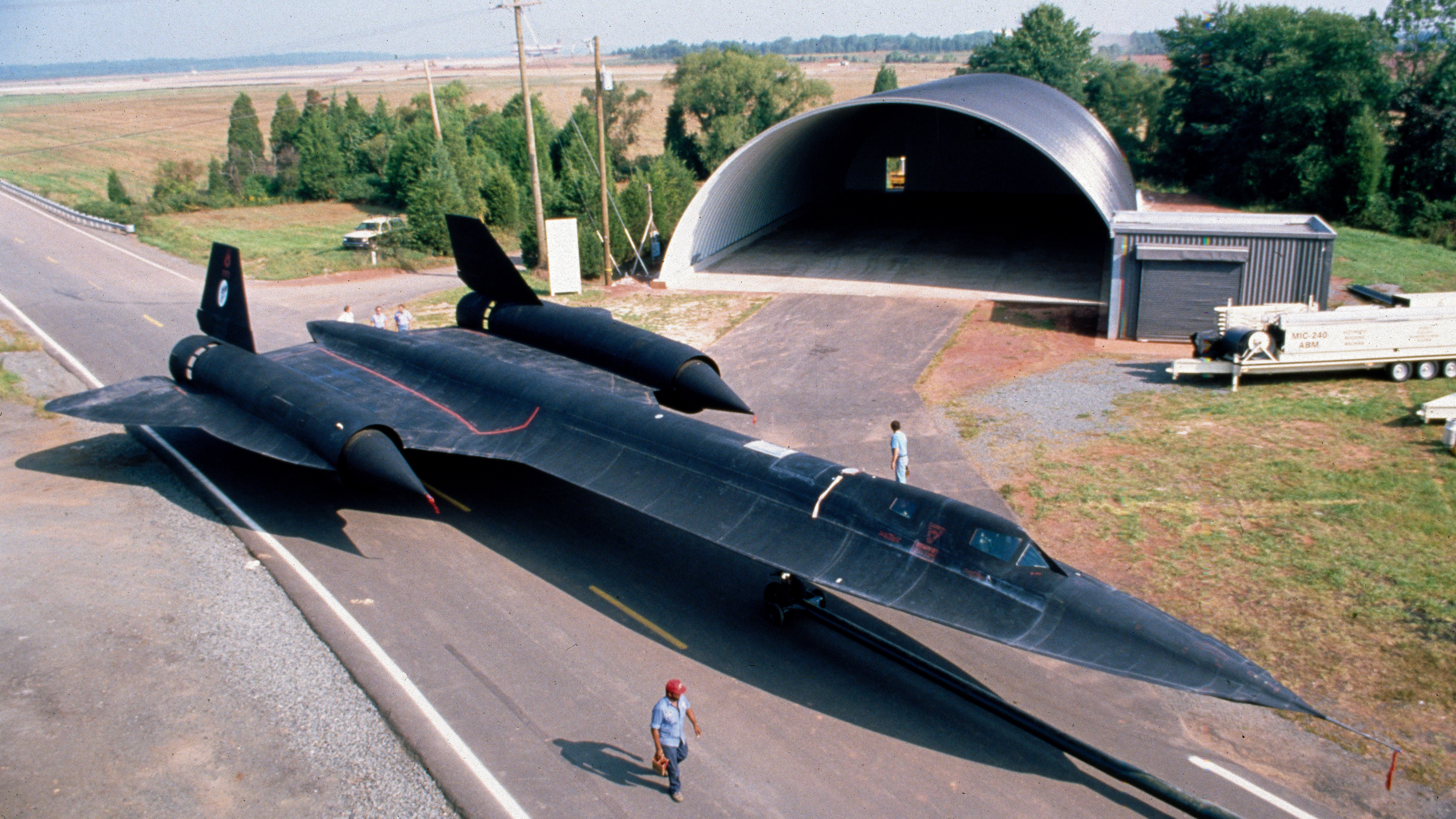
But that’s the end of the story and that’s almost never what I’m all about. Now I, like my father, wasn’t crazy about getting up at Oh Dark Thirty but I could see my mom really wanted to go. It wasn’t surprising. My mom liked to watch construction work being done. She liked watching the Lockheed SR-71 under full afterburner at the airshow at Point Mugu.

In fact, my mother told the story of the sights and sounds of the Blackbird many times after the show. She just loved stuff like that.
On that early autumn morning, I picked my mom up in my 1981 Nissan Diesel pickup truck and we made our way to the high desert a little before 4 a.m. Topanga was quiet but not empty and a early-season Santa Ana was working its way south.
Nothing, and I mean nothing, sounds and feels like a diesel cruising on a freeway in the dark. There’s a quality to the pitch and rhythm of the engine (in this case the Nissan SD-22, originally designed for use in forklifts) that makes it feel steady and inevitable and loyal as it powers the truck forward into time and space. Somehow, someway, a cruising diesel constantly reminds you that you’re truly going somewhere.
You can feel it in your bones.
We picked up the 405 and left the 118 behind and all was still dark. Sunrise was at 6:27 a.m. and Discovery was supposed to land fifteen minutes before then. Traffic on the 14 was a little heavier going south than north. It felt like we were the only ones heading toward the dry lake even though I knew we weren’t. We rolled on, mostly in silence, my mom commenting from time to time about the way the mountains had been cut to allow the highway to go through.
I don’t remember where we got off the 14. There was no GPS and I don’t even think we brought a map. We only had our reckoning and that turned out to be enough. Looking at a map, I will guess we got off somewhere around Rosamond before we headed east. Finally, we saw a small collection of cars and campers sitting on the side of the road, south of what we could later see was the dry-lake runway itself. I picked a place to park and we got out of the truck and stretched our legs. Then, we waited along with a few hundred others who huddled in small groups in the pre-dawn chill.
A few guys further up the road scanned the sky with binoculars, while trying to guess the direction of Discovery’s approach. Finally, in the very quietest moment, a boom rolled over the desert. Seconds later, a cheer rose from the faithful and everyone looked skyward to catch a glimpse of the shuttle on its approach.
Finally, we could see it. It didn’t look much like an airplane. As it traveled across the indigo sky, it also descended, very fast. It looked very much like a stone falling and it was hard to imagine something falling so fast could ever slow enough to make its way safely down the runway.
Finally, Discovery made a huge, soft turn and began to approach the dry lake from the east. Now the shape of Discovery could be clearly seen as it lined up perfectly above the center of the runway. Discovery was no more than a few hundred feet away as it passed us, close enough for us to see its red and white parachute billow from the rear of the fuselage. The crowd whooped as it went by and once it was stationary, far in the distance, people began to look at one another, making sure everyone had witnessed what they had experienced. That’s an interesting kind of sharing, seeing something so noteworthy and, for my mom and me, unique in all of our lives. A couple years later, I would again stand at Edwards and look to the sky as Chuck Yeager broke the sound barrier in an McDonnell Douglas F-4 Phantom II on the 40th anniversary of his 1947 flight in the Bell X-1.
But on that day in 1985 I thought only of my mother and how lucky we were to share such an amazing experience. My mom turned to me and grabbed my arm. “Paulie, I’m so glad we saw this!”


 Paul Cervantes