Now that was a good swing.

I hope my brother was recalling a time I said that about a golf swing of mine but I can’t be sure. Even if it was said about me it’s certainly not something I said often during my decades of playing golf. My brother was really talking about the fact he hadn’t actually played golf in well over a year, though he owns a mountain cabin only a few hundred yards from a humble 9-hole track, his home course.

Instead, he’s been hitting plastic golf balls around a course he’s laid out for himself on a little patch of grass near, but not on, the golf course. The plastic balls have helped my brother shift his focus to the quality of contact, the rhythm of his swing, and the completeness of his follow through. He said, “It reminded me of one time when you said, ‘now that was a good swing.'” I remember pulling of a few of those but not enough to keep me on the course. The golf courses of California haven’t missed me and I haven’t missed them much either.

I’m not sure why my brother is not playing his home course but I’m happy he’s managed to create his own game. At its core, golf is one of the most made-up games possible. You have the course, the clubs, the ball, the hole, all came from very humble beginnings. The course was a pasture, the club a stick, the ball a stone and hole a hole, but one dug by a rabbit or some other burrowing critter. Now, the improvisation is pretty much over as evidenced by the supernatural condition of today’s golf courses, even those that host the once-scruffy British Open Rota.

It reminds me of why it was so easy to turn away from golf. It simply became too hard to play enough golf to support what would never be more than a serviceable game. Cost was a consideration. Pace of play never got faster, only slower. Those of you who have read Tennis thing know that two of my brothers continue to drive over eight-thousand miles a year just to play golf twice a week at their club.

Now I find myself living a few hundred yards away from a golf course my father liked to play when it was simply too hot to tee it up in the valley. The track has seen better days but I remind myself I’ve not played it in at least forty years. I recently heard it’s been sold but if it has there’s no evidence its new owners have any great ambitions for it. I walked onto it a few times over the last couple weeks, just before dark. My fondness for the dim quiet of golf courses toward the end of the day is still keen though my interest in playing is not. It’s easy to see why the routing of the course worked and what its designer, Ted Robinson, Sr., had in mind when he laid out parts of it. It’s a modest golf course but not without its charms even in its current state of neglect.

I know what you’re thinking; am I tempted to sneak onto the course and play a few holes? I cannot lie, I’ve joked about it to some of the locals and it would be easy. But, I think I’d rather join my brother on the course he’s created near his mountain cabin. It would remind me of all the times I played golf with my father in his backyard as the sun drew low in the sky.

For my brother, CJC.

Now that was a good swing.

A checklist for your personal golf detox

I You do not suck because of your golf swing.

Great. I’m already amending my thesis. You do not suck because of your swing. If you have a handicap between 12 and +1. The fact is you don’t suck at all compared to most people who consider themselves golfers let alone those non-golfers who know you play. No, to them you’re already good. It’s only you who thinks you suck and believes that if your swing was better you’d be better.

II Your game will not be helped by a fitting session, no matter how expert. 

Your game will not improve because of a new driver, fitted shaft or fresh wedges. Flightscope is not your friend or your savior. It’s a pusher. Avoid being an addict.

III If you have been playing for more than 5-7 years, and you are over 45 years of age, you are probably done improving.

Live with it. Embrace it even. Sorry to burst your bubble but you’re also not going to become a faster runner. Consciousness of limitation is not causal to a limitation on your enjoyment of golf or any pastime.

IV The rare, rare, rare exceptions to point III prove the point.

Feel free to rub my nose in it. Send me stories about all the 45+ year olds you know whose handicaps have dropped from 10 to 5 or 4-2. 

I’m waiting.

V Here’s an old relationship rule that applies perfectly to golf.

If you’re in a challenging personal relationship ask yourself this: If nothing gets better, would you still continue with the relationship? The genius of this question is this: If you can hang in there with no improvement, any improvement will make the relationship (and your life) better and more enriching. Imagine how happy you would be about your golf game if you adopted this mindset.

VI The golf industry is not you and you are not the golf industry.

Why does this obvious fact matter? Because it should not matter to you how far the very best players in the world hit the ball or even the equipment they sometimes use but always endorse. Their spin rates shouldn’t matter nor should any other specification of their performance.

VII Last year I attended the Women’s US Am at Bel Air CC.

I overheard no fewer than three men muse about the distances the top four players achieved off the tee. 

Each said a variation of, “You know, they’re so smooth and their clubs are totally matched to their games.” 

As if… 

Finally, loosened by SoCal sunshine and two on-course beers I spoke up. 

“That’s totally wrong but you won’t like the truth.” 

Incredulous male golf fan: “Oh really, and what’s the truth?”

“The truth is that the four players on the course today are elite athletes. You and I are not.”

VIII You suffer because of denial and a lack of honesty about your golf goals. 

Today I asked a good friend who is a superb athlete about his golf goals for the rest of the year and beyond. He spoke of a battle with the course and a battle with himself. I thought to myself; what happens when we are battling ourselves? I think all of us, the yin and yang and the golfer, lose.

IX For the professional and the high-level amateur golf is a battle, with an opponent and the field.

Amateurs should celebrate their general freedom from these battles. They should celebrate the game for the sake of the game. Being outdoors for the simple joy of being outdoors and the fun of spending time with their companions. 

To quote Jones, “Golf is a game best enjoyed with the convivial companionship of close friends and loved ones.” 

Amen, Emperor Jones.

X Detoxing from golf is unlikely not impossible.

I’ve found my golf detox through another game that (so far) eschews unreasonable expectations, a game that emphasizes playing the game rather than a discrete athletic motion regarded in isolation. You can detox your golf game in a way that will maximize your enjoyment of the game. 

The question is, will you?

A checklist for your personal golf detox

Tennis thing: Racket thing 

It’s said that Novak Djokovic plays a tennis racket based a fifteen year old Head frame design. When I heard this and considered the fact for a few moments I thought to myself, the tech hasn’t advanced. If it had, Djokovic and the rest of the high-level players would be taking advantage.

Now this struck me as odd since tennis tech, as evidenced by string and rackets, advanced significantly sometime during the Agassi era. It’s easy to imagine how the move from wood to metal to graphite and the simultaneous evolution of strings, from gut to multifilaments, co-polys and polyester monofilaments, changed tennis forever, if maybe not for better.

I’ve come to describe tennis as an oppositional striking game, approximating some of the  confrontation elements that take place between a pitcher and hitter. Other than appropriate footwear, the racket is pretty much all the equipment a player brings into battle. In high level professional tennis, rackets are quite nearly disposable. To the enthusiast they are alternately sources of fascination or confusion.

The mechanics of a tennis racket are fairly simple. This is not to say that designing or building a racket is simple. Contemporary tennis rackets are the flower of post-industrial revolution advances in materials science and mass production. In some ways they are equatable to a contemporary golf driver. Both are component devices; one comprised of racket frame and string and the other of driver head and glued shaft. A driver’s playability is determined by the integration of shaft/head/player. In tennis, it’s obviously racket/strings/player. Both golf and tennis have well-developed industries to research, manufacture and market products but what do those wildly successful commercial efforts mean to the player?

I don’t want to get too carried away by ideas about the physics or mechanics of the tennis racket or the driver for that matter. Suffice it to say both improved very rapidly a few decades ago and both, today, have reached a kind of stasis. That stasis comes from a combination of two things. The first is the theoretic maximum of coefficient of restitution (COR, hereinafter). COR is the degree to which a modern driver face can deflect thereby allowing the ball to travel further assuming a given club head speed. So, virtually every modern professional golfer is using a driver head with essentially matched technology in terms of basic mechanics. I think the same thing is true when it comes to tennis rackets. The industry has pretty much figured it out. Now, this doesn’t mean all tennis rackets perform identically. They vary by length, weight and flexibility on at least two axis. The difficult and more interesting question is this: how do changes in those qualities affect a tennis player? 

TW’s drivers, 1997 on the left and 2018 on the right
No, TW did not put the pop-up mark on the old driver

Let me dodge that issue momentarily by shifting back to golf. If we regard Tiger Woods career as lasting roughly two decades, we will see that he started out using a driver that was pretty much from the decade that proceeded it. In other words, the next generation drivers being used today had not yet been developed by 1997. So, Tiger Woods when he first came onto the PGA Tour, used a driver (a King Cobra Deep Face 9 degrees, True Temper Dynamic Gold X100 shaft. The X100 shaft is steel, heavy steel at that. The driver’s steel head displaced somewhere around 210cc. A few years after that the driver boom occurred. The boom was caused by the simultaneous development of aluminum titanium alloys, which allowed the head size to balloon to 460cc and also the ability to maximize the mentioned coefficient of restitution. So, by the mid 2000s Tiger Woods would be using a driver with a graphite shaft and an aluminum / titanium alloy head that rode the edge of maximum allowable COR as regulated by the United States golf Association. 

By the mid 2000 driver technology for the most part had maxed out, both in terms of material and technology. Interestingly, if we make the obvious assumption that Novak Djokovic has access to the best equipment in the world, and further, that his racket of choice is based on a fifteen year old design, we can also conclude that tennis rackets, at least for the time being, have also been maxed out. So, back to the earlier question; how does this affect the average player whether a golfer or a tennis player? In both sports, I conclude that the technology advancements of the last fifteen to 20 years has been virtually irrelevant. Tiger Woods, at any point in his professional career, could have gone back to his 1997 steel-headed, steel- shafted driver with very few consequences. It is even arguable (and I have promoted the opinion) that the slight decrease in distance paired with the significant increase in control would have led him to even better play during that time of his career. As regards tennis, I doubt that any amateur player is likely to be disadvantaged by using a racket that’s even older than the one Novak Djokovic plays.

Tennis thing: Racket thing 

February 13: Sharing an email about history

Today I got an email from a would-be client of mine.

I gave her an assignment a few weeks back with a two-week deadline.

Here’s her email:

Paul

I am so sorry that I have neither followed up (yet) on your wonderful suggestions not let you know. As soon as we’d spoken I did some research into the subject then got stuck with a project I need to finish ASAP. I have to make (within the next few weeks!!) enough content for one quarter from 3 or more text books on the infinite topic of History of Golf.

So, that’s what I’m killing myself doing, especially on weekends. During my work, I was so happy to come across a couple of paragraphs dedicated to your friend (thought to myself – hey I know this guy!!), and excited that it will go into my powerpoints:

In 1911, Johnny McDermott, a brash young pro from Philadelphia was addicted to gambling at golf, ended the foreign and foreign-born dominance of the U.S. Open by becoming the first American-born winner of the event. At age 19 years, 10 months, and 14 days, he is still the youngest player ever to win the U.S. Open and the second-youngest ever to win any of the four modern majors. Only Young Tom Morris, who won the British Open in 1868 at age 17, was younger. As if to prove that his victory in 1911 was no fluke, McDermott won the US Open again in 1912 at the Country Club of Buffalo, where he became the first player to shoot a sub-par score in the US Open. Unfortunately he disappeared from the golfing scene as quickly as he had appeared. In 1914, at age 23, he collapsed and suffered a nervous breakdown in the clubhouse of the Atlantic City Country Club where he was the club pro. He never recovered from the incident and spent the rest of his life in mental hospitals, rest homes, and living with family members in Philadelphia, suffering from a mental illness.

Will follow-up on your ideas soon as this job is done.

Do you go to the Genesis Invitational?

Signed, Would-Be Client

And my reply:

Dear Client

You’re lucky. 

I was about to send you a friendly-reminder email.

Glad you’re busy, hoping you’re not too busy.

Yeah, I got some JJM bio stuff from the USGA’s head historian. Nice guy, tho I cannot recall his name. Oh, yeah, it’s Mike Trostel! Not all of my memory is gone, thank goodness.

What is most interesting about JJM is that there are  NO authoritative contemporaneous accounts of his decline. Some sources include what you have mentioned, others say bad financial decisions preceded his illness and still others point to the trauma of surviving a near-catastrophe at sea while sailing home  to the United States.

I guess this kind of vagueness is an omnipresent feature of most lives, even of some noteworthy folks like JJM. My mother was dead less than a week before her own daughter inadvertently misstated some well-known facts about my mother’s life during a eulogy.

In the back of the church I muttered to myself, “And we wonder why there are so many biographies of the same person.”

Anyway, it’s great to hear from you. 

Please keep in touch and be well!

Cheers.

Paul

The italicized paragraph is about John J. McDermott, a main character in my first novel. I was especially taken that my client presented what she did as authoritative. It may have been, but I doubt it. Whether it was JJM’s life or the life of my mother, people come and go and then we set about to say what happened in their lives. Sometimes we’re right. Other times, not so much. So, the word for the day is humble, as in be humble when citing facts about the lives of others, living or not.

John J. McDermott and one of his two U.S. Open trophies

Another LP is spinning for this evening’s writing soundtrack. It’s my single favorite solo guitar record ever. It’s by one or two-off virtuoso, George Cromarty and it’s called Wind In The Heather. It is a superb pressing with some of the best and best recorded acoustic guitar I have ever heard. I need to add Cromarty to my list of missing musicians.

This is also a rare flood survivor as the stained and damaged cover show. Happily, and I mean very happily, the record itself was spared. I never even had to clean it with the Nitty Gritty. I tried to get a little too arty with the processing on this, but what can you do other than try?

Anyway, thanks for reading.

February 13: Sharing an email about history

February 8: A bit more on yesterday’s missing musicians

The trauma of having to write all of yesterday’s post on my phone made me leave a few thoughts out. I was thinking about why John Danley & Brendan Campbell may have dropped out of the music business. At first, I thought that something bad must have happened to each of them, something like a chronic illness. The more I thought about it the more I realized the possibility that both had experienced some bizarre version of what happened to golf professional, Ty Tryon.

Tryon burst onto the PGA Tour back in the early days of the Tiger Woods era. He was only in high school when Callaway paid him a huge pile of money, nothing like the kind of cash Nike dumped on Woods, but we’re still talking about millions of dollars.

Ty Tryon, back in the early 2000s

Problem was that Tyron’s game soon collapsed, completely. Now, decades later, Tryon has become a walking monument to persistence. He’s been reduced to an annual quest just to find professional tournaments where he can tee it up in a so-far fruitless effort to find his long-gone game. Tryon was only 16 years old when he had that brief though profitable look at what the upper echelons of professional golf were like and thought he belonged. And, he has spent many years trying to get back there.

Campbell & Danley never had that look at the top. Oh sure, they made videos, played some live gigs and Campbell even composed and performed some music for a movie. Still, maybe what they saw of the music business simply didn’t make it seem like the kind of place they wanted to devote themselves to, possibly for years, with no guarantee for the kind of success they imagined.

And there’s another possibility I can think of; that one or both of them loved music, but didn’t love music as a profession. That’s how I like to imagine Campbell & Danley. I hope that wherever they are, and whatever they’re doing for a living, both continue to enjoy their rare musical gifts. And, should one or both of them decide they’d like to have another crack at the music business, I’ll be ready to enjoy their work once again.

Thanks, as always, for reading.

February 8: A bit more on yesterday’s missing musicians

January 23: Stuck in neutral

Feeling stuck in neutral is not fun for anyone, especially me. For the last week or so it feels like I’ve been waiting for a lot of things. I’m waiting on the cover art for Cottonwood. I’m waiting for a rush of ideas to come to me for my next book. I’m waiting for golf season to really get going. I’m waiting for the wind to calm down (I think it finally has, at least for now). And, I’m waiting for pCloud to finish backing up my music.

Yeah, I know.

That decision came out of nowhere. I had been thinking about subscribing to iTunes Match for a year but I’ve been underwhelmed by Home Sharing of late (it doesn’t always show all of my music) and there are scores of complaints about Match failing to sync entire libraries. I liked the idea of jumping the Apple ecosystem, only when it comes to music. I’m thinking ahead to when I might have my LPs uploaded (to somewhere other than iTunes) and hoping pCloud would handle those files while iTunes would not. We’ll see. I only have $50 on the table for the year so I kind of see it as an experiment.

Today I found myself encouraging my associate in Japan to feel free to experiment a little more. He’s new to the business he’s in and like everyone is trying to accomplish a lot on the fly. For the most part, I hate on the fly, but I know it has its place. I understand the motivation to do everything now; advertise, promote, build, sell. But, each of those tasks are intertwined, especially for a new business. And, quick decisions on each, in its way, can discourage valuable experimentation. After all, once the website is up, you’re done with it, right? It’s all too easy to move on without determining that decisions are being made with as great an emphasis on the quality of the decision as there on the speed of the decision.

Of course, I’m also the guy who feels like he’s in neutral so maybe there’s something else going on here. This is my year of known transition, that transition being the end of my long-time employment. What I’m hoping for this year is an extra dose of intensity but maybe intensity is driven a little more by a valuation of the speed of decision. That is not something that comes naturally to me.

The end of January is right around the corner and I have every confidence that its pace will be matched by the next 11 months. It’s time to get going. Neutral is not my friend. I’m done waiting for stuff. I’m happy to experiment, and willing to fail if there’s some learning in the process. But, being stuck in neutral is getting old and bringing me closer to nowhere. Thanks for reading.

Cayucos, California
January 23: Stuck in neutral

January 16: Sunday in Sacramento

Like I said, this has been a quick trip. Maybe too quick when you think about the numbers of miles to & fro but you know what they say about beggars.

Our Sunday started out slowly with breakfast at Cafe Bernardo’s-Pavillions. There are a couple others Bernardo’s in the chain but this location is my favorite, especially when it comes to their fantastic pancakes. Today’s were sublime; tender, good buttermilk flavor, not over or undercooked and the perfect thickness. I got by with one cake but I would have been able to devour four if self-preservation hadn’t gotten the better of me.

Later, we took a ride out to the Effie Yeaw Nature Center in Carmichael, in the same park as the Ancil Hoffman golf course I mentioned yesterday.

The nature center has a number of trails that meander along and around the American River. As on the golf course there are deer everywhere as well as wild turkeys. The air was just crisp enough to keep a jacket on even with the sun out.

Afterwards, I noticed a brewery in nearby Rancho Cordova that I wanted to check out called Fort Rock. Everything was just a little disappointing. It was too loud (the 49ers were playing Dallas), the tap list was a little blah as was the strip mall ish location. I tried the Lights Out IPA. It was Ok but far from soul-stirring. Maybe I was expecting too much or maybe the relentless din from the TVs and the football fans tweaked my tastebuds. I hate to scratch a brewery off the list after trying only one beer but I may have to in this case.

Ah, but dinner! Dinner was at Obo. Now why the hell can’t I have an Obo in Los Angeles? It’s Italian and it’s fantastic. I went all in with spaghetti & meat balls and it was good as it was last summer, the winter before that and so on. They also have a full bar, a small but well-curated tap list, and a $10 rye old fashioned.

Are you kidding me?

We were celebrating a birthday (not mine) so I had two old fashioneds and the three of us split a slice of cheesecake, chocolate mousse and a chocolate-dipped cupcake that took a ride home with the lucky birthday boy.

It’s HGTV again tonight as we wind down but least it’s Home Town and not the drivel I subjected myself to last night. Nope, I didn’t come up with any ideas for my next book. Maybe tomorrow. I’m not even any more relaxed than when we left Los Angeles but at least we had us some fun and were blessed with good company and a wonderful host.

Tomorrow will be 388 easy miles and a return to reality. I can’t say I’m looking forward to either but I’m glad we made the trip.

Thanks for reading.

January 16: Sunday in Sacramento

January 15: Sacramento

Thank goodness for the MLK holiday. It gave us a little time to make our way to Sacramento for a very quick getaway and a opportunity to dodge Omicron outside of Los Angeles County. I like this place. It’s not perfect but then again, neither am I. It’s not hard for me to confess the two big things that help me like it here.

The first is the welcome availability of quality golf that’s not crazy expensive. The 27 hole complex at Haggin Oaks was one of the best municipal facilities I had ever played until I was lucky enough to play Ancil Hoffman in nearby Carmichael. This last summer found me sitting on the patio at Ancil Hoffman drinking the biggest $8 Captain & Diet Coke you’ve ever seen. It is a beautiful layout that was in fantastic shape for the middle of summer, or any time of year for that matter.

Of course, that was summer and this is winter. It’s colder here than it is in SoCal. Worse, even though there’s no rain in the forecast the air is incredibly heavy, making tonight’s 43 degrees at 10pm feel quite a bit colder.

So, it’s cold, the days are short, what’s to do? There are great indoors are here aplenty. THat brings me to the second thing I love about Sacramento; the scores of great restaurants and bars. There are also tons of micro breweries around here though I must admit the pale ale I had from Berryessa Brewing this evening was not very good, but those are the breaks.

However, the cheddar burger at Hook & Ladder Manufacturing was superb. Stupid name for a place that is supposed to have an educational vibe (teacher’s desk inside the front door and school auditorium seats for use while waiting for a table).

But wait, am I so simple that burgers, booze and decent golf is enough to get me to relocate to Sacramento? Who knows, but I wouldn’t rule it out. Tomorrow I am hoping to write down some ideas for my next book. I hope you’ll be here to read them.

Sorry, no writing soundtrack tonight. Some idiotic home improvement show on HGTV is filling in, and doing a lousy job of it, I might add.

January 15: Sacramento

January 13: My friend & favorite watercolorist

My favorite watercolorist is also my friend, Alba Escayo. She and I go way back. I think we found each other on Elance which is now Upwork. Yup, a classic internet mogul move; change a good name to a lousy one. Alba lives and works in Spain. She created the cover on my first novel and I wanted her to create the cover on Cottonwood as well. I’m always grateful she’s younger than I am because it means she’ll be around to create the cover artwork for every book I write, if she’s willing and I am able.

I had an idea that involved a Cottonwood tree and a figure carrying a golf bag and walking away from the viewer. From underneath the tree, the figure reaches up and touches the low-hanging leaves. The idea of the walking away is that the figure is walking into the future, like all of us. The figure is faceless. It could be anyone. It could be one of the characters in the book but then again maybe not. No matter who it is, he reaches up to touch the tree, to touch a growing life.

I sent Alba an example of my idea but I did a bad job of explaining my vision to her. Probably I was in a hurry or maybe I thought we had discussed it more completely last time we emailed about it, over a year ago. She sent me this a couple days ago:

Now I have a problem, not a bad problem mind you, more like a decision. This is not at all what I had in mind, but I love it. It’s not a golf book so I had no intention of having an image of someone swinging a golf club on the cover, but there it is. And, now that it’s there, it has me doubting my concept. I’ve been reminding myself of some of my best non-advice advice:

It doesn’t really matter.

Of course it does, but maybe not. I wanted Alba to create the cover because I love her work, and this is her work. Now I find myself hesitant to continue to foist my vision on her, especially after she’s blessed me with this beautiful creation. My concept is not the idea of a visual artist but rather of a lowly writer. Part of me is screaming at myself to leave the artwork to the artist, and that is definitely Alba and definitely not me.

But we are talking about me. So, in the end I couldn’t help myself and I emailed Alba with my thoughts. As I said, I love the cover she’s done, and I want it, and I’ll pay her for it gladly. It will hang proudly over my desk and I will smile each time I see it. It may not end up being the artwork I use on the cover and then again it might be.

The decisions made in writing a book, especially a self-published book, go on and on. I’m very happy that no matter what decision I make about the cover art, the work will be Alba’s and it will be fantastic because it is hers.

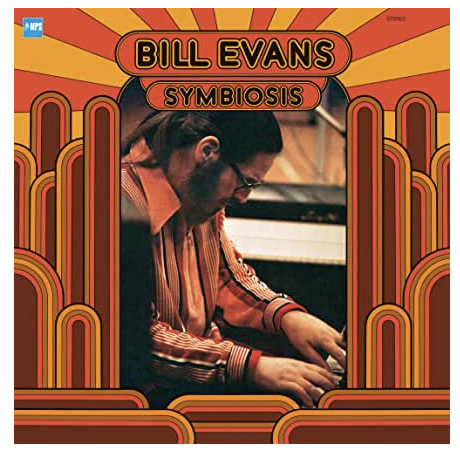
Today’s writing soundtrack is an elegant 1974 record by Bills Evans called, Symbiosis. It is some of the best of jazz and classical (read: orchestral) music I have ever heard. It is melodically and rhythmically evocative of both times and places I’d like to be. I know a pianist who doesn’t think much of Bill Evans’ work from this era, but I think it is wonderful. Maybe you will, too, so take a listen.

Thanks for dropping by.

January 13: My friend & favorite watercolorist

January 11: HBO’s Luck

I cannot tell you why I found myself thinking about HBO’s doomed series, Luck, while I was out on my morning hike. Wait a minute, I do remember why. I was listening to a song that was used in the last episode. For some reason, Luck must have been cursed from the outset. Much of it was filmed at nearby Santa Anita Park. And, sadly, the horrible race horse deaths that plagued production of the series have continued in the years since. I don’t believe anyone knows precisely why. It was not a perfect series, but it had some very interesting elements, all of which were coalescing as the series reached its untimely end.

As I was making my way down the hill, listening to the song, I thought about writing a letter to Dustin Hoffman. I mean, what the hell is he so busy doing lately? I thought he might be interested in doing a movie version of Luck (that I, of course, would write), since I believe he was one of the main producers of the series. He’s likely had a lot riding on its success. I thought that pretty much everyone involved with the series were still alive and working. But, then I thought of the character of Gus Demitriou who was played beautifully by Dennis Farina and I remembered he died way back in 2013 at the age of 69.

That really slammed the door on my idea because I felt Gus was the heart and soul of the series. I actually met Dennis Farina once on the golf course. Man, that was a long time ago. I was playing golf with my brother John and my father, that shows that it was at least 14 years ago and obviously more. We were playing at a now defunct golf course out in west Simi Valley called, holy shit, I can’t remember the name! Well, I guess it doesn’t matter but in a way the make up of the course influences the story. Oh, I remember! The name of the course was Lost Canyons. A better name might have been Lost Ball Canyons. I would guess the average player, across handicaps, lost between 6-10 balls over an honest 18 holes. It was bad enough if the air was calm and if it was windy, forget it. We were playing the 18th hole and getting close to the green when suddenly a golf ball bounced up and smacked into my golf bag which was standing on the fringe between the fairway and the rough. I looked back up the fairway to see a man riding in the golf cart alone, waving at me.

“Man, I am so sorry,” said the man as he came to a halt. “Are you Ok? This is my first time here and this place kicked my ass. I’ve lost a ton of balls today. I had to buy a fuckin’ dozen at the turn.”

“No problem,” I said. “Your ball didn’t even come close to me. Anyway, I have you beat on lost ball stories.”

“What do you mean,” asked Farina.

I shook my head and said, “You know that par-3 17th? Well, I lost my birdie putt on that hole.”

Clearly incredulous, Farina said, “What the hell do you mean you lost your birdie putt? How the hell do you lose a putt?

“Easy,” I said. “I had a 20 footer up the hill, should have broken about two feet left. But I got all excited about it being for birdie and I smashed it right off the back of the green down into the canyon. Never saw it again. Unless you want to climb down after it I say it’s lost.”

Farina gave me a good belly laugh and said, “Damn, I wish I had caught up with you guys earlier!”

He seemed like a genuinely good guy and I really enjoyed him in that role.

Even I could magically convince David Milch, Dustin Hoffman and the gods at HBO to make the movie, I wouldn’t want to see it without Gus. I would say don’t bother, boys.

By the way, the song I was listening to was Otis Taylor’s Nasty Letter from his 2003 record, Truth Is Not Fiction.

Just buy it, it’s fantastic.

January 11: HBO’s Luck