Why book clubs are an abomination; not really, well, kinda.

I was out to lunch when someone mentioned how the pace of her book club was making her forget what she had read.

She said, “I vividly remember books I read in high school and college just fine but I don’t remember book club books from just a few months ago!”

I said, always trying to be helpful, “That’s because book clubs are an abomination.”

“Hey,” she said. “I really love my book club. You suck.”

Who invented book clubs anyway?

I did wonder about that but in the end the answer doesn’t matter. Book clubs are here to stay and people (think) they like ‘em. And, isn’t liking something what life generally and reading specifically is all about? Could be, but there’s something else going on here. All of us have easy access to way more books than we can ever read. That’s not always been true, of course. Back to lunch. Before being canceled on charges of anti-book club heresy I tried to stimulate a moment of deeper thought when I asked, “How many books would you guess Shakespeare read over the course of his 52 years?”

Dozens, possibly hundreds but unlikely thousands as so many of today’s avid readers consume. Yes, I said consume as humans consume food as part of an endless cycle of food in / waste out. Imagine a food that continues to nourish over weeks, days and years. In reading, those are books remembered, returned to, quoted and treasured. Book club books are destined to be forgotten, like an unsubstantial meal that provides little if any sustaining nourishment.

The same effect, also driven by increasing ubiquity, also happens with music. Casual listening drove omnipresent music first into elevators and now Spotify. Now, think about the last series you binge-watched, unable to be sated, uninterested in waiting, until next week before devouring the next episode. Have you ever started what looks like an interesting series only to realize somewhere during the first episode that you’ve already watched the series from beginning to end? For all of this to work, an endless stream of media has to exist and it does. So, we consume more but with less and less genuine respect for what is being created.

Reading and listening; are they the same?

Of late, a book reviewer at the New York Times wrote a piece telling the world she’d come to fully embrace audio books over actual reading. I could not fight my way through the entire article. When she went so far as to contend that listening to a book was the same as reading I had to close the virtual pages of the newspaper I was reading. Can you imagine being a teacher of first or second grade students, trying to teach your students to read. Then, imagine an indignant parent scolding you for requiring students to learn to read when even reviewers at the New York Times prefer listening to reading. Why should my child bother to learn to read?

By the next morning it struck me that the reviewer was actually minimizing both reading and listening by unwisely equating each. Do I actually have to say that reading and listening are two different processes? The reviewer went on to sing the praises of audio books because she could listen while she knitted, crocheted, wove baskets or whatever. Full disclosure, I’ve done the same except I’m doing something truly constructive. Namely, practicing my tennis serve. Still, I am not reading while hitting my out-wide slice. I am listening and listening is an active and rewarding process.

We can dig a bit deeper by thinking about music. We nearly always listen to music but some cognoscenti read the musical score while listening which might give insight as to the performer’s fidelity to what’s been notated onto the score. That kind of listening is quite intense and so is also uncommon. Listeners to audiobooks may like or dislike the narrator’s voice. But hearing the narrator’s interpretation doesn’t bring anyone closer to a genuine — and certainly not a dispositive — understanding of what the author meant.

As an aside, I just finished an audio book called Meet Me at the Museum by Anne Youngson. It’s an unusual novel. The entire book consists of letters sent back and forth between a woman and a man. What’s interesting? Well, I think whatever quality exists in this book is primarily conveyed by the female and male readers, one an English woman and the other a Danish man writing in English (or someone doing a fair impression of a Dane speaking English). The point here is only that interpretation is an art, whether it is the interpretation of words on a page or musical notes on a score.

My hope is that we will all read and listen and watch with greater care and deliberation. Sensitize your own preferences when it comes to the media you consume. Look within rather than relentlessly asking others to recommend books or music. I think part of what makes art memorable is, sometimes, the effort we put into finding it. And, importantly, once you find something, read it again as you would play a song you have come to love, again and again. Read some of the dialog and narrative descriptions out loud. For just a few minutes, you be the narrator. Seek to treasure what you consume and it will nourish you now and tomorrow. Put another way, read less and you may find that you enjoy reading more in addition to remembering more of what you read. No, you don’t have to quit your book club but you might be a better reader if you do.

Why book clubs are an abomination; not really, well, kinda.

My Mom and NASA STS-51I

I can only recall one time my father wasn’t willing to take my mom somewhere. It was 1985 and my mothers wanted to watch Space Shuttle Discovery land at Edwards AFB. Discovery’s flight lasted 7 days, 2 hours, 17 minutes, 42 seconds and it landed on September3, 1985 at 6:15:43 a.m.

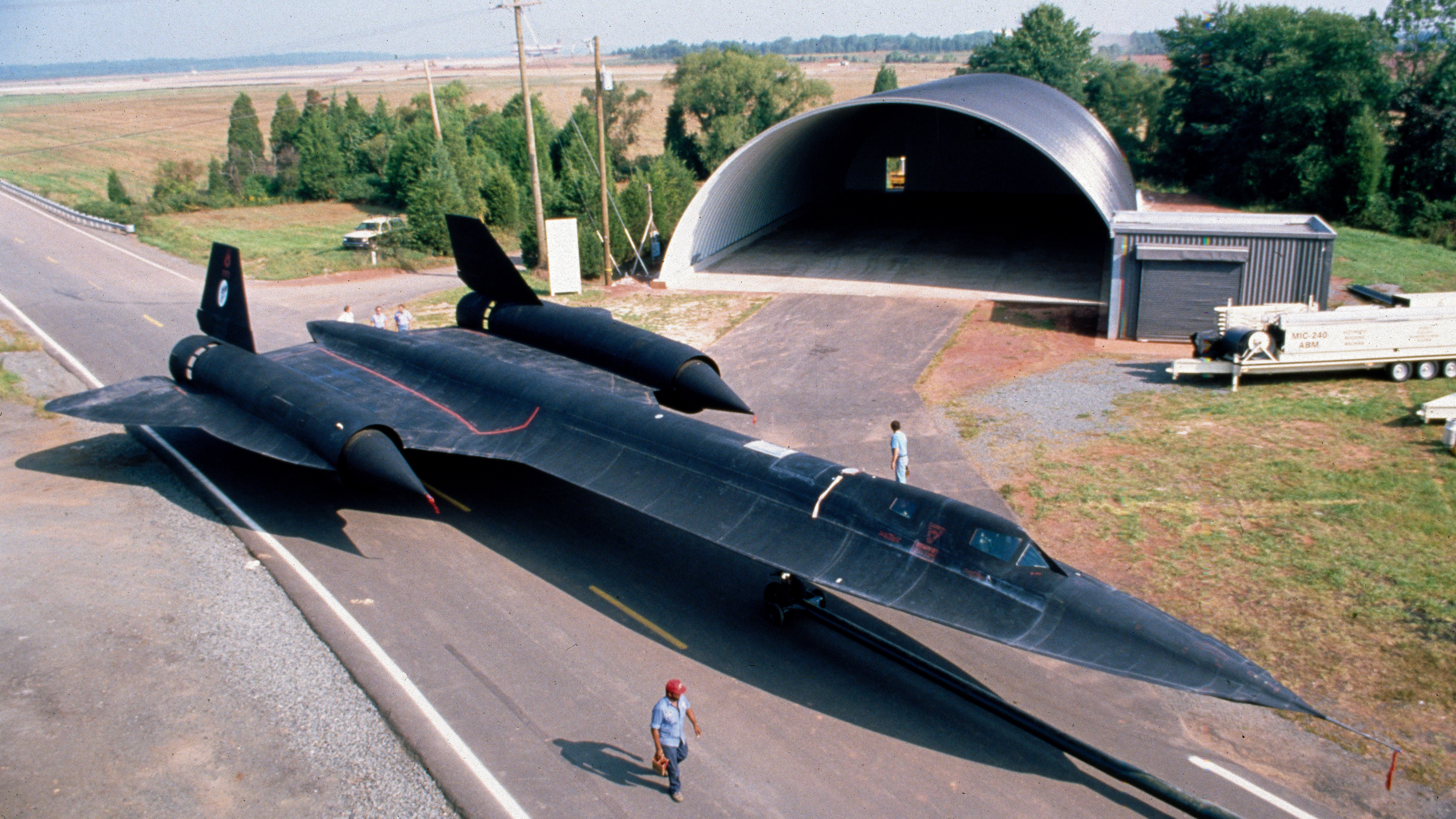
But that’s the end of the story and that’s almost never what I’m all about. Now I, like my father, wasn’t crazy about getting up at Oh Dark Thirty but I could see my mom really wanted to go. It wasn’t surprising. My mom liked to watch construction work being done. She liked watching the Lockheed SR-71 under full afterburner at the airshow at Point Mugu.

A Lockheed SR-71 under full afterburner.

In fact, my mother told the story of the sights and sounds of the Blackbird many times after the show. She just loved stuff like that.

A retired Lockheed SR-71A (Blackbird, s/n 64-17972, A19920072000) photographed on a road in front of the Smithsonian National Air and Space Museum temporary Blackbird storage hangar at Dulles International Airport, Chantilly, Virginia.

On that early autumn morning, I picked my mom up in my 1981 Nissan Diesel pickup truck and we made our way to the high desert a little before 4 a.m. Topanga was quiet but not empty and a early-season Santa Ana was working its way south. 

Nothing, and I mean nothing, sounds and feels like a diesel cruising on a freeway in the dark. There’s a quality to the pitch and rhythm of the engine (in this case the Nissan SD-22, originally designed for use in forklifts) that makes it feel steady and inevitable and loyal as it powers the truck forward into time and space. Somehow, someway, a cruising diesel constantly reminds you that you’re truly going somewhere.

You can feel it in your bones.

We picked up the 405 and left the 118 behind and all was still dark. Sunrise was at 6:27 a.m. and Discovery was supposed to land fifteen minutes before then. Traffic on the 14 was a little heavier going south than north. It felt like we were the only ones heading toward the dry lake even though I knew we weren’t. We rolled on, mostly in silence, my mom commenting from time to time about the way the mountains had been cut to allow the highway to go through.

I don’t remember where we got off the 14. There was no GPS and I don’t even think we brought a map. We only had our reckoning and that turned out to be enough. Looking at a map, I will guess we got off somewhere around Rosamond before we headed east. Finally, we saw a small collection of cars and campers sitting on the side of the road, south of what we could later see was the dry-lake runway itself. I picked a place to park and we got out of the truck and stretched our legs. Then, we waited along with a few hundred others who huddled in small groups in the pre-dawn chill.

A few guys further up the road scanned the sky with binoculars, while trying to guess the direction of Discovery’s approach. Finally, in the very quietest moment, a boom rolled over the desert. Seconds later, a cheer rose from the faithful and everyone looked skyward to catch a glimpse of the shuttle on its approach.

Finally, we could see it. It didn’t look much like an airplane. As it traveled across the indigo sky, it also descended, very fast. It looked very much like a stone falling and it was hard to imagine something falling so fast could ever slow enough to make its way safely down the runway. 

Finally, Discovery made a huge, soft turn and began to approach the dry lake from the east. Now the shape of Discovery could be clearly seen as it lined up perfectly above the center of the runway. Discovery was no more than a few hundred feet away as it passed us, close enough for us to see its red and white parachute billow from the rear of the fuselage. The crowd whooped as it went by and once it was stationary, far in the distance, people began to look at one another, making sure everyone had witnessed what they had experienced. That’s an interesting kind of sharing, seeing something so noteworthy and, for my mom and me, unique in all of our lives. A couple years later, I would again stand at Edwards and look to the sky as Chuck Yeager broke the sound barrier in an McDonnell Douglas F-4 Phantom II on the 40th anniversary of his 1947 flight in the Bell X-1.

But on that day in 1985 I thought only of my mother and how lucky we were to share such an amazing experience. My mom turned to me and grabbed my arm. “Paulie, I’m so glad we saw this!”

My Mom and NASA STS-51I

Throwing away an idea

One of the reasons I insure my now-aged 2006 Mini Cooper with Hagerty is the ongoing enjoyment I get from reading their superb Drivers Club quarterly magazine. First of all, the issues are printed. This fact makes me think think back on the USGA’s defunct magazine, Golf Journal, surely one of the best golf periodicals ever and also a stinging example of the USGA’s lack of vision and why golf sucks. I have collected a handful of year’s worth of Drivers Club issues. I keep them in wooden magazine holders I’ve owned for decades. When the dedicated holders got full about a year ago I decided to purge the least-interesting past issue whenever a new issue arrived in my PO Box.

Wednesday is happy hour day (I say day because my friends at Institution don’t do HH every day but only on Wesnesdays and only from 4-6pm. Geez.) at Institution Ale and I made sure to bring my reading glasses so I could devour the issue in a hop and sunshine-augmented vibe. The issue was a little disappointing but I still read most of it. By the time I finished my one-and-done ON PINS & NEEDLES (Session IPA) I had closed the magazine, done with it and sure it was the latest issue not to make it into the vanishing space of my wood magazine holders. By the way, I don’t usually care for session IPAs but this one was excellent, while not at all like being hit over the head as are so many of the big-boned, broad-shouldered IPAs I typically enjoy. After leaving my empty glass on the bar I noticed a trash can and unceremoniously dumped the current issue of Drivers Club.

Then, I forgot all about it.

Until this morning.

While on my 30-minute drive to tennis I made a couple voice memos, two of them actually. After I finished the second recording my mind flashed to the day before and the trashed magazine. And then I remembered the largely subliminal urge that caused me to throw the magazine away.

There was an article in the magazine about a guy who set out in his crappy old Mitsubishi pickup / camper to visit some of the environs of California’s own, John Steinbeck. Something about the guy’s set up irked me. I may not have appreciated the Steinbeck works he focused on, especially Travels with Charley, but there was something else that kept me from reading an essay that might have been right up my reading alley. I know Steinbeck’s work well, having read all of his works (even his superb short stories) with the exception of East of Eden. I could easily do what this guy did (absent the mini-truck camper). What afflicted me was simple road trip envy.

Yes, we recently returned from my family reunion in the midwest.

Yes, we extended our trip with a three-day visit with my dear friend MIB in south-eastern Michigan.

And, yes, we hope to make it to Sacramento sometime this fall.

And, that was enough when it comes to travel for a while.

But, a true road trip is different. I haven’t been on one of those for years. To me, road trips differ significantly from simply traveling by car. One of the main differences is a lack of advanced hotel/motel reservations. This is especially doable when on one’s home turf, which I am whenever I am in California. Unless I’m way north of Redding, I’m more than happy to head for home if I can’t find anywhere to stay. A big challenge for me is finding places in California I’ve not been before or places I’ve forgotten about or would actually like to visit. A friend of mine just got home from riding the historic Skunk Train in Fort Bragg. Fort Bragg is a weak maybe while the Skunk Train is a big probably not.

Even though I’m not excited by the prospect of riding a near-silent rail car I would like to spend some time in California in the 300+ miles from Fort Bragg to Medford, Oregon. Here I am thinking of the Trinity National Forest and the Six Rivers National Forest.

But now the calendar says September and that makes me wonder when we will have the chance to take another road trip.

I hope it’s soon.

In the meantime, I wonder if I can find a copy of the current issue of Hagerty Drivers Club on Ebay?

Throwing away an idea

Now that was a good swing.

I hope my brother was recalling a time I said that about a golf swing of mine but I can’t be sure. Even if it was said about me it’s certainly not something I said often during my decades of playing golf. My brother was really talking about the fact he hadn’t actually played golf in well over a year, though he owns a mountain cabin only a few hundred yards from a humble 9-hole track, his home course.

Instead, he’s been hitting plastic golf balls around a course he’s laid out for himself on a little patch of grass near, but not on, the golf course. The plastic balls have helped my brother shift his focus to the quality of contact, the rhythm of his swing, and the completeness of his follow through. He said, “It reminded me of one time when you said, ‘now that was a good swing.'” I remember pulling of a few of those but not enough to keep me on the course. The golf courses of California haven’t missed me and I haven’t missed them much either.

I’m not sure why my brother is not playing his home course but I’m happy he’s managed to create his own game. At its core, golf is one of the most made-up games possible. You have the course, the clubs, the ball, the hole, all came from very humble beginnings. The course was a pasture, the club a stick, the ball a stone and hole a hole, but one dug by a rabbit or some other burrowing critter. Now, the improvisation is pretty much over as evidenced by the supernatural condition of today’s golf courses, even those that host the once-scruffy British Open Rota.

It reminds me of why it was so easy to turn away from golf. It simply became too hard to play enough golf to support what would never be more than a serviceable game. Cost was a consideration. Pace of play never got faster, only slower. Those of you who have read Tennis thing know that two of my brothers continue to drive over eight-thousand miles a year just to play golf twice a week at their club.

Now I find myself living a few hundred yards away from a golf course my father liked to play when it was simply too hot to tee it up in the valley. The track has seen better days but I remind myself I’ve not played it in at least forty years. I recently heard it’s been sold but if it has there’s no evidence its new owners have any great ambitions for it. I walked onto it a few times over the last couple weeks, just before dark. My fondness for the dim quiet of golf courses toward the end of the day is still keen though my interest in playing is not. It’s easy to see why the routing of the course worked and what its designer, Ted Robinson, Sr., had in mind when he laid out parts of it. It’s a modest golf course but not without its charms even in its current state of neglect.

I know what you’re thinking; am I tempted to sneak onto the course and play a few holes? I cannot lie, I’ve joked about it to some of the locals and it would be easy. But, I think I’d rather join my brother on the course he’s created near his mountain cabin. It would remind me of all the times I played golf with my father in his backyard as the sun drew low in the sky.

For my brother, CJC.

Now that was a good swing.

Confusion, anger and the sublime at McDonald’s

I am at McD watching the long, slow flow of customers who want the kind of help they’re used to but is no longer available. Phase 1 looks like confusion as it comes to the faces of the 40-something and 50-somethings, mostly males.

Do I stand at the counter and wait?

Should I call out?

Pacing across the small space can happen next followed closely by a look of exasperation.

Finally, anger shows up often with an awkward attempt to find others who are suffering similarly in their attempt to buy a Senior Coffee, even though it exists only in their memories.

Nothing works anymore.

You can’t get anything.

Then I realized that we all exist inside of a rapidly changing system. All includes the McD employees and even the people who conceived, designed and put the current system into action. Nearly all of them can remember at least a fews days before kiosks and in-app purchase came into being and fast food meant a uniformed high school kid lashed onto a computer terminal. That kid used to be the tip of the the sword, the singularity where all customer need confronted McD’s ability to accommodate or refuse it. Today, most employees are on the move and no one appears to be slacking off although some move with significantly more determination and purpose. I am talking about teenagers here.

High school age customers know the drill. A few order by app but but most seem to prefer the kiosk. That makes me wonder how they figure out who owes what and who is paying. Somehow it all evens out in the end. The creators of the new regime, and here I resist using the term corporate overlords because I realized that everyone, even the designers and engineers who created the new systems are, themselves, merely reacting to and adapting to continuously shifting sands. No one knows, before it’s tried, if self-check, in-app purchase will work and deliver us all safely to fast-food paradise.

But, back to anger, though sadly, to be sure. Being confused is dandy. I’ve been there. But, letting confusion slip into anger that’s dumped on a 17-year old making minimum wage is totally fucked up. There’s this one kid and I say kid because I honestly cannot say if the employee is a he, she or a they. Because of the employee’s voice I am going to refer to her as she. She is delightful. Big, black framed glasses with curly brown hair working its way out from under her McD baseball hat she has to wear. She seems to smile warmly at everyone, all the time. She is always pleasant. Everything is no problem while her smile goes from warm to warmer. If a smart lawyer saw her, he’d hire her simply for her pleasantness. Pick her up and drop her into a law firm and she’d be a perfect receptionist. Clients would love her. She’d make oodles more money and be on her way to whatever profession she might choose. Yet, who knows? Maybe McD is giving her a different kind of start toward the same kind of eventual destination.

I hope this.

What really bothers me, though, is the thought of some bilious adult, likely a man, being shitty toward her, the kind of shitty that takes the warm glow from her smile.

Confusion, anger and the sublime at McDonald’s

914 part 1 is done!

It will be up at Amazon within a couple days. When it’s live I will put a link here.

914 is part of a collection of short stories I had hoped to finish by now. Alas. My new plan is to release each (or small mini-collections) while I continue to work on the collection. This will give me time to revise the stories individually before dealing issues related to the collection.

The collection will be available both in ebook and on paper, the individual stories are electronic exclusively.

A note my workflow evolution. I composed 914 in Apple Notes, as always. But, this time I imported the copy into Pages so I could eventually export it to EPUB. Who knows how long KDP will allow EPUB? No matter, I’m taking advantage for now.

A small lesson learned was that EPUB doesn’t support headers or footers, so no pagination. This makes sense when one considers the resulting copy has to be reflowable.

Pages is not especially intuitive. I can imagine a day when it will be even more like Word. But, it’s manageable and that’s all I ask for today.

914 part 1 is done!

My short story 914 and the cover ChatGPT has been working on.

I’ve finished Part 1 of 914 and I’m pretty happy with it.

It seems our friends at Amazon’s KDP have given up on their MOBI file in favor of their new creation, KPF. For a writer, KPF is just the latest hurdle on the journey to getting what our work onto the KDP platform, but who am I to complain?

Then I thought of something. I composed 914 in my usual app, Apple Notes. Then, after reading about the demise of MOBI on March 18 I noticed that KDP will grudgingly accept an EPUB file. I recalled Apple’s Pages allowed for export to EPUB so I decided to export to Pages and then to EPUB. Part 1 of 914 is long for a short story (about 6,000 words) but simple in terms of layout. There are no sections or chapter headings and I don’t care much about widows and orphans for something that won’t appear on paper until my entire short story collection is done. So, I dumped the 914 copy into Pages, worked out pagination and a header, and now I’m down to editing. If the resulting file is really cool with the wise algos at KDP then I’m cool, too.

I had some ideas about the cover but I really don’t want to spend too much time on it. 914 is only one of a collection of short stories I decided to publish by itself. Why not? There’s no downside and it seems wise to keep up with how KDP’s machinery works as well as I can. Enter ChatGPT. Chat is all in and came up with two promising ideas in the snap of the finger. After I made a few corrections Chat said:

Great choice! I’ll modify the image to include a classic blue-and-yellow California plate with a slightly obscured number while keeping the overall aesthetic intact. I’ll get that done and share it with you shortly. I’ll start working on the modifications now. Once it’s ready, I’ll share the updated version with you.

And then, nothing. When I reached out this morning to check progress Chat said:

Good morning! I haven’t started editing the image yet, but I’ll get to work on it now. I’ll update you as soon as it’s ready!

At least he’s positive and enthusiastic. Who knew working with AI would feel exactly the same as working with a living, breathing artist?

My short story 914 and the cover ChatGPT has been working on.

Who knows? Maybe the windows rolled up.

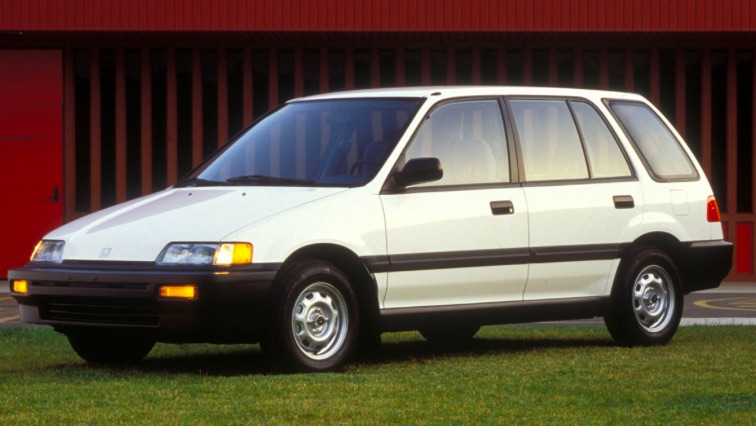
It’s been a long time since I’ve seen a Honda Civic Wagon from the mid to late 1980s. It’s it was slick and aero to the original Civic Wagon was square and boxy.

It is said that the Chrysler PT Cruiser was based on the Civic’s functionality though obviously not on the Honda’s looks.

That the Civic was a better and more practical car, there’s no doubt. And I will say no more about the PT Cruiser. It is best forgotten.

No, this is about the Civic Wagon I saw today. I wanted to take a photo of it but somehow it felt too intrusive.

It was, spectacular.

It was in Ventura and it was white. There was a single surfboard on a nicely done roof rack. I could see there had been some “modifications“ on the inside. The backseat was gone and the passenger seat had its seat back removed. I could see two long fishing poles going from the front to the back where a passenger, in a different time and place, might have sat.

I wondered to myself, who owns this?

Other than the roof rack, it appeared all original. The rims were steel Honda 13 inchers and the minuscule tires looked better suited to a golf cart.

I just had to see who owned it. I thought that I knew exactly what he looked like, but I had to see him for myself. And then there he was. He was probably a little younger than me but he managed to look older. He was lean and gray with a hat on his head and to-the-knees board shorts. He loaded something into the back before getting into the driver’s seat.

The little Honda, of course, started instantly and ran smoothly, like any Civic. As he pulled out of the driveway, I could see his rear license plate, a California plate, of course, was even more faded than the car’s paint.

Both owner and car were spectacularly OG and legit. Yes, there is a part of me that wishes I had taken a photo of the both of them. Who knows, he may have enjoyed the attention. On the other hand, it would feel, to me, like disturbing a wild animal in its natural habitat. Who knows? Maybe the windows, which were all rolled down, still rolled up? As if it matters.

They don’t make cars, or even many guys, like that anymore; full of purpose and devoid of pretense.

Who knows? Maybe the windows rolled up.

A checklist for your personal golf detox

I You do not suck because of your golf swing.

Great. I’m already amending my thesis. You do not suck because of your swing. If you have a handicap between 12 and +1. The fact is you don’t suck at all compared to most people who consider themselves golfers let alone those non-golfers who know you play. No, to them you’re already good. It’s only you who thinks you suck and believes that if your swing was better you’d be better.

II Your game will not be helped by a fitting session, no matter how expert. 

Your game will not improve because of a new driver, fitted shaft or fresh wedges. Flightscope is not your friend or your savior. It’s a pusher. Avoid being an addict.

III If you have been playing for more than 5-7 years, and you are over 45 years of age, you are probably done improving.

Live with it. Embrace it even. Sorry to burst your bubble but you’re also not going to become a faster runner. Consciousness of limitation is not causal to a limitation on your enjoyment of golf or any pastime.

IV The rare, rare, rare exceptions to point III prove the point.

Feel free to rub my nose in it. Send me stories about all the 45+ year olds you know whose handicaps have dropped from 10 to 5 or 4-2. 

I’m waiting.

V Here’s an old relationship rule that applies perfectly to golf.

If you’re in a challenging personal relationship ask yourself this: If nothing gets better, would you still continue with the relationship? The genius of this question is this: If you can hang in there with no improvement, any improvement will make the relationship (and your life) better and more enriching. Imagine how happy you would be about your golf game if you adopted this mindset.

VI The golf industry is not you and you are not the golf industry.

Why does this obvious fact matter? Because it should not matter to you how far the very best players in the world hit the ball or even the equipment they sometimes use but always endorse. Their spin rates shouldn’t matter nor should any other specification of their performance.

VII Last year I attended the Women’s US Am at Bel Air CC.

I overheard no fewer than three men muse about the distances the top four players achieved off the tee. 

Each said a variation of, “You know, they’re so smooth and their clubs are totally matched to their games.” 

As if… 

Finally, loosened by SoCal sunshine and two on-course beers I spoke up. 

“That’s totally wrong but you won’t like the truth.” 

Incredulous male golf fan: “Oh really, and what’s the truth?”

“The truth is that the four players on the course today are elite athletes. You and I are not.”

VIII You suffer because of denial and a lack of honesty about your golf goals. 

Today I asked a good friend who is a superb athlete about his golf goals for the rest of the year and beyond. He spoke of a battle with the course and a battle with himself. I thought to myself; what happens when we are battling ourselves? I think all of us, the yin and yang and the golfer, lose.

IX For the professional and the high-level amateur golf is a battle, with an opponent and the field.

Amateurs should celebrate their general freedom from these battles. They should celebrate the game for the sake of the game. Being outdoors for the simple joy of being outdoors and the fun of spending time with their companions. 

To quote Jones, “Golf is a game best enjoyed with the convivial companionship of close friends and loved ones.” 

Amen, Emperor Jones.

X Detoxing from golf is unlikely not impossible.

I’ve found my golf detox through another game that (so far) eschews unreasonable expectations, a game that emphasizes playing the game rather than a discrete athletic motion regarded in isolation. You can detox your golf game in a way that will maximize your enjoyment of the game. 

The question is, will you?

A checklist for your personal golf detox

Please, go ahead & judge this book by its cover!

The sequel to my 2019 novel, John J. McDermott & the 1971 U.S. Open, is finally for sale at Amazon.

I think I bettered the six months it took John J. McDermott & the 1971 U.S. Open to make it from finished manuscript to published but not by much. It’s a great feeling to be finished writing but a lousy one to anticipate all of the annoying steps that have to be taken before anyone can read your book.

Right now, it’s eBook only. An issue with the cover formatting undermined me at the last minute. Hopefully, you lovers of paper books will be able to grab a copy later in the week.

In the meantime, Cottonwood the eBook is waiting to be read.

Please, go ahead & judge this book by its cover!