Alba Escayo

Let me tell you about being lucky.

I have been lucky enough to have the covers of my last three books created by Alba Escayo.

Alba holding her girl and a copy of
JJM & the 1971 U.S. Open

No, we have never met. 

No, we have never spoken on the telephone, or even by Zoom. 

Yet, somehow, I feel that I know Alba. And I mean beyond her fabulous artwork. Writing, and especially writing books, is a rather lonely and isolating process. And, when you’re done writing, it always seems to come as a surprise that a book has no physical presence or look, beyond the words on the page.

I always respond to that moment with a slight twinge of panic. You see, every writer wants his work to be good and to look good. Some writers (and that includes me) want their words to both read nicely and also to look correctly , for lack of a better word, on the page. When words are kept together or held apart by a stylistically correct layout, they help to encourage the right spirit and heart from the reader. And, once a writer is aware of this fact, he simply can’t commit words to paper without caring about how they look.

But, the panic that I referred to earlier has to do with the cover. The person who said that you cannot judge a book by its cover was right and wrong at the same time. Especially for the self published writer, I think the connection between the writer and the cover artist is nothing less than critical. if the artist doesn’t know the writer, and doesn’t know the book, I just don’t see a way for the artist to create a cover that truly works with the book and its story.

The other day, I was trying to remember when I first crossed paths with Alba Escayo. It was a very long time ago. The subject of the book was golf. And, when I first heard from Alba she wrote of her fondness for her countryman, Seve Ballesteros. Reading about her passion for golf, a game that at the time I don’t believe she had even played, gave me great hope for the project. Later, when I saw her initial sketches, I knew she was perfect for that project and all the ones that will come after.

An early version of Cottonwood’s cover

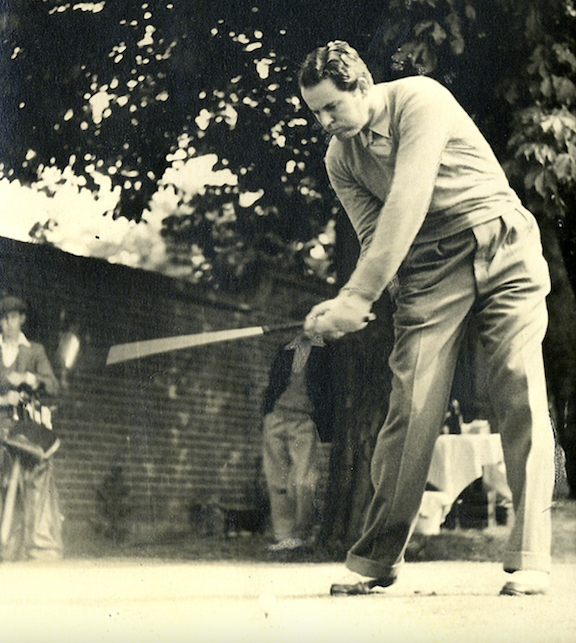
Alba and I have created two books that revolve around golf. The first was John J. McDermott and the 1971 U.S. Open and the second was Cottonwood. Neither book would be as good as it is without her contribution. Alba’s covers made the book come alive before the reader even opened it. There is no way to place the value on the initial impact that a really great cover can give to a book so I won’t try.

There is also no way to place a value on Alba’s ongoing friendship or her endless patience with my sometimes peculiar visions, but I value both greatly. The depth and sensitivity of her art is fascinating. I can give her nothing more than a few words and get back beautiful images that make me want to use all of them rather than choose one over another.

The sad remnants of the Racquet Club of Palm Springs courtesy of Google Earth or something like it

Tennis thing is an unusual book. But, I told you how lucky I am when it comes to cover art. It turns out that both Alba and I took up tennis at about the same time, she and her girl on the clay courts of Spain and me on whatever SoCal hardcourt will put up with me. For Tennis thing I gave her an odd starting point, the long-abandoned Racquet Club of Palm Springs. The club first opened by in 1934 and it was owned by actors Charles Farrell and Ralph Bellamy. I’m tempted to go into a lot of boring detail about the club and its history and sad decline but I will resist since I’m just trying to show how little I can get away with giving Alba and still get fantastic artwork.

From that visual hunch Alba came up with this:

No, this is not quite the final version of the paperback’s cover but you get the idea. How did she manage to get the precise feel of my book? I will never know yet I am ecstatic with the result. It makes me want to write a better book next time just so I can work with Alba Escayo again.

There’s nothing better than being lucky.

Alba Escayo

Tennis thing: “Paulie, you would love tennis!”

I first wanted to play tennis when I was eleven. But, I didn’t actually play, and neither did any of the 5th-heading-to-6th graders who were unlucky enough to take tennis in summer school in 1971. Shit, I even got a racket, a Pancho Gonzales model I got in exchange for two books of Blue Chip Stamps. I also had enough dough on hand to buy a can of Slazenger tennis balls. My dearest piece of tennis swag was the neat little ball pouch my mom made for me. Rather than lug that silly, cylindrical tin can around I carried my three new tennis balls in the pouch my mother made, complete with drawstring fashioned from an old venetian blind pull-cord.

Rockin’ for sure. 

The only problem, as I mentioned, was that we never hit a ball and the class was unceremoniously cancelled after the first session. It seems no one realized a tennis court needs a net for the game to be a game. Sure, we could have banged balls against the handball court that stood a few feet away but no one thought of that. So, the Spalding tennis racket went home and our springer spaniel, Bo, got to shred the new Slazengers to pieces. There’s always someone who’s happy with an outcome.

Fast forward to late summer of 2023. I’m 62 and I’ve still never played tennis, yet a coalescence of forces somehow got me started in the game. First, was my friend Michael who early in our largely-telephonic relationship would tell me, “Paulie, you’d love tennis!” 

Where Michael got the nerve to call me Paulie I will never know. 

The second force was a spur-of-the-moment stop at nearby Calabasas Tennis & Swim Center. I’d been thinking of taking swimming lessons but nothing had panned out at nearby Pierce College. Indoor pools (like those at area YMCAs) lost their appeal sometime early in the pandemic. After the visit, I found myself checking out the club’s website when I noticed a list of tennis coaches. One name stuck out, I’m not sure why. Maybe it was the first name, Caesar. Heck, I’ve always wanted to know someone named Caesar. Plus, he’d worked with wheel-chair players. I figured anyone who could do that successfully had a decent chance with broken-down me. I sent Caesar an email and waited— for about an hour. Turns out he had time the next day, Monday. Talk about the ball being in my court. I thought it over for a minute before I fired back an email saying I’d be there.

I was ready, if ready meant wearing one of my best golf polos, a pair of khaki golf shorts and my old Nike gym shoes. Caesar was kind enough to offer the loan of one of his cool Tecnifibre rackets. My first lesson was the end of July and it was hot, just the way I like it. One of the unexpected yet best things about taking up something like tennis at my age is this: I had absolutely no idea what to expect. Would I even have a chance to swing at the ball during my first lesson? I remember stories of John Wooden spending the first practice going over the proper way to tie a basketball shoe;  a method that prevented blisters, turned ankles and laces that untied themselves during a game. Maybe that would be how it was. Another nightmare vision stressed running, more running than I could do at 62 and maybe more than I could have done at 42. Caesar is a no-nonsense kind of guy with an outwardly easy yet somehow intense brand of focus. Caesar’s racket in hand I stroked short forehands from the forward-service line as he hit the ball lazily back over the net. I was overjoyed when my first swing sent the ball right back to him. Amazing.

Better than the result, an outcome wholly irrelevant when you consider we weren’t playing a game, was the feeling. It felt good. I could feel the ball and the tension of strings come together before the ball made its way back into Caesar’s court. That was only a few months ago, in late July, but after only a few more swings I was hooked. It wasn’t as if every shot was perfect, or even successful. There was some magical combination of my motion and watching the approach of the ball and unconsciously aligning my body in a way that gave me a clean cut at the ball that grabbed me right away. Michael was right.

Every few balls, after I’d swatted a ball into the net or fouled one off into the court adjacent to us, Caesar would stop long enough for a chat at the net. Those breaks were a relief, a chance for my arm to recover and for me to catch my breath. Caesar always, and I mean to this day, many, many lessons later, always starts by saying something positive before moving on toward something that needs correction, like my forehand follow through.

Caesar’s positive style is still perfect for me, especially with my well-developed ability to be critical of myself. The overall vibe of the club was similarly positive though it took me a while to specify everything I experienced and saw that made it feel that way. First, and this was unexpected, was the presence of actual women. I mean, there were women everywhere, I’m guessing at least half of the people taking lessons were women and an even greater percentage of those who were playing, usually doubles. There were young women, well-tended middle-aged women, little girls and one woman, who had to be at least 75, carrying a Babolat bag that must have weighed at least half as much as she did. 

Being on the tennis courts felt like being out in the world. It was nothing like being on a golf course where 95% of the players were just like me; late middle-aged men. In golf, women and girls are so much in the minority that they always stick out in a way that disadvantages them. But in tennis, they all seemed so at home, so empowered, so much as if they belonged, which they do. Being better for them makes it better for everyone, including me. Even better is the vibe that extends to the way lessons are given. Walking by the courts you can hear students and coaches chatting with each other, sharing a laugh at shots, both good and bad. And, usually, student and coach are playing some approximation of tennis itself. This is almost never true in golf, where the instructor usually stands, arms crossed, observing the student and commenting on an occasional shot.

Stifling. 

Even though I was gassed after my lesson I could feel a connection to the game I had never felt before, except in baseball. It wasn’t like I was great at it, I’m still not. It was the way my motion and flight of the ball and the eventual meeting of the ball and the racket brought a feeling that was just right. Now, when it comes to tennis feeling right it’s not exactly feeling. And, while some elements of tennis do feel natural there are a myriad of details to monitor to make the shot come off, and not all of those come easily. Example? The toss that precedes a serve. More on that later.

Occasionally, in the same way one’s thoughts might drift toward the consideration of mortality, I wonder what might have been if I had turned to tennis when I was 52 or 42 or 32 or 15? It’s fun to think about the rackets of each era, especially the ones that were used when I was 15 in 1976. The Pancho Gonzales model I had when I was 11 would have come in handy, I suppose. But, I manage to keep those feelings away and to stay in the moment, as tennis demands.

Every time I walk onto the court, I feel lucky, and that’s a gift in itself.

Tennis thing: “Paulie, you would love tennis!”

Tennis thing is done!

I’m very excited that Tt is done and right on time. Alba Escayo is still working on the final version of the print cover but this gives you a good idea of how cool it will be when I am finally holding it in my hands (and, hopefully, you’re holding it in your hands, too).

So just what is Tennis thing?

That’s a fair question. Those of you who have read anything else I have ever written has never read anything about tennis. There’s good reason for this. Up until August of 2023 I had never played tennis. But, shortly after I started learning tennis I had an idea and Tennis thing was born. It’s part diary, part confessional, part study, part history and part analysis. Most writers seek to create works with at least an element of timelessness. But, the stated purpose of Tennis thing is to bring out everything I learn, come to believe and think about tennis; all of the experiences and emerging mindsets bracketed by a one year period. That’s going to bring a purposeful bit of discursiveness to Tennis thing. Who is to say whether Charles Broom, whom I interview later in Tennis thing, will still be playing professional tennis by the time you read this? The same goes for my observations about the other pros I’ve watched play, the tennis coaches I’ve observed and worked with, or even my own viability in tennis. I want the 365 day now of my tennis experience to trump everything. Is that a good idea? I think so but the proof is in the reading and that’s where you come in. 

Tennis thing is done!

Tennis thing: Imagine being Bobby Riggs

Imagine being Bobby Riggs at age 21 or 55…

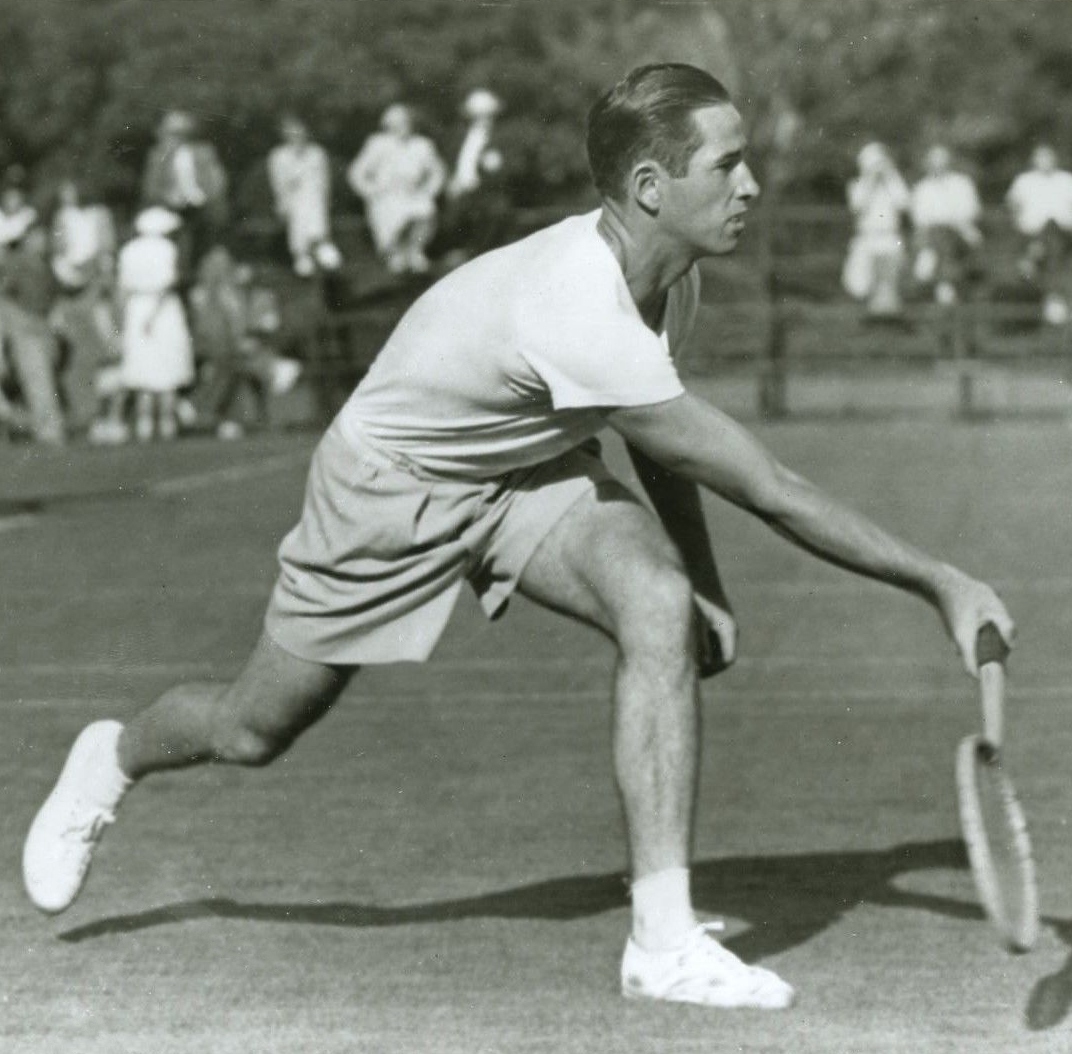
Bobby Riggs during the quiet years

My latest book, Tennis thing is done at last. It’s a diary of sorts about my first year playing tennis. I’m going to be sharing chapters here over the next few months. Following this post is another chapter on Riggs. He is a fascinating figure to me.

In 1939, at 21, Bobby Riggs wins everything at Wimbledon. Singles… Doubles… Mixed doubles. Ever the gambler, Riggs maintained that by betting on himself he won $100,000. He was, obviously, a very different kind of amateur.

Bobby Riggs was born in 1918 and grew up in a relatively shitty working-class area of Los Angeles called Lincoln Heights. Long before his historic triumph at Wimbledon, he’d been branded a mere hustler and a gambler and was shunned by the amateur tennis scene at the Los Angeles Tennis Club and beyond.

From 1939 until 1972, he was totally off the tennis stage, such that it was back then, and living in complete anonymity. Of course, the Great Depression had something to do with this as did the fact that Riggs, like all of his contemporaries, were well-beyond their tennis primes by the time the Open Era of Tennis arrived in 1968.

Finally, Riggs or someone else, stumbled upon the battle of the sexes schtick that defined the rest of his life. I wonder who we have to thank for that? Like all schticks, it revived his fame though it did so at the cost of a great diminishment of the impact of the superb play during his earlier life. History, as it so happens, was usurped by notoriety. I wonder how that felt in Rigg’s heart of hearts? To be fair, it wasn’t like he consciously chose fame over his storied history as a player. He simply must have grabbed onto fame like the lifeline it was especially to bespectacled a tennis player in his mid-50s whom few had ever even heard of.

Something about Los Angeles helps to create hustlers and I wonder why that’s true. Trevino & Hogan would have gotten eaten alive out here. Sure, they could handle the heat and humidity of Texas but the glare and grit of Hollywood would have wilted them. Somehow, unlikely guys like Riggs & Pancho Gonzales thrived in Los Angeles, in their ways, at least for a while. 

Riggs and Billie Jean King in the early 70s during the Battle of the Sexes Era
Tennis thing: Imagine being Bobby Riggs

Interview with Golf Historian, Kevin Kenny

Like so many things, the internet is both a curse and a blessing. One way that it’s been a blessing to me has been through its power to introduce me to colleagues and associates I would never have met without this virtual world. Kevin Kenny is one of these. He is a writer, a historian and a kindred spirit.

We both love golf enough to write about it, and that’s saying something. I’m grateful he’s been willing to answer some of my questions about his work.

Paul Cervantes

What was your life’s work before you started to write about golf?

Kevin Kenny

I was involved in a family retail shoe business in Dublin for 28 years. After that, I became a mature student and did three degrees in Scotland (where we lived for a time) in history and politics. Then when we came back to Dublin I taught Social Science with The Open University (a UK based distance-learning institution) for 14 years. 

Paul Cervantes:

What was your first golf book and what about the subject motivated you to devote an entire book to the subject? Also, how long did your first book take to write?

Kevin Kenny

My first book was American Golf in the Great Depression: The Pros Take to the Grapefruit Circuit. I think I got my interest in this area from studying American history when I was a mature student. It took me about a year to write it.

Paul Cervantes:

Did you find that writing your golf during the Great Depression book motivated you to write more about American golf as opposed to golf in general? What was it about American golf, or American golfers, that caught your interest and sustained it?

Kevin Kenny

Yes, writing about golf in the 1930s started a chain. So, that led me to write a book on Ralph Guldahl whose career I felt had not been properly recognised. And in both of the first two books, I came across Fred Corcoran who was one of the instigators of the LPGA tour and that led me to write about Patty Berg. As to why American golf history and not golf in general- I always felt that there were so many stories in US golf- so many characters- so many wonderful players- it seemed natural to research American golf history.

A further point about my interest in US golf history. In the early 1960s, when I had started golf, my father began to receive golf journals from his sister in America and here I first came across the wonderful writings of Herbert Warren Wind. And we received a copy of Bobby Jones’ Golf Is My Game- for me the best golf book ever. All of these whetted my appetite for American golf history.

Paul Cervantes

I read Golf is My Game long ago. I like to tell people who’ve never heard of Jones about his life even more so than his golf. There’s a kind of magic to his life and education, as it blended with the greatness of his play, I doubt we’ll be lucky enough to see again. He was, of course, a different kind of amateur than those we have today. What parts of Golf Is My Game resonated most for you when you first read it? What are its most enduring messages for you today?

Kevin Kenny

I think Jones conveys an awful lot of common sense about the golf swing and he had an interesting take on putting which he suggested should be a slight slicing action. Not sure too many of today’s gurus would agree with that. But, what resonated with me most were his recollections of his career which his great friend O.B. Keeler divided into the seven lean years and then, gloriously, the seven fat years. His descriptions of his many great rounds, especially playing golf under pressure, were wonderful. And he wrote a short love story to St. Andrews and what it meant to him. Just a wonderful and moving book…

Paul Cervantes

Another player from the mid-1930s you’ve written about is Ralph Guldahl. What made him the greatest player of his era and why was his reign so painfully short?

Ralph Guldahl circa 1937

Kevin Kenny

For about three to four years, Ralph Guldahl was as good as any player in the world and maybe better. He won successive U.S. Opens in 1937 and 1938 and he won the Masters in 1939. In addition, he won three successive Western Opens, which was as prestigious as the Masters at this time. For this brief period, no other player could match him. Why he lost his game in the 1940s is one of golf’s mysteries and I try to tackle this in my book. Theories range from him writing an instructional book which caused him to think too much about his game — to his wife being tired of the travel involved. Remember, one of the perks of being a U.S. Open champion is that you got to play numerous exhibitions for $300-400 a time. But this took its toll and often he would be on the road for a few weeks at a time. Or maybe he just lost his desire. I became interested in him when writing about the Great Depression. I wondered why we did not know more about him, considering his outstanding record.

Paul Cervantes

That brings me to John J. McDermott, an American golfer we’ve both written about, me in a fact-driven fictionalization and you in biography. What about McDermott got you interested enough to write a book about him? Also, what surprised you most during your research? Finally, are you considering any new projects?

Kevin Kenny

I have a friend in Florida called Marty Kavanaugh- a retired pro and PGA Hall of Famer. He spoke to me a few times about John J. McDermott and suggested it was a subject worth researching and that is how I got started. What surprised me most? Perhaps how young he was to achieve what he did. To become one of the best, if not the best at 19, 20, 21, 22 years of age shows an incredibly strong mind. Hogan’s best period was when he was around the 40 mark. No- I have no plans for any other books- four is enough, but I look forward to reading your next one. Thank you Paul, I have enjoyed this.

Interview with Golf Historian, Kevin Kenny

Please, go ahead & judge this book by its cover!

The sequel to my 2019 novel, John J. McDermott & the 1971 U.S. Open, is finally for sale at Amazon.

I think I bettered the six months it took John J. McDermott & the 1971 U.S. Open to make it from finished manuscript to published but not by much. It’s a great feeling to be finished writing but a lousy one to anticipate all of the annoying steps that have to be taken before anyone can read your book.

Right now, it’s eBook only. An issue with the cover formatting undermined me at the last minute. Hopefully, you lovers of paper books will be able to grab a copy later in the week.

In the meantime, Cottonwood the eBook is waiting to be read.

Please, go ahead & judge this book by its cover!

February 18: Another clear day

Today was another exceptionally clear day. It was also an uneventful day save for the lunch get-together with my siblings. That started the day off nicely. I got to hear about what they were reading and about how their book clubs worked, in terms of what kinds of things they talked about.

There was also some chat about our upcoming family reunion in July. Eureka! continues to have Lady Face Blind Ambition for $4 so I couldn’t resist having one (and then another one). These kinds of family outings don’t last too long, no one’s prone to linger or talk about anything too amusing, so I was on my way home by 1:30, just in time for a quick hike.

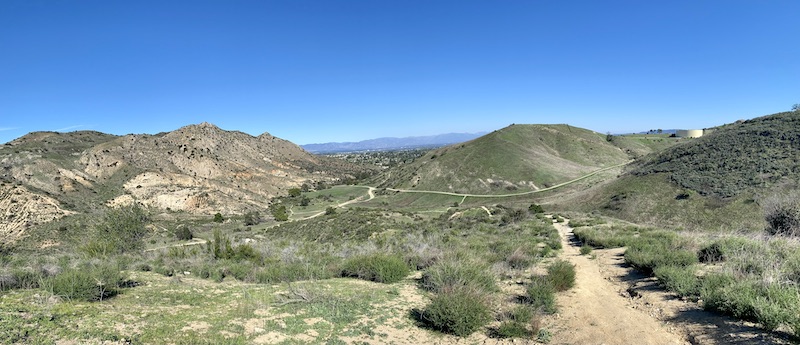
Like I said, it was very clear day. Lots of folks were heading out at once so I decided to take a connector trail towards El Escorpion. Once there, I picked up a trail that I was pretty sure would link back to the Victory side. I was right, but the last third of the trail was brutally steep. Had it not been for the light, cooling breeze it may have been too much. But I made it and then found my way to Bible Rock before heading back to the main trail and my car.

Those two beers were not my friend on this hike, but I was happy to have made it out for a couple hours.

I’m getting a little antsy about the book. It’s feeling ripe and ready to publish. I’m ready to move on but circumstances won’t let me quite yet. It’s also a time of anticipation. There are always technical issues, most commonly with the EPUB or MOBI files used for the the Amazon Kindle Version.

It’s rather like the feeling of dreading impending traffic that you know you’ll hit, simply because you’re in a hurry. It makes you wonder why you’re in a hurry and then you remember.

There’s time enough but none to waste.

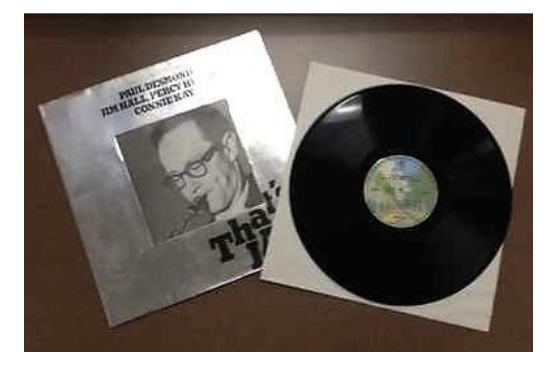
Tonight’s writing soundtrack is another LP. This time it’s an oldie and a scratchy one at that. It’s Paul Desmond’s That’s Jazz. It’s from 1961 and it’s pretty much the epitome of California Cool. Desmond’s playing is impeccable as always. There’s never been anyone better at this kind of stuff. His tone and articulation were effortless and he was rhythmically faultless and nimble to boot. Still, in some strange kind of way this LP reminds me that I really don’t much care for jazz anymore. The best jazz was universally played in the past and if you can’t find a reason to look ahead toward even the possibility of new and better days, a genre can really become mundane. It’s always amazing to me that these straight-laced looking guys like Desmond and Bill Evan were relentless self-abusers, Desmond with booze while Evans favored heroin and later cocaine. It makes their music perfect time capsules of another era when jazz was perfected and before its inevitable entropic decline.

Thanks for reading.

That was Jazz
February 18: Another clear day

February 17: Busy, like the old days

Today was busy like the old days. Things rapidly came together with a new client and I had to do a phone interview and write a follow-up memo. It doesn’t sound very time consuming (it is). It also doesn’t sound especially interesting but, again, it is. Many of our clients are desperately ill. I describe myself as the tip of the arrow since I’m often the first one to really get to know a new client and their history, as well as their family.

Much of what I do is about sizing up the client in a lot of different ways. Sometimes, as it was today, it’s about getting a sense of the client’s vitality, especially his memory and mental sharpness. The client has faced a terminal diagnosis and has undergone a very risky surgical procedure with chemotherapy to follow. It is not an easy time in the life of the client or the family. The first time I spoke to this client (after his diagnosis but before his surgery) he sounded fantastic. Rather than sounding anything like a typical 80 year old he sounded 60…maybe even younger. I knew that 4 weeks after his surgery he would sound like a completely different person, and he did. But, he’s a tough guy and shows no inclination to going gentle in to this or any good night. He’s an easy guy to root for.

Recapitulating a long phone call like that is tricky. It’s a memo that’s likely to be read in haste even though it was written with great care. That’s just the way things work in this business; the best of efforts are not always appreciated for what they are, yet it’s still critical that one’s best effort is put forward. This being anything but my first rodeo, I am Ok with all of that. I sleep well knowing we’re on the right side of the cases we pursue and that there’s not a long line of people who can do what I do in quite the way I do it. All of my work today was done in no more than 3 hours but it felt much longer and took a good deal of starch out of me. There’s no getting used to speaking to the very ill shortly after a diagnosis. Feeling like an interloper or an opportunist is easy. Finding a way to always be regarded as a positive force during a very negative time for both the client and the family is an art. I’m not perfect at it, but I’m better than most, or at least I think I am.

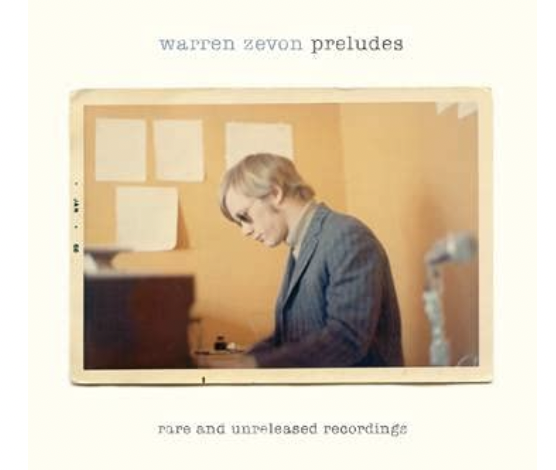
I’ve been warned about leaving out the writing soundtrack in my posts. Sometimes I need a soundtrack but occasionally all I can stand are the clicking sound of my laptop’s keys. There’s no real formula to it though I have to say I have a much lower tolerance to audible distractions than I used to. Anyway, tonight’s soundtrack is drowning out the keyboard clicks and that’s a good thing. I’m listening to Empty Hearted Town from Warren Zevon’s posthumous (2007) record, Preludes: Rare and Unreleased Recordings. There are 16 tracks here. Some are a marginal versions of marginal songs but the track I mentioned and Tule’s Blues and Studebaker, among a handful of others, make the collection more than worthwhile. Anyway, thanks for listening.

February 17: Busy, like the old days

February 16: Kinda not so good

Long story short, I did not come up with a workable idea for the ending to the story I’m considering. The fact is I didn’t spend a lot of time thinking about it today. So, I suppose my progress on the idea is directly proportional to the time expended on the task. I was busy today, at least off and on. The day didn’t feel totally wasted but except for going to the post office I was at home and working in my office from around 9 until 3. At 3 a friend of mine called and we met for a while.

That was a relief; it’s hard to spend much more time than that indoors.

Then came dinner and then came the last episode of the first part of season 4 of Ozark. It’s not my favorite show but I would say that the fourth season is the best so far. My sense is that they divided the fourth season into two parts to finish out the series this year but what the heck do I know?

I don’t have any great ambitions for tomorrow but I am hoping to be outside more. The weather is supposed to be good, if good is defined as clear and mild. There’s wind forecast for Friday. Here’s hoping they missed on that one.

Today I finished my various Crosby-Nash, CS&N, CSN&Y and Stills-Young Band LPs (Buffalo Springfield was last week). That was a relief. The three-LP CS&N Carry On present particular trouble, though I’m not sure why. I was just scattered enough mentally that I keep losing track of what I had uploaded and what I hadn’t. The cherry on the sundae was me forgetting about one side entirely and letting the record spin for hours after it was done. Nice.

Great for the record and for the stylus of the EVO 3…not.

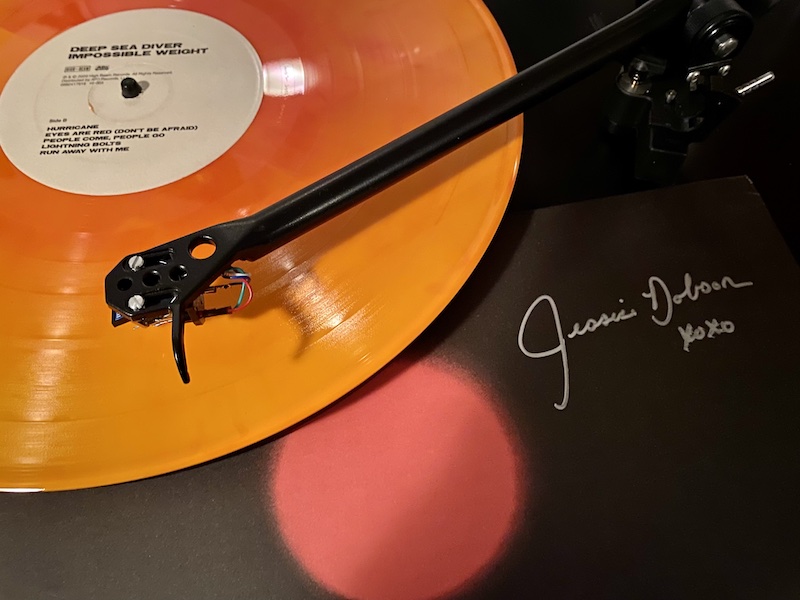
Anyway, tomorrow’s another day. In the meantime, tonight’s writing soundtrack is another LP, Deep Sea Diver’s Impossible Weight. I really like Jessica Dobson’s voice and playing. Not every song on this record is as raw, elemental and powerful as the last one, Run Away With Me, but they’re all good enough for me to enjoy. Anyway, check out that orange vinyl and Jessica’s signature!

How the heck do you beat that?

Answer…you don’t.

Thanks for reading.

February 16: Kinda not so good

February 15: For me, today was Valentine’s Day

I had a wonderful Valentine’s Day (yes, I know it was actually yesterday) for a very simple reason. I was lucky enough to spend some of it with my valentine, at least a few hours of it. She took the whole day off, so from 10 until 3:30 we hiked and talked and enjoyed a gorgeous day. We don’t get many chances to share even part of a weekday so it was an especially rare treat.

The only problem was that our time together was all too short, as it always is.

Our time on the trail gave me a chance to think about the book idea I that occurred to me yesterday. I can see the span of time. I can see some of the interesting events but I can’t really see the story, let alone the all-important ending. My concern is that there might not be a complete story to see. The last thing I want to do is jump into a story without even knowing the ending.

No good can come from that.

So, I’m going to do a little brainstorming about how my new story might end. Since there are biographical elements it’s all too easy to imagine that the story just goes on but that won’t work with a book. If I come up with some ideas between now and tomorrow I am thinking about writing the beginning of the story as tomorrow’s post. If I don’t, I’m not going to start writing. It’s not important for my idea about the ending to be the one I end up using. It’s only important for me to have an idea, even if I eventually change the ending, before I get started.

Ideas come along when they want so this may take a while.

Thanks for reading.

February 15: For me, today was Valentine’s Day