Why book clubs are an abomination; not really, well, kinda.

I was out to lunch when someone mentioned how the pace of her book club was making her forget what she had read.

She said, “I vividly remember books I read in high school and college just fine but I don’t remember book club books from just a few months ago!”

I said, always trying to be helpful, “That’s because book clubs are an abomination.”

“Hey,” she said. “I really love my book club. You suck.”

Who invented book clubs anyway?

I did wonder about that but in the end the answer doesn’t matter. Book clubs are here to stay and people (think) they like ‘em. And, isn’t liking something what life generally and reading specifically is all about? Could be, but there’s something else going on here. All of us have easy access to way more books than we can ever read. That’s not always been true, of course. Back to lunch. Before being canceled on charges of anti-book club heresy I tried to stimulate a moment of deeper thought when I asked, “How many books would you guess Shakespeare read over the course of his 52 years?”

Dozens, possibly hundreds but unlikely thousands as so many of today’s avid readers consume. Yes, I said consume as humans consume food as part of an endless cycle of food in / waste out. Imagine a food that continues to nourish over weeks, days and years. In reading, those are books remembered, returned to, quoted and treasured. Book club books are destined to be forgotten, like an unsubstantial meal that provides little if any sustaining nourishment.

The same effect, also driven by increasing ubiquity, also happens with music. Casual listening drove omnipresent music first into elevators and now Spotify. Now, think about the last series you binge-watched, unable to be sated, uninterested in waiting, until next week before devouring the next episode. Have you ever started what looks like an interesting series only to realize somewhere during the first episode that you’ve already watched the series from beginning to end? For all of this to work, an endless stream of media has to exist and it does. So, we consume more but with less and less genuine respect for what is being created.

Reading and listening; are they the same?

Of late, a book reviewer at the New York Times wrote a piece telling the world she’d come to fully embrace audio books over actual reading. I could not fight my way through the entire article. When she went so far as to contend that listening to a book was the same as reading I had to close the virtual pages of the newspaper I was reading. Can you imagine being a teacher of first or second grade students, trying to teach your students to read. Then, imagine an indignant parent scolding you for requiring students to learn to read when even reviewers at the New York Times prefer listening to reading. Why should my child bother to learn to read?

By the next morning it struck me that the reviewer was actually minimizing both reading and listening by unwisely equating each. Do I actually have to say that reading and listening are two different processes? The reviewer went on to sing the praises of audio books because she could listen while she knitted, crocheted, wove baskets or whatever. Full disclosure, I’ve done the same except I’m doing something truly constructive. Namely, practicing my tennis serve. Still, I am not reading while hitting my out-wide slice. I am listening and listening is an active and rewarding process.

We can dig a bit deeper by thinking about music. We nearly always listen to music but some cognoscenti read the musical score while listening which might give insight as to the performer’s fidelity to what’s been notated onto the score. That kind of listening is quite intense and so is also uncommon. Listeners to audiobooks may like or dislike the narrator’s voice. But hearing the narrator’s interpretation doesn’t bring anyone closer to a genuine — and certainly not a dispositive — understanding of what the author meant.

As an aside, I just finished an audio book called Meet Me at the Museum by Anne Youngson. It’s an unusual novel. The entire book consists of letters sent back and forth between a woman and a man. What’s interesting? Well, I think whatever quality exists in this book is primarily conveyed by the female and male readers, one an English woman and the other a Danish man writing in English (or someone doing a fair impression of a Dane speaking English). The point here is only that interpretation is an art, whether it is the interpretation of words on a page or musical notes on a score.

My hope is that we will all read and listen and watch with greater care and deliberation. Sensitize your own preferences when it comes to the media you consume. Look within rather than relentlessly asking others to recommend books or music. I think part of what makes art memorable is, sometimes, the effort we put into finding it. And, importantly, once you find something, read it again as you would play a song you have come to love, again and again. Read some of the dialog and narrative descriptions out loud. For just a few minutes, you be the narrator. Seek to treasure what you consume and it will nourish you now and tomorrow. Put another way, read less and you may find that you enjoy reading more in addition to remembering more of what you read. No, you don’t have to quit your book club but you might be a better reader if you do.

Why book clubs are an abomination; not really, well, kinda.

914 part 1 is done!

It will be up at Amazon within a couple days. When it’s live I will put a link here.

914 is part of a collection of short stories I had hoped to finish by now. Alas. My new plan is to release each (or small mini-collections) while I continue to work on the collection. This will give me time to revise the stories individually before dealing issues related to the collection.

The collection will be available both in ebook and on paper, the individual stories are electronic exclusively.

A note my workflow evolution. I composed 914 in Apple Notes, as always. But, this time I imported the copy into Pages so I could eventually export it to EPUB. Who knows how long KDP will allow EPUB? No matter, I’m taking advantage for now.

A small lesson learned was that EPUB doesn’t support headers or footers, so no pagination. This makes sense when one considers the resulting copy has to be reflowable.

Pages is not especially intuitive. I can imagine a day when it will be even more like Word. But, it’s manageable and that’s all I ask for today.

914 part 1 is done!

My short story 914 and the cover ChatGPT has been working on.

I’ve finished Part 1 of 914 and I’m pretty happy with it.

It seems our friends at Amazon’s KDP have given up on their MOBI file in favor of their new creation, KPF. For a writer, KPF is just the latest hurdle on the journey to getting what our work onto the KDP platform, but who am I to complain?

Then I thought of something. I composed 914 in my usual app, Apple Notes. Then, after reading about the demise of MOBI on March 18 I noticed that KDP will grudgingly accept an EPUB file. I recalled Apple’s Pages allowed for export to EPUB so I decided to export to Pages and then to EPUB. Part 1 of 914 is long for a short story (about 6,000 words) but simple in terms of layout. There are no sections or chapter headings and I don’t care much about widows and orphans for something that won’t appear on paper until my entire short story collection is done. So, I dumped the 914 copy into Pages, worked out pagination and a header, and now I’m down to editing. If the resulting file is really cool with the wise algos at KDP then I’m cool, too.

I had some ideas about the cover but I really don’t want to spend too much time on it. 914 is only one of a collection of short stories I decided to publish by itself. Why not? There’s no downside and it seems wise to keep up with how KDP’s machinery works as well as I can. Enter ChatGPT. Chat is all in and came up with two promising ideas in the snap of the finger. After I made a few corrections Chat said:

Great choice! I’ll modify the image to include a classic blue-and-yellow California plate with a slightly obscured number while keeping the overall aesthetic intact. I’ll get that done and share it with you shortly. I’ll start working on the modifications now. Once it’s ready, I’ll share the updated version with you.

And then, nothing. When I reached out this morning to check progress Chat said:

Good morning! I haven’t started editing the image yet, but I’ll get to work on it now. I’ll update you as soon as it’s ready!

At least he’s positive and enthusiastic. Who knew working with AI would feel exactly the same as working with a living, breathing artist?

My short story 914 and the cover ChatGPT has been working on.

Who knows? Maybe the windows rolled up.

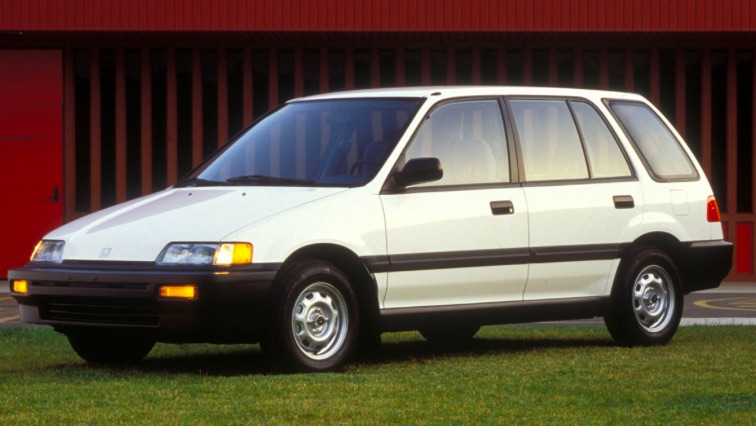
It’s been a long time since I’ve seen a Honda Civic Wagon from the mid to late 1980s. It’s it was slick and aero to the original Civic Wagon was square and boxy.

It is said that the Chrysler PT Cruiser was based on the Civic’s functionality though obviously not on the Honda’s looks.

That the Civic was a better and more practical car, there’s no doubt. And I will say no more about the PT Cruiser. It is best forgotten.

No, this is about the Civic Wagon I saw today. I wanted to take a photo of it but somehow it felt too intrusive.

It was, spectacular.

It was in Ventura and it was white. There was a single surfboard on a nicely done roof rack. I could see there had been some “modifications“ on the inside. The backseat was gone and the passenger seat had its seat back removed. I could see two long fishing poles going from the front to the back where a passenger, in a different time and place, might have sat.

I wondered to myself, who owns this?

Other than the roof rack, it appeared all original. The rims were steel Honda 13 inchers and the minuscule tires looked better suited to a golf cart.

I just had to see who owned it. I thought that I knew exactly what he looked like, but I had to see him for myself. And then there he was. He was probably a little younger than me but he managed to look older. He was lean and gray with a hat on his head and to-the-knees board shorts. He loaded something into the back before getting into the driver’s seat.

The little Honda, of course, started instantly and ran smoothly, like any Civic. As he pulled out of the driveway, I could see his rear license plate, a California plate, of course, was even more faded than the car’s paint.

Both owner and car were spectacularly OG and legit. Yes, there is a part of me that wishes I had taken a photo of the both of them. Who knows, he may have enjoyed the attention. On the other hand, it would feel, to me, like disturbing a wild animal in its natural habitat. Who knows? Maybe the windows, which were all rolled down, still rolled up? As if it matters.

They don’t make cars, or even many guys, like that anymore; full of purpose and devoid of pretense.

Who knows? Maybe the windows rolled up.

Interview with Golf Historian, Kevin Kenny

Like so many things, the internet is both a curse and a blessing. One way that it’s been a blessing to me has been through its power to introduce me to colleagues and associates I would never have met without this virtual world. Kevin Kenny is one of these. He is a writer, a historian and a kindred spirit.

We both love golf enough to write about it, and that’s saying something. I’m grateful he’s been willing to answer some of my questions about his work.

Paul Cervantes

What was your life’s work before you started to write about golf?

Kevin Kenny

I was involved in a family retail shoe business in Dublin for 28 years. After that, I became a mature student and did three degrees in Scotland (where we lived for a time) in history and politics. Then when we came back to Dublin I taught Social Science with The Open University (a UK based distance-learning institution) for 14 years. 

Paul Cervantes:

What was your first golf book and what about the subject motivated you to devote an entire book to the subject? Also, how long did your first book take to write?

Kevin Kenny

My first book was American Golf in the Great Depression: The Pros Take to the Grapefruit Circuit. I think I got my interest in this area from studying American history when I was a mature student. It took me about a year to write it.

Paul Cervantes:

Did you find that writing your golf during the Great Depression book motivated you to write more about American golf as opposed to golf in general? What was it about American golf, or American golfers, that caught your interest and sustained it?

Kevin Kenny

Yes, writing about golf in the 1930s started a chain. So, that led me to write a book on Ralph Guldahl whose career I felt had not been properly recognised. And in both of the first two books, I came across Fred Corcoran who was one of the instigators of the LPGA tour and that led me to write about Patty Berg. As to why American golf history and not golf in general- I always felt that there were so many stories in US golf- so many characters- so many wonderful players- it seemed natural to research American golf history.

A further point about my interest in US golf history. In the early 1960s, when I had started golf, my father began to receive golf journals from his sister in America and here I first came across the wonderful writings of Herbert Warren Wind. And we received a copy of Bobby Jones’ Golf Is My Game- for me the best golf book ever. All of these whetted my appetite for American golf history.

Paul Cervantes

I read Golf is My Game long ago. I like to tell people who’ve never heard of Jones about his life even more so than his golf. There’s a kind of magic to his life and education, as it blended with the greatness of his play, I doubt we’ll be lucky enough to see again. He was, of course, a different kind of amateur than those we have today. What parts of Golf Is My Game resonated most for you when you first read it? What are its most enduring messages for you today?

Kevin Kenny

I think Jones conveys an awful lot of common sense about the golf swing and he had an interesting take on putting which he suggested should be a slight slicing action. Not sure too many of today’s gurus would agree with that. But, what resonated with me most were his recollections of his career which his great friend O.B. Keeler divided into the seven lean years and then, gloriously, the seven fat years. His descriptions of his many great rounds, especially playing golf under pressure, were wonderful. And he wrote a short love story to St. Andrews and what it meant to him. Just a wonderful and moving book…

Paul Cervantes

Another player from the mid-1930s you’ve written about is Ralph Guldahl. What made him the greatest player of his era and why was his reign so painfully short?

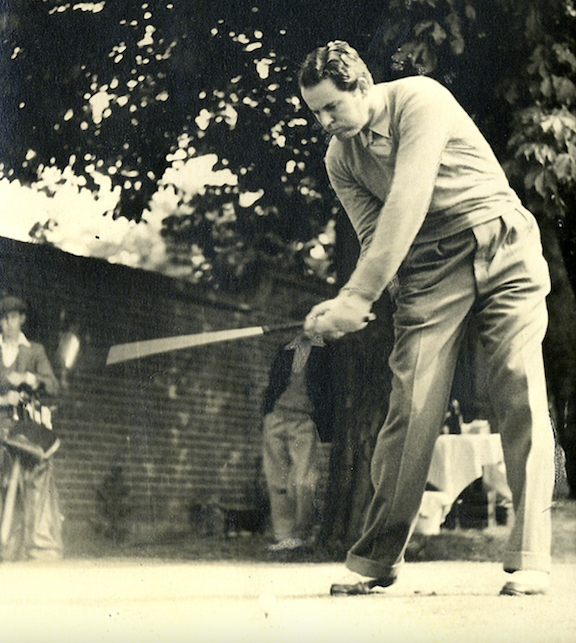
Ralph Guldahl circa 1937

Kevin Kenny

For about three to four years, Ralph Guldahl was as good as any player in the world and maybe better. He won successive U.S. Opens in 1937 and 1938 and he won the Masters in 1939. In addition, he won three successive Western Opens, which was as prestigious as the Masters at this time. For this brief period, no other player could match him. Why he lost his game in the 1940s is one of golf’s mysteries and I try to tackle this in my book. Theories range from him writing an instructional book which caused him to think too much about his game — to his wife being tired of the travel involved. Remember, one of the perks of being a U.S. Open champion is that you got to play numerous exhibitions for $300-400 a time. But this took its toll and often he would be on the road for a few weeks at a time. Or maybe he just lost his desire. I became interested in him when writing about the Great Depression. I wondered why we did not know more about him, considering his outstanding record.

Paul Cervantes

That brings me to John J. McDermott, an American golfer we’ve both written about, me in a fact-driven fictionalization and you in biography. What about McDermott got you interested enough to write a book about him? Also, what surprised you most during your research? Finally, are you considering any new projects?

Kevin Kenny

I have a friend in Florida called Marty Kavanaugh- a retired pro and PGA Hall of Famer. He spoke to me a few times about John J. McDermott and suggested it was a subject worth researching and that is how I got started. What surprised me most? Perhaps how young he was to achieve what he did. To become one of the best, if not the best at 19, 20, 21, 22 years of age shows an incredibly strong mind. Hogan’s best period was when he was around the 40 mark. No- I have no plans for any other books- four is enough, but I look forward to reading your next one. Thank you Paul, I have enjoyed this.

Interview with Golf Historian, Kevin Kenny

Please, go ahead & judge this book by its cover!

The sequel to my 2019 novel, John J. McDermott & the 1971 U.S. Open, is finally for sale at Amazon.

I think I bettered the six months it took John J. McDermott & the 1971 U.S. Open to make it from finished manuscript to published but not by much. It’s a great feeling to be finished writing but a lousy one to anticipate all of the annoying steps that have to be taken before anyone can read your book.

Right now, it’s eBook only. An issue with the cover formatting undermined me at the last minute. Hopefully, you lovers of paper books will be able to grab a copy later in the week.

In the meantime, Cottonwood the eBook is waiting to be read.

Please, go ahead & judge this book by its cover!

February 7: Musicians who are missing in action

Brendan Campbell

The internet is an endlessly fascinating place. It has made finding new wonderful musicians easy and immensely satisfying. I could not begin to name all of the musicians who have crossed my path, quite by accident, over the last decade or so.

The odd thing is that occasionally one of them (or two in this case) will go missing, leaving only the music that led me to them in the first place.

The first is Brendan Campbell. He may have had another record at some point, but the only one I know of is Burgers & Murders. I’m listening to Pleiades right now. This guy is so gone that he doesn’t even have a licensing deal with iTunes anymore. I found that out when I realized that none of his songs were on my iPhone. Had they not been downloaded to my MacMini years back that music would have been gone, maybe forever.

The other musician is even more obscure. All John Danley left behind are a handful of videos. He was (is?) a wonderful finger-style player. From what I’ve been able to find he’s totally done with the whole music deal. The last reference I saw about him mentioned that he’d turned to a career in psychotherapy.

John Danley

A handful of years ago, he had a working website. What must have happened for him to let both his website’s eponymous domain and the site itself slip below the electrons of the internet? I just don’t get it. It’s just too easy and inexpensive to keep a website online to let one slip away. I actually mentioned Danley’s name to Will Ackerman a couple years back, along with a link to one of his videos. I had a kind of fantasy that Will might have recognized Danley’s talent and would want to set about using his industry connections to get him discovered, but Danley’s anonymity remains frustratingly intact.

How many more wonderful musicians am I doomed to find and lose? To put a tiny spin of optimism I could say I’m fortunate to have found Danley & Campbell at all, and that’s true. It’s always hard to keep from wanting more, I suppose.

Thanks for reading.

P.S. Had I been willing to let this post wait until tomorrow I would have done a better job. For some reason tonight the WordPress desktop app will let me do everything but write a post.

The optimist would say how lucky I am to be able write what I have on my phone.

February 7: Musicians who are missing in action

February 5: Hill climb & pano

The winds have been blowing off & mostly on for more than a week. When we had measurable rain a while back I allowed myself a bit too much optimism, at least as regards the drought.

Now that optimism is being blown away and that’s a lousy feeling. The only benefit of Santa Anas this time of year are cloudless, scrubbed-blue skies and fantastic visibility. Even though the winds were less intense today, the skies were still quite clear.

My valley to valley hike is front of mind. I’ve been looking for a map that shows all of the fire roads in Los Angeles and Ventura counties but I haven’t found one so far. I made a trip to REI today since they have a good selection of maps and guides on hand but they didn’t have what I needed. There was an interesting trail map of Conejo to the ocean that should have easily covered the entire relevant area except that the folks at NatGeo decided to plop the map’s legend right over the west end of the valley, where it meets up with Palo Comado. Oh well. What do those folks know?

This is iPhone pano looking northish (those are homes in Bell Canyon on the left).

This is a nastyish hil climb I use to inaugurate my legs and lungs every time I use the Victory Trailhead. From the middle to the top you actually ascend on toes. It’s possible to descend it but if it happens to rain again this hill will be impassable both up and down. The photo doesn’t do it justice; it’s damn steep.

No hike is complete without a refreshment and today I promised myself a blood orange IPA from the pizza and beer tavern at the intersection of Victory & Valley Circle. Somehow I’ve managed to miss the name of the brewery both times I’ve enjoyed it there. That fact gives me a good excuse to drop in for another pint someday soon.

Tonight’s writing soundtrack is He’s Fine from The Secret Sisters 2017 record You Don’t Own Me Anymore. It’s far and away the best song on the record; clean, simple and bound to no genre or time. It’s fantastic.

Thanks for reading.

February 5: Hill climb & pano

January 16: Sunday in Sacramento

Like I said, this has been a quick trip. Maybe too quick when you think about the numbers of miles to & fro but you know what they say about beggars.

Our Sunday started out slowly with breakfast at Cafe Bernardo’s-Pavillions. There are a couple others Bernardo’s in the chain but this location is my favorite, especially when it comes to their fantastic pancakes. Today’s were sublime; tender, good buttermilk flavor, not over or undercooked and the perfect thickness. I got by with one cake but I would have been able to devour four if self-preservation hadn’t gotten the better of me.

Later, we took a ride out to the Effie Yeaw Nature Center in Carmichael, in the same park as the Ancil Hoffman golf course I mentioned yesterday.

The nature center has a number of trails that meander along and around the American River. As on the golf course there are deer everywhere as well as wild turkeys. The air was just crisp enough to keep a jacket on even with the sun out.

Afterwards, I noticed a brewery in nearby Rancho Cordova that I wanted to check out called Fort Rock. Everything was just a little disappointing. It was too loud (the 49ers were playing Dallas), the tap list was a little blah as was the strip mall ish location. I tried the Lights Out IPA. It was Ok but far from soul-stirring. Maybe I was expecting too much or maybe the relentless din from the TVs and the football fans tweaked my tastebuds. I hate to scratch a brewery off the list after trying only one beer but I may have to in this case.

Ah, but dinner! Dinner was at Obo. Now why the hell can’t I have an Obo in Los Angeles? It’s Italian and it’s fantastic. I went all in with spaghetti & meat balls and it was good as it was last summer, the winter before that and so on. They also have a full bar, a small but well-curated tap list, and a $10 rye old fashioned.

Are you kidding me?

We were celebrating a birthday (not mine) so I had two old fashioneds and the three of us split a slice of cheesecake, chocolate mousse and a chocolate-dipped cupcake that took a ride home with the lucky birthday boy.

It’s HGTV again tonight as we wind down but least it’s Home Town and not the drivel I subjected myself to last night. Nope, I didn’t come up with any ideas for my next book. Maybe tomorrow. I’m not even any more relaxed than when we left Los Angeles but at least we had us some fun and were blessed with good company and a wonderful host.

Tomorrow will be 388 easy miles and a return to reality. I can’t say I’m looking forward to either but I’m glad we made the trip.

Thanks for reading.

January 16: Sunday in Sacramento

January 15: Sacramento

Thank goodness for the MLK holiday. It gave us a little time to make our way to Sacramento for a very quick getaway and a opportunity to dodge Omicron outside of Los Angeles County. I like this place. It’s not perfect but then again, neither am I. It’s not hard for me to confess the two big things that help me like it here.

The first is the welcome availability of quality golf that’s not crazy expensive. The 27 hole complex at Haggin Oaks was one of the best municipal facilities I had ever played until I was lucky enough to play Ancil Hoffman in nearby Carmichael. This last summer found me sitting on the patio at Ancil Hoffman drinking the biggest $8 Captain & Diet Coke you’ve ever seen. It is a beautiful layout that was in fantastic shape for the middle of summer, or any time of year for that matter.

Of course, that was summer and this is winter. It’s colder here than it is in SoCal. Worse, even though there’s no rain in the forecast the air is incredibly heavy, making tonight’s 43 degrees at 10pm feel quite a bit colder.

So, it’s cold, the days are short, what’s to do? There are great indoors are here aplenty. THat brings me to the second thing I love about Sacramento; the scores of great restaurants and bars. There are also tons of micro breweries around here though I must admit the pale ale I had from Berryessa Brewing this evening was not very good, but those are the breaks.

However, the cheddar burger at Hook & Ladder Manufacturing was superb. Stupid name for a place that is supposed to have an educational vibe (teacher’s desk inside the front door and school auditorium seats for use while waiting for a table).

But wait, am I so simple that burgers, booze and decent golf is enough to get me to relocate to Sacramento? Who knows, but I wouldn’t rule it out. Tomorrow I am hoping to write down some ideas for my next book. I hope you’ll be here to read them.

Sorry, no writing soundtrack tonight. Some idiotic home improvement show on HGTV is filling in, and doing a lousy job of it, I might add.

January 15: Sacramento