I hope my brother was recalling a time I said that about a golf swing of mine but I can’t be sure. Even if it was said about me it’s certainly not something I said often during my decades of playing golf. My brother was really talking about the fact he hadn’t actually played golf in well over a year, though he owns a mountain cabin only a few hundred yards from a humble 9-hole track, his home course.
Instead, he’s been hitting plastic golf balls around a course he’s laid out for himself on a little patch of grass near, but not on, the golf course. The plastic balls have helped my brother shift his focus to the quality of contact, the rhythm of his swing, and the completeness of his follow through. He said, “It reminded me of one time when you said, ‘now that was a good swing.'” I remember pulling of a few of those but not enough to keep me on the course. The golf courses of California haven’t missed me and I haven’t missed them much either.
I’m not sure why my brother is not playing his home course but I’m happy he’s managed to create his own game. At its core, golf is one of the most made-up games possible. You have the course, the clubs, the ball, the hole, all came from very humble beginnings. The course was a pasture, the club a stick, the ball a stone and hole a hole, but one dug by a rabbit or some other burrowing critter. Now, the improvisation is pretty much over as evidenced by the supernatural condition of today’s golf courses, even those that host the once-scruffy British Open Rota.
It reminds me of why it was so easy to turn away from golf. It simply became too hard to play enough golf to support what would never be more than a serviceable game. Cost was a consideration. Pace of play never got faster, only slower. Those of you who have read Tennis thing know that two of my brothers continue to drive over eight-thousand miles a year just to play golf twice a week at their club.
Now I find myself living a few hundred yards away from a golf course my father liked to play when it was simply too hot to tee it up in the valley. The track has seen better days but I remind myself I’ve not played it in at least forty years. I recently heard it’s been sold but if it has there’s no evidence its new owners have any great ambitions for it. I walked onto it a few times over the last couple weeks, just before dark. My fondness for the dim quiet of golf courses toward the end of the day is still keen though my interest in playing is not. It’s easy to see why the routing of the course worked and what its designer, Ted Robinson, Sr., had in mind when he laid out parts of it. It’s a modest golf course but not without its charms even in its current state of neglect.
I know what you’re thinking; am I tempted to sneak onto the course and play a few holes? I cannot lie, I’ve joked about it to some of the locals and it would be easy. But, I think I’d rather join my brother on the course he’s created near his mountain cabin. It would remind me of all the times I played golf with my father in his backyard as the sun drew low in the sky.
Great. I’m already amending my thesis. You do not suck because of your swing. If you have a handicap between 12 and +1. The fact is you don’t suck at all compared to most people who consider themselves golfers let alone those non-golfers who know you play. No, to them you’re already good. It’s only you who thinks you suck and believes that if your swing was better you’d be better.
II Your game will not be helped by a fitting session, no matter how expert.
Your game will not improve because of a new driver, fitted shaft or fresh wedges. Flightscope is not your friend or your savior. It’s a pusher. Avoid being an addict.
III If you have been playing for more than 5-7 years, and you are over 45 years of age, you are probably done improving.
Live with it. Embrace it even. Sorry to burst your bubble but you’re also not going to become a faster runner. Consciousness of limitation is not causal to a limitation on your enjoyment of golf or any pastime.
IV The rare, rare, rare exceptions to point III prove the point.
Feel free to rub my nose in it. Send me stories about all the 45+ year olds you know whose handicaps have dropped from 10 to 5 or 4-2.
I’m waiting.
V Here’s an old relationship rule that applies perfectly to golf.
If you’re in a challenging personal relationship ask yourself this: If nothing gets better, would you still continue with the relationship? The genius of this question is this: If you can hang in there with no improvement, any improvement will make the relationship (and your life) better and more enriching. Imagine how happy you would be about your golf game if you adopted this mindset.
VI The golf industry is not youand you are not the golf industry.
Why does this obvious fact matter? Because it should not matter to you how far the very best players in the world hit the ball or even the equipment they sometimes use but always endorse. Their spin rates shouldn’t matter nor should any other specification of their performance.
VII Last year I attended the Women’s US Am at Bel Air CC.
I overheard no fewer than three men muse about the distances the top four players achieved off the tee.
Each said a variation of, “You know, they’re so smooth and their clubs are totally matched to their games.”
As if…
Finally, loosened by SoCal sunshine and two on-course beers I spoke up.
“That’s totally wrong but you won’t like the truth.”
Incredulous male golf fan: “Oh really, and what’s the truth?”
“The truth is that the four players on the course today are elite athletes. You and I are not.”
VIII You suffer because of denial and a lack of honesty about your golf goals.
Today I asked a good friend who is a superb athlete about his golf goals for the rest of the year and beyond. He spoke of a battle with the course and a battle with himself. I thought to myself; what happens when we are battling ourselves? I think all of us, the yin and yang and the golfer, lose.
IX For the professional and the high-level amateur golf is a battle, with an opponent and the field.
Amateurs should celebrate their general freedom from these battles. They should celebrate the game for the sake of the game. Being outdoors for the simple joy of being outdoors and the fun of spending time with their companions.
To quote Jones, “Golf is a game best enjoyed with the convivial companionship of close friends and loved ones.”
Amen, Emperor Jones.
X Detoxing from golf is unlikely not impossible.
I’ve found my golf detox through another game that (so far) eschews unreasonable expectations, a game that emphasizes playing the game rather than a discrete athletic motion regarded in isolation. You can detox your golf game in a way that will maximize your enjoyment of the game.
Like so many things, the internet is both a curse and a blessing. One way that it’s been a blessing to me has been through its power to introduce me to colleagues and associates I would never have met without this virtual world. Kevin Kenny is one of these. He is a writer, a historian and a kindred spirit.
We both love golf enough to write about it, and that’s saying something. I’m grateful he’s been willing to answer some of my questions about his work.
Paul Cervantes
What was your life’s work before you started to write about golf?
Kevin Kenny
I was involved in a family retail shoe business in Dublin for 28 years. After that, I became a mature student and did three degrees in Scotland (where we lived for a time) in history and politics. Then when we came back to Dublin I taught Social Science with The Open University (a UK based distance-learning institution) for 14 years.
Paul Cervantes:
What was your first golf book and what about the subject motivated you to devote an entire book to the subject? Also, how long did your first book take to write?
Did you find that writing your golf during the Great Depression book motivated you to write more about American golf as opposed to golf in general? What was it about American golf, or American golfers, that caught your interest and sustained it?
Kevin Kenny
Yes, writing about golf in the 1930s started a chain. So, that led me to write a book on Ralph Guldahl whose career I felt had not been properly recognised. And in both of the first two books, I came across Fred Corcoran who was one of the instigators of the LPGA tour and that led me to write about Patty Berg. As to why American golf history and not golf in general- I always felt that there were so many stories in US golf- so many characters- so many wonderful players- it seemed natural to research American golf history.
A further point about my interest in US golf history. In the early 1960s, when I had started golf, my father began to receive golf journals from his sister in America and here I first came across the wonderful writings of Herbert Warren Wind. And we received a copy of Bobby Jones’ Golf Is My Game- for me the best golf book ever. All of these whetted my appetite for American golf history.
Paul Cervantes
I read Golf is My Game long ago. I like to tell people who’ve never heard of Jones about his life even more so than his golf. There’s a kind of magic to his life and education, as it blended with the greatness of his play, I doubt we’ll be lucky enough to see again. He was, of course, a different kind of amateur than those we have today. What parts of Golf Is My Game resonated most for you when you first read it? What are its most enduring messages for you today?
Kevin Kenny
I think Jones conveys an awful lot of common sense about the golf swing and he had an interesting take on putting which he suggested should be a slight slicing action. Not sure too many of today’s gurus would agree with that. But, what resonated with me most were his recollections of his career which his great friend O.B. Keeler divided into the seven lean years and then, gloriously, the seven fat years. His descriptions of his many great rounds, especially playing golf under pressure, were wonderful. And he wrote a short love story to St. Andrews and what it meant to him. Just a wonderful and moving book…
Paul Cervantes
Another player from the mid-1930s you’ve written about is Ralph Guldahl. What made him the greatest player of his era and why was his reign so painfully short?
Ralph Guldahl circa 1937
Kevin Kenny
For about three to four years, Ralph Guldahl was as good as any player in the world and maybe better. He won successive U.S. Opens in 1937 and 1938 and he won the Masters in 1939. In addition, he won three successive Western Opens, which was as prestigious as the Masters at this time. For this brief period, no other player could match him. Why he lost his game in the 1940s is one of golf’s mysteries and I try to tackle this in my book. Theories range from him writing an instructional book which caused him to think too much about his game — to his wife being tired of the travel involved. Remember, one of the perks of being a U.S. Open champion is that you got to play numerous exhibitions for $300-400 a time. But this took its toll and often he would be on the road for a few weeks at a time. Or maybe he just lost his desire. I became interested in him when writing about the Great Depression. I wondered why we did not know more about him, considering his outstanding record.
Paul Cervantes
That brings me to John J. McDermott, an American golfer we’ve both written about, me in a fact-driven fictionalization and you in biography. What about McDermott got you interested enough to write a book about him? Also, what surprised you most during your research? Finally, are you considering any new projects?
Kevin Kenny
I have a friend in Florida called Marty Kavanaugh- a retired pro and PGA Hall of Famer. He spoke to me a few times about John J. McDermott and suggested it was a subject worth researching and that is how I got started. What surprised me most? Perhaps how young he was to achieve what he did. To become one of the best, if not the best at 19, 20, 21, 22 years of age shows an incredibly strong mind. Hogan’s best period was when he was around the 40 mark. No- I have no plans for any other books- four is enough, but I look forward to reading your next one. Thank you Paul, I have enjoyed this.
The trauma of having to write all of yesterday’s post on my phone made me leave a few thoughts out. I was thinking about why John Danley & Brendan Campbell may have dropped out of the music business. At first, I thought that something bad must have happened to each of them, something like a chronic illness. The more I thought about it the more I realized the possibility that both had experienced some bizarre version of what happened to golf professional, Ty Tryon.
Tryon burst onto the PGA Tour back in the early days of the Tiger Woods era. He was only in high school when Callaway paid him a huge pile of money, nothing like the kind of cash Nike dumped on Woods, but we’re still talking about millions of dollars.
Ty Tryon, back in the early 2000s
Problem was that Tyron’s game soon collapsed, completely. Now, decades later, Tryon has become a walking monument to persistence. He’s been reduced to an annual quest just to find professional tournaments where he can tee it up in a so-far fruitless effort to find his long-gone game. Tryon was only 16 years old when he had that brief though profitable look at what the upper echelons of professional golf were like and thought he belonged. And, he has spent many years trying to get back there.
Campbell & Danley never had that look at the top. Oh sure, they made videos, played some live gigs and Campbell even composed and performed some music for a movie. Still, maybe what they saw of the music business simply didn’t make it seem like the kind of place they wanted to devote themselves to, possibly for years, with no guarantee for the kind of success they imagined.
And there’s another possibility I can think of; that one or both of them loved music, but didn’t love music as a profession. That’s how I like to imagine Campbell & Danley. I hope that wherever they are, and whatever they’re doing for a living, both continue to enjoy their rare musical gifts. And, should one or both of them decide they’d like to have another crack at the music business, I’ll be ready to enjoy their work once again.
Like I said, this has been a quick trip. Maybe too quick when you think about the numbers of miles to & fro but you know what they say about beggars.
Our Sunday started out slowly with breakfast at Cafe Bernardo’s-Pavillions. There are a couple others Bernardo’s in the chain but this location is my favorite, especially when it comes to their fantastic pancakes. Today’s were sublime; tender, good buttermilk flavor, not over or undercooked and the perfect thickness. I got by with one cake but I would have been able to devour four if self-preservation hadn’t gotten the better of me.
Later, we took a ride out to the Effie Yeaw Nature Center in Carmichael, in the same park as the Ancil Hoffman golf course I mentioned yesterday.
The nature center has a number of trails that meander along and around the American River. As on the golf course there are deer everywhere as well as wild turkeys. The air was just crisp enough to keep a jacket on even with the sun out.
Afterwards, I noticed a brewery in nearby Rancho Cordova that I wanted to check out called Fort Rock. Everything was just a little disappointing. It was too loud (the 49ers were playing Dallas), the tap list was a little blah as was the strip mall ish location. I tried the Lights Out IPA. It was Ok but far from soul-stirring. Maybe I was expecting too much or maybe the relentless din from the TVs and the football fans tweaked my tastebuds. I hate to scratch a brewery off the list after trying only one beer but I may have to in this case.
Ah, but dinner! Dinner was at Obo. Now why the hell can’t I have an Obo in Los Angeles? It’s Italian and it’s fantastic. I went all in with spaghetti & meat balls and it was good as it was last summer, the winter before that and so on. They also have a full bar, a small but well-curated tap list, and a $10 rye old fashioned.
Are you kidding me?
We were celebrating a birthday (not mine) so I had two old fashioneds and the three of us split a slice of cheesecake, chocolate mousse and a chocolate-dipped cupcake that took a ride home with the lucky birthday boy.
It’s HGTV again tonight as we wind down but least it’s Home Town and not the drivel I subjected myself to last night. Nope, I didn’t come up with any ideas for my next book. Maybe tomorrow. I’m not even any more relaxed than when we left Los Angeles but at least we had us some fun and were blessed with good company and a wonderful host.
Tomorrow will be 388 easy miles and a return to reality. I can’t say I’m looking forward to either but I’m glad we made the trip.
Thank goodness for the MLK holiday. It gave us a little time to make our way to Sacramento for a very quick getaway and a opportunity to dodge Omicron outside of Los Angeles County. I like this place. It’s not perfect but then again, neither am I. It’s not hard for me to confess the two big things that help me like it here.
The first is the welcome availability of quality golf that’s not crazy expensive. The 27 hole complex at Haggin Oaks was one of the best municipal facilities I had ever played until I was lucky enough to play Ancil Hoffman in nearby Carmichael. This last summer found me sitting on the patio at Ancil Hoffman drinking the biggest $8 Captain & Diet Coke you’ve ever seen. It is a beautiful layout that was in fantastic shape for the middle of summer, or any time of year for that matter.
Of course, that was summer and this is winter. It’s colder here than it is in SoCal. Worse, even though there’s no rain in the forecast the air is incredibly heavy, making tonight’s 43 degrees at 10pm feel quite a bit colder.
So, it’s cold, the days are short, what’s to do? There are great indoors are here aplenty. THat brings me to the second thing I love about Sacramento; the scores of great restaurants and bars. There are also tons of micro breweries around here though I must admit the pale ale I had from Berryessa Brewing this evening was not very good, but those are the breaks.
However, the cheddar burger at Hook & Ladder Manufacturing was superb. Stupid name for a place that is supposed to have an educational vibe (teacher’s desk inside the front door and school auditorium seats for use while waiting for a table).
But wait, am I so simple that burgers, booze and decent golf is enough to get me to relocate to Sacramento? Who knows, but I wouldn’t rule it out. Tomorrow I am hoping to write down some ideas for my next book. I hope you’ll be here to read them.
Sorry, no writing soundtrack tonight. Some idiotic home improvement show on HGTV is filling in, and doing a lousy job of it, I might add.
My favorite watercolorist is also my friend, Alba Escayo. She and I go way back. I think we found each other on Elance which is now Upwork. Yup, a classic internet mogul move; change a good name to a lousy one. Alba lives and works in Spain. She created the cover on my first novel and I wanted her to create the cover on Cottonwood as well. I’m always grateful she’s younger than I am because it means she’ll be around to create the cover artwork for every book I write, if she’s willing and I am able.
I had an idea that involved a Cottonwood tree and a figure carrying a golf bag and walking away from the viewer. From underneath the tree, the figure reaches up and touches the low-hanging leaves. The idea of the walking away is that the figure is walking into the future, like all of us. The figure is faceless. It could be anyone. It could be one of the characters in the book but then again maybe not. No matter who it is, he reaches up to touch the tree, to touch a growing life.
I sent Alba an example of my idea but I did a bad job of explaining my vision to her. Probably I was in a hurry or maybe I thought we had discussed it more completely last time we emailed about it, over a year ago. She sent me this a couple days ago:
Now I have a problem, not a bad problem mind you, more like a decision. This is not at all what I had in mind, but I love it. It’s not a golf book so I had no intention of having an image of someone swinging a golf club on the cover, but there it is. And, now that it’s there, it has me doubting my concept. I’ve been reminding myself of some of my best non-advice advice:
It doesn’t really matter.
Of course it does, but maybe not. I wanted Alba to create the cover because I love her work, and this is her work. Now I find myself hesitant to continue to foist my vision on her, especially after she’s blessed me with this beautiful creation. My concept is not the idea of a visual artist but rather of a lowly writer. Part of me is screaming at myself to leave the artwork to the artist, and that is definitely Alba and definitely not me.
But we are talking about me. So, in the end I couldn’t help myself and I emailed Alba with my thoughts. As I said, I love the cover she’s done, and I want it, and I’ll pay her for it gladly. It will hang proudly over my desk and I will smile each time I see it. It may not end up being the artwork I use on the cover and then again it might be.
The decisions made in writing a book, especially a self-published book, go on and on. I’m very happy that no matter what decision I make about the cover art, the work will be Alba’s and it will be fantastic because it is hers.
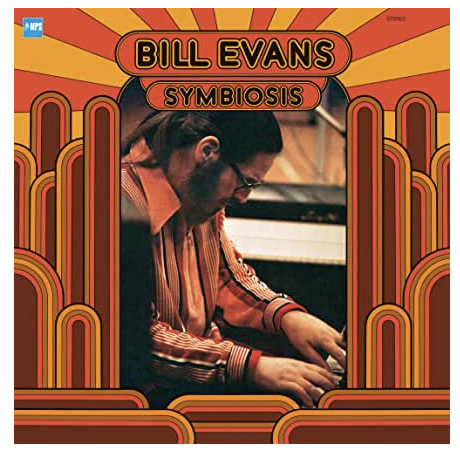
Today’s writing soundtrack is an elegant 1974 record by Bills Evans called, Symbiosis. It is some of the best of jazz and classical (read: orchestral) music I have ever heard. It is melodically and rhythmically evocative of both times and places I’d like to be. I know a pianist who doesn’t think much of Bill Evans’ work from this era, but I think it is wonderful. Maybe you will, too, so take a listen.
I really regret not keeping up with progress reports on Cottonwood over the time I’ve been working on it. The funny thing is that I until I checked I couldn’t even remember how long I’ve been working on the book. Now that I have checked I see it’s been a good long time since my first novel, John J. McDermott & the 1971 U.S. Open came out in April of 2019.
Cottonwood is a sequel of sorts. No, I guess it’s just a plain old sequel. It takes the lives of the two main characters from the early 1970s in Pennsylvania all the way to the desert of California and the late 1970s. I didn’t really have another book with the same characters, or at least some of them, in mind when I was putting the finishing touches on JJM. But suddenly, when I was totally done with it, I realized that I wasn’t totally done with it.
I imagined the book continuing into the future, the future being nearly a decade later. I saw the book continuing into my own time and closer to some of my own places. So much of the first book was an educated guess. Oh sure, I’d been to Pennsylvania when I was a kid but I didn’t have any real memories of it, other than staying with my mom’s cousin in an ancient row house in Reading, Pennsylvania one summer when I was about 12. Worse, I’d never been to Wales or anywhere in Europe for that matter (still haven’t, in fact). That was a huge problem. I spent hours looking at maps, imagining how the sun rose and set in various parts of the country. I read about how much it cost to take a ship from New York to Wales and how long the voyage took. I came to know some of that stuff, as we know facts that are printed on the page, but I couldn’t know them as experiences.
They say to write what you know. It makes a kind of intuitive sense but the need to know breaks down quickly when you start to write. The important thing for me has been to know and understand my characters. From there, my book is only a measure of how well I can bring my imagination and my relationship with my characters together. I think that Cottonwood will be a better book than JJM, or at least I hope it will be. It’s certainly a longer one and it’s not quite done yet. I wanted Cottonwood to have a more leisurely quality than JJM but life over the last two and a half years got in the way, both for me and the main characters. Life up and took away some of the meandering feel that I had hoped for the book and replaced it with something more intense, and I guess that’s Ok. We all write, partly, to make a character come to life. I hope that Cottonwood will do more than keep the characters from JJM alive. I hope it will show them as they change and meet challenges in the world they exist in much as I try to do in my own.
Anyway, it’s been a long effort and I happy to have made as much progress as I have. I can see the end of Cottonwood coming and also the beginning that will follow it close behind.
I’ve followed Tom Slighter of Slighter Golf for a long time, all the way back to the days when I consulted to Jim Von Lossow of Von’s Golf. Back then, I was very impressed by the purposeful look of Slighter’s early putters.
A while back, while researching new putter companies, I happened across the Slighter Golf website again and realized that the guy who had been a relative newcomer way back when had become one of the stallworts of the independent putter craft.
And here I emphasize the word craft. CNC and 3D printing are amazing and I am glad I live in a world where they exist and help make our lives easier. But, craft is as important as programing. Tom Slighter is a man with the rare ability to take an idea and make it real and to give it a kind of soul.
The putters Slighter Golf makes are more than mere tools or products. Rather, they’re invested with something of the man himself and that’s what appeals to me about Slighter Golf. I want to thank Tom and his entire team for being so generous with their time.
Paul Cervantes Back when you started out there weren’t many small putter companies in the US or anywhere for that matter. What made you decide to make your own putters?
Tom Slighter I first began changing grips and shafts on my own clubs in 1990. Later that year I began repairing golf clubs for local clubs in Salem, Oregon for several years. I was able to repair golf clubs for pay and free golf. I was working for State Farm insurance at the time and in 1998, I transferred to Seattle, WA. The golf courses in that area already had golf club repair shops so I did not pursue club repair. I had about 30 putters of my own that I decided to sell and pay off some debt from the move. I used eBay to sell my putters and after selling all of them I realized there might be a market to refinish putters and sell them on eBay.
I began refinishing putters in 1999 and used eBay to sell the putters I had refinished. I didn’t notice any one else refinishing putters at that time so I received numerous requests for refinishing work. After working on hundreds of putters and slowly building up my shop with equipment I decided to design my own putter. I looked all over the Seattle area for a machinist to help me make my putter. After being turned down multiple times, I found a machinist who had a small machine shop in Arlington, Washington who was willing to assist me.
I spent a year prototyping a design and after many attempts we made my first putter I named the Seattle. I manufactured twenty-seven Seattle putters and listed one on eBay in September 2002. I was very nervous that it would not sell and be embarrassed. To my surprise it did sell and in fact I sold out of the rest of the Seattle putters shortly thereafter. I then designed the Tacoma, Bellevue, etc. I purchased my first knee mill and started to learn how to use it. I watched my machinist and practiced frequently. I continued to develop my skills on the milling machine and became fairly proficient. I began building a good size shop with all the necessary equipment to specifically work on putters. I had become nearly a completely self-sufficient machine shop that strictly was for building putters. I could see that building and refinishing putters was beginning to be fairly lucrative. I applied for my business license under Slighter Golf, developed a website and was off and running.
Paul Cervantes These days there are a whole slew of New Kids on the Block making putters, companies like Brandon Matthew, Logan Olson’s Olson Manufacturing & Tyson Lamb are a few that come to mind. In some ways, it seems like it must have gotten easier for a new company to get started (because of CNC, 3D printing and the like). Are you glad you got your start when you did or would you rather get a putter company off the ground today (assuming you were twenty years younger)?
Tom Slighter I have noticed over the last 10 years there have been quite a few new and very talented putter designers. Some are very gifted and may very well be the leaders in the industry. The CNC process is pretty much the same, but the machines have more memory, newer programs and capabilities. I never did learn to program however I wish that I had. I was too busy making putters to really dive into that aspect. There are many great programmers, but I believe they should learn how to build a putter from the bottom up by hand. Very few of those individuals are still around. In my opinion, watching a craftsman build a putter from a solid block of steel using a knee mill is fun to see. I am very proud to have started when I did many years ago, when there were only a few of us putter makers. Even then, it was a very difficult market to break into with so many trusted putter makers already on the market.
Paul Cervantes I mentioned earier that I consulted to Jim Von Lossow (founder of Von’s Golf) when he was still making putters back in the 90s. At the time keeping up with production was an ongoing challenge for his company. As back order and lead times got longer customers got impatient. What are lead times like for a new Slighter putter? Is it a challenge to keep up or do you and your team have it down?
Tom Slighter Jim Von Lossow is a pioneer in his own right. I remember meeting him in the early 2000s. He was very well known in the Seattle area for club repair, fitting and putter design. I, unfortunately, did not chat much with Jim about his line of putters but I am sure he struggled with keeping up with demand and dealing with the reliability of machinists. My early years, I was always backed up with orders. I remember being ninety putters behind and fulfilling orders as quickly and efficiently as I could. I was always up front with my customers on lead-time and followed up with progress updates. I would not sell a putter to anyone who paid more for a rush order. It was not fair to my other customers. I have a wonderful team today that can typically produce a custom putter in two weeks or less.
Paul Cervantes What’s your favorite material to work with? And, I mean both from an ease of production perspective and from the perspective of the quality of the resulting putter?
Tom Slighter I enjoy milling carbon steel as it is very soft and cuts like butter; not a fan of welding on carbon because it is so dirty. I love to weld on stainless steel because it so clean to work with. The harder stainless steel metals like 15-5, 17-4, nitronic are difficult to mill and hard on cutters. Copper is like milling gum but easy to stamp. Brass will throw some fine chips and is also easy to stamp but both are just too soft for hosels and do not really offer the best feel. Aluminum is good for larger putters like mallets to keep the weight reasonable; good for inserts and easy to mill.
Paul Cervantes Beyond appearance do you think there’s an actual difference in feel (or sound) between a one-piece head and a putter with a welded hosel? I have a hunch about your answer but I’m very interested to learn what you think.
Tom Slighter I have not noticed any difference in sound or feel between a putter with a welded neck to that of a one-piece putter. If a weld is done correctly, it is very solid.
Paul Cervantes How has your machining equipment and technique evolved over the last couple decades? Do you have any old equipment that you remain dedicated to even though there are newer & better machines out there?
Tom Slighter That is a great question. I have a Sharp TMV-50 Knee mill I purchased new in 2006. I have made countless putters with it and modified hundreds of other putters. I know every inch of that machine and it is definitely my go-to mill. I was lucky to purchase a 1970 Grazziano SAG 12 lathe from a shop that was closing down. The owner had purchased his Grazziano brand new when he started his business in his garage. When I purchased it in 2011 I was the second owner. I have completely enjoyed this lathe ever since. It is an awesome piece of equipment and knowing its past makes it all that much more special. We do have multiple CNC machines for production runs.
Paul Cervantes Tom, this is just me being me and getting in the way of my own interview. I think every putter maker on the planet who makes a Ping Anser variant ought to get out of bed every morning and be thankful that Karsten Solheim was so damn smart. Isn’t it amazing that the essential head shape of the Anser is still as viable as it is? It’s so ubiquitous that putter makers really have to make one, even the young guns and so-called innovators pretty much bow to Redwood City and Phoenix. As an aside I’m always surprised that even though Ping invented the dang thing they’ve nearly forgotten how to make a good one. Sorry, I’m not sure there’s even a question in there but maybe you can help me and tell me your thoughts about Karsten and the Ping Anser and Slighter Golf’s unique spin on it.
Tom Slighter Paul, you have a great understanding of the putter market. I could not agree with you more. PING’s design of the Anser was iconic and in turn was developed into the Anser 2 and Anser 4. Cameron completely redesigned the Anserputters into works of art. He redesigned most of the PING line into works of art. PING had a dynasty in the putter market and in my opinion missed the boat by resting on their laurels. I admire Cameron’s ability to re-invent the wheel so to speak. Genius. When I started out I was intrigued by the old school TaylorMade T.P.A. series. I loved the TaylorMade T.P.A. 8 of the 1980s. I was influenced by their design and incorporated my spin to develop my line.
I did not want to steal an idea but rather take what was already known and make it better. If I could dab into the market that way and gain the trust of my customers anything else I design would be hopefully be accepted. I understood that I was not going to ‘storm’ into the market, but rather work my way in the back door. With that said, it is clear to me that the PING style putters are here to stay in one way shape or form. You can always design a crazy new putter that may flood the market for a while (Cameron Detour is a great example) and then slowly ride off into the sunset. However, I have noticed over the years that customers will fall back on the old classic putters. Re-making them will always be a solid market. PING just hasn’t been able to match anything Cameron has made with respect to the Anser.
Paul Cervantes What’s next for you and your company? Do you want Slighter Golf to evolve into something new over the next decade or are you just happy to keep on keeping on?
Tom Slighter We are steady as she goes at this time. We are looking to expand more in the next year or so. This situation with the pandemic has been interesting to say the least and hopefully when it has settled down more we will begin to develop in areas we have planned. I would also like to say that I don’t do all of this alone and with that in mind I’d like to recognize the rest of my team, Jason Smith, Mike Place & Will Borg.
My name is Mike Place. I have over 30 years of machining experience. Although I do not golf on a regular basis, I admire the same high standards golfers expect. Whether it is a simple adjustment, small modification, or a complete refinishing, I get satisfaction out of applying my same high standards to working on putters; I come to appreciate them for what they are and how important they are to our customers. Working with Tom Slighter has been a great experience on all levels. I have learned so many things about the sport. I get excited every time I see a new putter come in. It is an opportunity for me to use my many years of machining in ways I never thought I would. Thanks so much to our customers for trusting in Slighter Golf. Thanks to customer feedback I have come to learn just how important a putter is.
My name is Will Borg. I have been a machinist for over 15 years. I have always liked working with metals, whether it is welding, milling, or fabricating. “To make something that didn’t exist into something that someone can enjoy is very rewarding.” I have been lucky enough to have worked with Tom and learn from one of the best, and learning all the fine details that go into building high end putters.Mike Place & Will Borg of Slighter Golf
I’m Jason Smith. I’ve had the pleasure of Tom’s acquaintance for more than 12 years. Since our introduction, I have been extremely enthused to work with Tom designing, machining putters and the occasional day on the course. I have a real passion for golf, I grew up on a golf course and have been playing since I was a little boy. These days, I enjoy the game with my entire family, especially my son Preston. Preston played varsity golf on the local high school golf team. Anytime we want to test out a new prototype, Preston quickly volunteers to take on the task. Along with golf, I’m passionate about manufacturing, specifically designing and producing product. I’ve had the pleasure of designing product used all over the world and beyond, from the bottom of the ocean to outer space. It’s nice to see literally millions of components in use, designed with my team, but nothing is more satisfying than playing a game with something so innocent as a high-quality putter co-designed and CNC machined with Tom Slighter. Being 50 years old, I havemade an enormous circle of friends and resources throughout my life. That being said, I hold very few on a throne as high as I hold Tom Slighter, when it comes to excellence as a human being. I am truly grateful to be working along side of him, I look forward to many more years.
I thoroughly enjoy my family time especially now that I have more time with my wife, Bonnie. I cannot thank my family enough for being there for me in so many meaningful ways. I used to work 7 days a week for a combined 70 hours at my day job and the putter business for 18 years. I embraced every minute developing my putter business through the ups and downs. I met so many interesting people along the way that I would not exchange for the world. Partnering up with my dear friend, Jason Smith has allowed me, for the most part to retire from the putter business. I am now able to golf twice a week, snorkel, fish, work out in the gym, hang out with Bonnie at the beach, basically enjoy a whole different period of my life. Jason is a very gifted and brilliant machinist, incredible business entrepreneur, and down right kind hearted individual. It is an honor to work with Jason and his team. Working with Mike Place and Will Borg who are gifted machinists in their own right have honed their skills to that of the golf industry. They have increased the skillset of Slighter Golf to an entirely different level. Amy Reems, our office manager, Sarah Clogston, our office assistant and Justin Crawford, our consultant have a passion for our business and provide incredible service to our customers. I am truly honored to have the opportunity of working with each one of them in our effort to meet the needs of our customers. Thank you so very much.
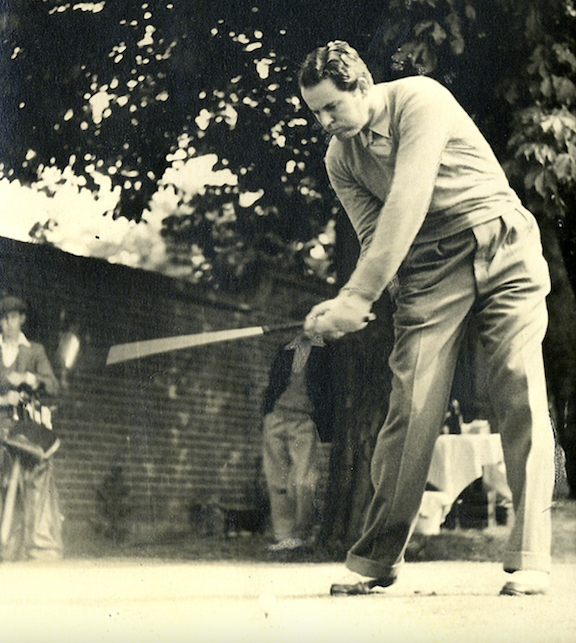
When I was a kid, my father (who was a really, really good player) told me I had too much right hand in my golf swing and that it resulted in my then-constant slice. This was sadly not one of my father’s better golf lessons and it took me years to learn that the opposite was true.
Now, the funny thing is that even though I know this, I sometimes find myself driving the downswing, and even initiating my takeaway, using the energy and force of my left arm.
Trying to avoid this tendency got me thinking (seldom a good thing when it comes to golf, but a really good thing in this case) about what some Youtube golf gurus had to say on the subject. The first video is from Steve Johnston and the fun starts at around the three minute mark. Johnston actually says that, “The left arm just hangs and is inert until the right arm stretches it and creates leverage.” The crucial part lasts about three minutes and is worth watching again and again to get the idea to fully penetrate thicker heads like mine.
Next, up is Martin Chuck in this video from way back in 2011. Roll forward to the forty second mark and you’ll hear him say that, “The left arm just hangs.”
Now I know both arms work together in every good golf swing. But, I also know that I tend to let my left arm take over both in effort and feel. I’m right handed and I know my right arm is stronger and more coordinated than my left. But still, I need to relearn this lesson far more often than you would think.
Hey, I’m trying…
When I allow the right arm to do its correct share of the work, the club’s path back and into the downswing is both easier and tidier, for lack of a better word. Also critical is what Johnston says about pulling, specifically when he says outright that there’s no pulling with the left arm.
Again, I know I’m guilty of that more than I care to admit. When it comes to golf, reminders from those who know better are great to have and frequently needed (by me, anyway).






 Paul Cervantes