January 27: Audacity

2021 was apparently the first year that LP sales eclipsed CD sales in decades. It was a small surprise to me and more of a comment on the fact that CD sales are so minimal rather than LP sales being so strong. I am not especially enamored with the LP. It’s just that it’s the best playback method I know of, though it is badly flawed, and that’s before we start talking about the inevitable issue of LP wear. Ugh.

Still, today was an important day. I uploaded my first LP to my Mac. Audacity is both relatively good and totally free. That’s impressive in a day that finds every software company looking to maximize profits. I was stunned that on my very first effort I ended up having a playable side of a decently clean demo pressing of Dylan’s Street Legal. I chose that LP because it was in fair shape (I didn’t know how many times I would have to play it) and because I happen to have a CD of the same record right in front of me.

The initial results were hideous. The RIAA equalization on the front end of the A/D I used was (and I shall not slander the company who made it here), how shall I say this, marginal or worse. So, I climbed around behind my vintage Salamander Designs rack and took the analog feed from the record-out of my preamp just to see if my suspicions were correct.

They were.

Once I was taking the data from this line-level source, one side of the LP came in at a shade over 62MB. Not bad, certainly much better than a FLAC file will alter. I judged the resulting AAC file to sound pretty Ok, in fact significantly better than I had hoped. I’ll do some more careful listening tomorrow before considering uploading the LP side using FLAC. If I use AAC all of my LPs would occupy only about 55GB, which would leave me plenty of room for extra storage mischief (read, the acquisition of more music in digital, CD and LP formats).

The Audacity UI looks like it’s from twenty years ago but it is relatively simple in operation and very well executed. The folks who developed it knew (and know) exactly what they’re doing and exactly what they’re up against. I have to remind myself that none of what I’m doing was anticipated by the originators of any of the technology employed during the creation of the source material. This ability to move analog to digital in this way is all a manifestation of software developers adapting to what came long before in an effort to preserve music that was acquired many years before the technology was anticipated to be able to move it around.

How often does that work out in favor if the music lover / consumer?

In other words, the future of music, at least insofar as how we can store it, would seem to be in good programming hands, as of this writing.

More, as ever, later. Thanks for reading.

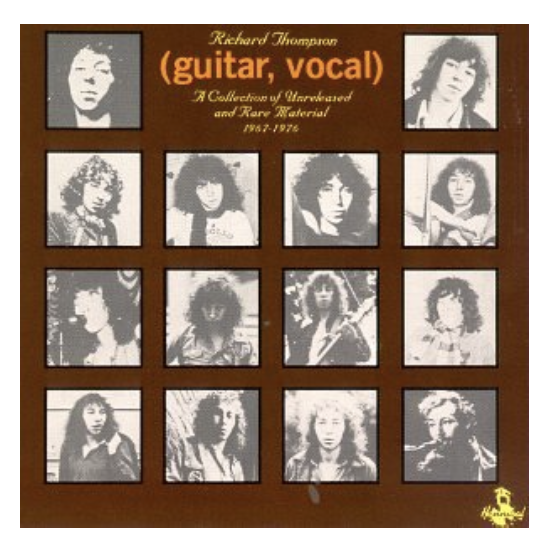
Tonight’s writing soundtrack is Richard Thompson’s (Guitar, Vocal) 1967-1976. Yup, even the CD is costly today ($25 at Amazon) but you should have it anyway.

Any lover of guitar must…
January 27: Audacity

January 13: My friend & favorite watercolorist

My favorite watercolorist is also my friend, Alba Escayo. She and I go way back. I think we found each other on Elance which is now Upwork. Yup, a classic internet mogul move; change a good name to a lousy one. Alba lives and works in Spain. She created the cover on my first novel and I wanted her to create the cover on Cottonwood as well. I’m always grateful she’s younger than I am because it means she’ll be around to create the cover artwork for every book I write, if she’s willing and I am able.

I had an idea that involved a Cottonwood tree and a figure carrying a golf bag and walking away from the viewer. From underneath the tree, the figure reaches up and touches the low-hanging leaves. The idea of the walking away is that the figure is walking into the future, like all of us. The figure is faceless. It could be anyone. It could be one of the characters in the book but then again maybe not. No matter who it is, he reaches up to touch the tree, to touch a growing life.

I sent Alba an example of my idea but I did a bad job of explaining my vision to her. Probably I was in a hurry or maybe I thought we had discussed it more completely last time we emailed about it, over a year ago. She sent me this a couple days ago:

Now I have a problem, not a bad problem mind you, more like a decision. This is not at all what I had in mind, but I love it. It’s not a golf book so I had no intention of having an image of someone swinging a golf club on the cover, but there it is. And, now that it’s there, it has me doubting my concept. I’ve been reminding myself of some of my best non-advice advice:

It doesn’t really matter.

Of course it does, but maybe not. I wanted Alba to create the cover because I love her work, and this is her work. Now I find myself hesitant to continue to foist my vision on her, especially after she’s blessed me with this beautiful creation. My concept is not the idea of a visual artist but rather of a lowly writer. Part of me is screaming at myself to leave the artwork to the artist, and that is definitely Alba and definitely not me.

But we are talking about me. So, in the end I couldn’t help myself and I emailed Alba with my thoughts. As I said, I love the cover she’s done, and I want it, and I’ll pay her for it gladly. It will hang proudly over my desk and I will smile each time I see it. It may not end up being the artwork I use on the cover and then again it might be.

The decisions made in writing a book, especially a self-published book, go on and on. I’m very happy that no matter what decision I make about the cover art, the work will be Alba’s and it will be fantastic because it is hers.

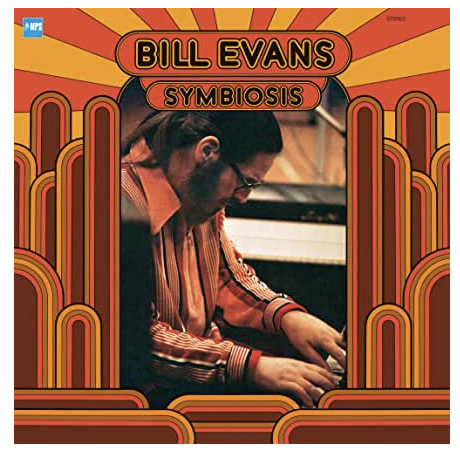
Today’s writing soundtrack is an elegant 1974 record by Bills Evans called, Symbiosis. It is some of the best of jazz and classical (read: orchestral) music I have ever heard. It is melodically and rhythmically evocative of both times and places I’d like to be. I know a pianist who doesn’t think much of Bill Evans’ work from this era, but I think it is wonderful. Maybe you will, too, so take a listen.

Thanks for dropping by.

January 13: My friend & favorite watercolorist

A Quick Review of the Fifine K669B USB Microphone

Fifine

You can buy this little beauty here.

I’m grateful to Fred Greene, head honcho of the GolfSmarter podcast, for a number of things. One that I hadn’t anticipated was how much I enjoyed being interviewed by him for his podcast. Though it was a little out of my experiential-comfort zone, I really enjoyed it. I’m a born talker (as I think most writers are) but speaking formally over the course of 30 minutes is a different kind of talking than most of us are used to doing.

But, again, I liked it. I soon had the idea of doing an audio version of my golf short story, Kingdom of Dreams. I saw the effort as a study that would help me determine whether I could successfully narrate my novel, John J. McDermott & the 1971 U.S. Open.

I think I can.

Though I’m not bowled over by the quality of my narration so far the results seem workable and I’m hoping to get better as I gain experience and learn from my inevitable mistakes.

It didn’t take long to figure out I needed a microphone that was better than the built-in mics in any of my Macs or my iPhone. I asked around and did (very) little research.

A trusted podcaster I know recommended the Blue Yeti but I wasn’t all that enthusiastic about dropping $125 on something that could soon end up collecting dust on a shelf.

So, I decided on the Fifine K669B. I’m mean, it’s only $29 at Amazon and it’s Prime-eligible so there’s very little to lose.

Some of you may know I worked in high end audio for decades and have reviewed well over a hundred high end products. I’ve also been formally and informally involved of scores of recording sessions from pop to classical.

But, I’ve never actually reviewed a microphone. The more I thought about it the more I realized that something really critical to proper audio reviewing was missing.

There’s no reference.

Nearly all of the web and youtube reviews of mics compare one mic to another. I understand this temptation but the better or worse game that’s pretty much useless in evaluating playback gear is even more useless in evaluating source gear.

Why?

Let’s say it again…there’s no reference.

A given reviewer may like the way his voice sounds on Mic A instead of Mic B but that is no predictor of whether anyone else will like the sound of their voice when captured by Mic A.

A significant part of mic performance can be evaluated objectively but most reviewers confine their objective comments to describing features which is fine as far as that goes, but features do not relate directly to quality when you’re talking about audio fidelity.

So, what can I say about the Fifine? I can say it’s fine…for me. It has a fixed cardioid pattern that’s well suited to my simple needs and is truly plug & play (at least on a Mac).

Also, the little fellow is nicely put together, seemingly solid, yet not overly heavy. Some will surely complain about the captive USB cable but at least you know that if you remembered to bring the mic you also remembered the cable!

The only adjustment on the mic is for volume and I found the sensitivity to be plenty wide for my needs and is quite smooth. The volume knob has a reassuringly heavy feel and is easy to position precisely and consistently.

I found set up to be as simple as plugging the mic in and hitting record and I designate the sound quality as just dandy (I know; far too many technical terms).

For $29 there’s just nothing for me to complain about.

Lastly, the Fifine Folks appear to be very responsive at least related to their Amazon sales. This is especially impressive for such an inexpensive product and shows the company understands that early efforts related to customer service will help them build their brand over time.

Well done, Fifine. You’ve done a fantastic job with K669B.


A Quick Review of the Fifine K669B USB Microphone