A Quick Review of the Fifine K669B USB Microphone

Fifine

You can buy this little beauty here.

I’m grateful to Fred Greene, head honcho of the GolfSmarter podcast, for a number of things. One that I hadn’t anticipated was how much I enjoyed being interviewed by him for his podcast. Though it was a little out of my experiential-comfort zone, I really enjoyed it. I’m a born talker (as I think most writers are) but speaking formally over the course of 30 minutes is a different kind of talking than most of us are used to doing.

But, again, I liked it. I soon had the idea of doing an audio version of my golf short story, Kingdom of Dreams. I saw the effort as a study that would help me determine whether I could successfully narrate my novel, John J. McDermott & the 1971 U.S. Open.

I think I can.

Though I’m not bowled over by the quality of my narration so far the results seem workable and I’m hoping to get better as I gain experience and learn from my inevitable mistakes.

It didn’t take long to figure out I needed a microphone that was better than the built-in mics in any of my Macs or my iPhone. I asked around and did (very) little research.

A trusted podcaster I know recommended the Blue Yeti but I wasn’t all that enthusiastic about dropping $125 on something that could soon end up collecting dust on a shelf.

So, I decided on the Fifine K669B. I’m mean, it’s only $29 at Amazon and it’s Prime-eligible so there’s very little to lose.

Some of you may know I worked in high end audio for decades and have reviewed well over a hundred high end products. I’ve also been formally and informally involved of scores of recording sessions from pop to classical.

But, I’ve never actually reviewed a microphone. The more I thought about it the more I realized that something really critical to proper audio reviewing was missing.

There’s no reference.

Nearly all of the web and youtube reviews of mics compare one mic to another. I understand this temptation but the better or worse game that’s pretty much useless in evaluating playback gear is even more useless in evaluating source gear.

Why?

Let’s say it again…there’s no reference.

A given reviewer may like the way his voice sounds on Mic A instead of Mic B but that is no predictor of whether anyone else will like the sound of their voice when captured by Mic A.

A significant part of mic performance can be evaluated objectively but most reviewers confine their objective comments to describing features which is fine as far as that goes, but features do not relate directly to quality when you’re talking about audio fidelity.

So, what can I say about the Fifine? I can say it’s fine…for me. It has a fixed cardioid pattern that’s well suited to my simple needs and is truly plug & play (at least on a Mac).

Also, the little fellow is nicely put together, seemingly solid, yet not overly heavy. Some will surely complain about the captive USB cable but at least you know that if you remembered to bring the mic you also remembered the cable!

The only adjustment on the mic is for volume and I found the sensitivity to be plenty wide for my needs and is quite smooth. The volume knob has a reassuringly heavy feel and is easy to position precisely and consistently.

I found set up to be as simple as plugging the mic in and hitting record and I designate the sound quality as just dandy (I know; far too many technical terms).

For $29 there’s just nothing for me to complain about.

Lastly, the Fifine Folks appear to be very responsive at least related to their Amazon sales. This is especially impressive for such an inexpensive product and shows the company understands that early efforts related to customer service will help them build their brand over time.

Well done, Fifine. You’ve done a fantastic job with K669B.
 

A Quick Review of the Fifine K669B USB Microphone

Kingdom of Dreams Part 3

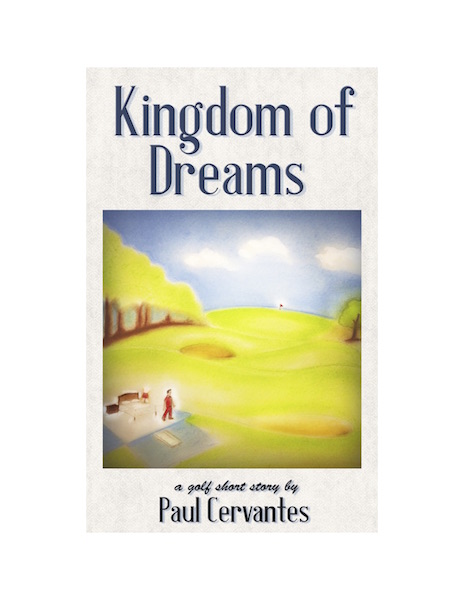
This is Part 3 of Kingdom of Dreams, my 2014 golf short story.

Part 4 will be available soon so please check back.

I hope you enjoy it and thanks for having a listen.

By the way, you can buy the ebook here: Kingdom of Dreams ebook at Amazon.

Kingdom of Dreams Part 3

The paperback version of my novel is now on sale at Amazon!

After a lengthy delay, the print-version of my novel, John J. McDermott & the 1971 U.S. Open, is available at Amazon.

You can get your very own copy of the paperback here.

The delay was related to the cover. I’m usually not one to point fingers but I was the problem.

There, I said it…now go buy a copy.


The paperback version of my novel is now on sale at Amazon!

Kingdom of Dreams Part 2

This is Part 2 of Kingdom of Dreams, my 2014 golf short story.

Part 3 will be available soon so please check back.

I hope you enjoy it and thanks for stopping by and having a listen.

You can buy the ebook here: Kingdom of Dreams ebook at Amazon.

Kingdom of Dreams Part 2

Kingdom of Dreams Part 1

This is Part 1 of Kingdom of Dreams, my 2014 golf short story.

Part 2 will be available in a week or so.

I hope you enjoy it and thanks for stopping by.

You can buy the ebook here: Kingdom of Dreams ebook at Amazon.

KOD Cover for Blog Part 1


Kingdom of Dreams Part 1

The software I’m using to write my new book is…

I’ve been making good progress on my new book, especially considering the hodgepodge of software I’ve been using.

I wrote my first book in Microsoft Word and it was a harrowing and creativity-sapping process. Word is like a huge Swiss Army knife of a word processor. A knife with a shit-ton of tools can be impressive. You look at it wondering how many tools there are and whether you’re likely to use most (or any) of them.

Then you realize the damn thing’s heavy. Then you realize that using any of the tools except the main blade is a fiddly and frustrating experience.

In the end, you leave the knife at home more than you use it.

Don’t get me wrong. I’m grateful that Word exists. The choices made by the folks who created it result in a benchmark product. I would never refer to Word as a bad piece of software. It’s simply a bit of software that’s unsuited to the creative flow of my writing.

A while back, I was prattling on about Ulysses and iA Writer. Later, I discovered and used Bear for a while. I deemed each of them as interesting but not quite useful enough. Each design is good at pretty much keeping out of the writer’s way.

It’s the issue of sync that settled the matter, and not in favor of iA Writer, Ulysses or even Bear.

Each of those platforms rely on iCloud for sync. That’s OK if the writer uses the same Apple ID across all devices and the iTunes Store. There’s the problem for me. Also, I think the software companies should use their own system and servers for sync rather than relying on iCloud.

I think WorkFlowy does sync right. Their ingeniously simple software is truly web-based, syncing by username, seamlessly.

I encourage those folks to develop WorkFlowy for Writers and let me know when it gets to beta. If they can build on the way WorkFlowy works and apply it to the work of long-form writing it would be a real game changer.

The software I’ve chosen to write my book in is Apple’s very own Notes. File organization is simple and straightforward. You can choose your own font and basic formatting is a snap. I will continue to use Word as the destination software (and archived backup) for the eventual manuscript. Importantly, documents created in Notes paste cleanly into Word without any weird or unexpected formatting problems. Notes also syncs both immediately and perfectly across all devices, as one would expect of one of Apple’s own creations operating in their own ecosystem. The UI is clean and uncluttered and this helps me to focus on what I’m working on. 

I’m glad to be watching that hodgepodge of software vanish into my rearview mirror. I’m also glad there are software folks out there who are trying to make the challenge of writing easier and I’m really happy Apple did such a marvelous job with Notes.

The software I’m using to write my new book is…

Listen to my interview on the GolfSmarter podcast

GolfSmarter #676

Exciting News: Now you can listen to my interview on the GolfSmarter podcast here:

My interview on GolfSmarter

It was really generous of GolfSmarter’s head-honcho, Fred Greene, to invite me onto the show. He does an amazing job on the podcast and makes the entire process so enjoyable for the guest. The experience made me want to do it all again, but to do a little better job.

I did the interview cold; I didn’t know what questions Fred would be asking in advance. That ramped up my anxiety factor a little at the outset but once we got rolling the interview took on a nice flow. Fred’s a real pro and a great friend to golf.

I was very pleased to have the opportunity to talk about the release of the second edition of Tony Manzoni’s classic golf instructional book, The Lost Fundamental as well as the availability of my new book, John J. McDermott & the 1971 U.S. Open.

Thanks, Fred, for providing the forum for me to share two of my favorite subjects with you and the entire GolfSmarter audience.

Listen to my interview on the GolfSmarter podcast

How (and how NOT) to discuss a friend’s new novel.

I’m going to take a few minutes to explain how to discuss a friend (or loved one’s) new novel.

Please consider my premise:

The novel was a royal pain in the ass to write. It was a wholly unreasonable thing to try to create while holding down a day job of any kind.

It started out hard & got harder.

Then, as if by magic, it was done.

In the end, the writer failed in ways he never imagined.

In the end, the writer succeeded in ways he never believed possible.

A book should be read, it must be reacted to, so the writer gives it to the audience he imagines will be the most kind and receptive and responsive.

You’re that audience and I’m going to tell you what the writer wants you to say and ask (and also what he hopes you won’t).

First, be aware the writer knows his novel is flawed.

He didn’t write the novel to get rich.

He didn’t write the novel to become famous.

He wrote the novel in an effort to convey an idea or series of ideas in the best and most engaging way he could.

Let’s cover those pesky don’ts first.

The writer doesn’t want to hear about what you’re reading right now and that you’ll get to his book when you’re done.

The writer doesn’t care when you read his book, only how.

The writer doesn’t want to be asked how he intends to promote his book. It’s a valid subject, of course, but in the heady time just after the book has gone up for sale it’s probably not front-of-mind for the writer.

The writer doesn’t want to be reminded how great it is that it’s become so easy for anyone to write a book and sell it on Amazon.

The writer doesn’t want to be asked how many copies have sold so far.

The writer doesn’t want to be asked if he he’s going to send the book to any real publishers.

Let’s move along to what the writer does want you to ask about.

The writer wants to know if you liked the book. He wants to know if you found any of the characters likable or loathsome or fun or frightening.

He wants you to ask him how he went about writing the characters the way he did.

He wants you to ask if any of the characters were based on people he actually knew or knows.

He wants you to ask what it was about the real person that made him want to form the person into a character in a fictional book.

The writer wants to know if you didn’t like the book.

Trust me on this.

He wants to know if you simply didn’t find the story intriguing or the characters engaging. If he fell short (and he surely did), you’re his best chance of figuring out how he did and maybe even why.

The writer wants you to ask how you decided on the book’s sequence. He wants you to ask how you were able to handle the different times and places while maintaining the book’s coherence and flow.

The writer wants to be asked why he decided to write a book at all?

Why make the effort to do something that consumes literally thousands of hours and, in many cases, years to complete with a vanishing a chance of being appreciated by more than a few readers, let alone to achieve financial compensation commensurate with the effort?

It’s a good question that every aspiring writer has asked himself not only when he first set out to write the book, but likely every single time he sat down to work on it.

The way you ask that question may help the writer draw a closer to his own answer when he asks the question of himself.

He also wants you to ask him about other subjects he may be interested in, or may already be working on.

Finally, he wants to be asked what he learned from writing the book.

He wants you to tell him what you regard as the best part and worst part of his book.

Lastly, the writer wants to know what his book made you think and feel. Were you happy to be done with it, to be relieved of the perceived obligation of reading it, or did its ending leave you wanting more?

Did reading it make you think differently about the writer? Did it change the way you thought about what he might accomplish in the future, based on what you see as the promise or lack of promise manifested in the book you just read?

The writer is asking himself each of these questions as he lays his head on his pillow every night.

Is the writer is an honest soul, looking to achieve beyond his prior achievements?

Though obvious to me, I should say that everything I write here assumes the writer in question is an honest soul. I assume the writer was trying to achieve something bigger and far more importantly than bigger or longer, a work beyond anything he may have written before.

Thinking of a novel as leap of faith.

I think every novel represents a leap of faith for a writer and I believe a writer simply wants to be asked what made him want to take the leap.

That’s a question he’s asking himself, too.

How (and how NOT) to discuss a friend’s new novel.

My Novel is Available at Amazon…For Now!

A friend of mine, Fred Greene, does the GolfSmarter podcast. He was kind enough to interview me for his show and I’ve decided to make my novel available at Amazon for the next few months.

Sometime around April or May, I will be taking the book down while I submit it to a handful of publishers.

So, get it while it’s available…

John J. McDermott & the 1971 U.S. Open

Also, I’ll post again when the podcast episode is live.

Thanks for reading.

front cover alone with sansserif

My Novel is Available at Amazon…For Now!