Flickr’s Explore Algorithm & “Good” Photography

Photos of mine have been captured by Elickr’s Explore algorithm a handful of times. Each time I wonder why for a few moments before I remind myself that a computer program can’t see photos, derive possible relevance, think about or consider what the photographer may have been thinking about when the shutter was pressed.

That makes me think, why would anyone care whether one of their photos made it into Explore? I can’t come up with a reason that a photographer would be motivated to try to get his images into Flickr that could possibly relate to the quality of his photography.

After all, who could possibly aspire to impress a computer’s programming?

It’s easy to imagine one possible motivation residing in a miniature version of Warhol’s Fifteen Minutes of Fame, and I know some photographers who are looking for just that. At the same time, I can see Flickr’s motive in developing and refining the Explore algorithm. I don’t browse the images in Explore very often but when I do I see lots of close-up photographs of birds and a lot of huge landscapes with surreal or at least very dramatic color.

The photos in Explore are nearly always conventional in the extreme. The occasional unusual photo (unusual either in subject or execution) nearly always strikes me as something that made the algorithm experience the computer-software equivalent of bemusement, for a mere fraction of a millisecond. Today there’s a simple photo of a miniature figurine of a lion. I can imagine the data chain inside the algorithm wondering silently to itself, is that miniature lion really alive?

That question got me thinking about just how unlikely it is that the algorithm will ever be able to judge truly interesting let alone good photographs. Think of the objective differences between an Ansel Adams photograph of Yosemite National Park and the millions of other images captured from the same or similar vantage points. Now think about how you would go about creating a program that recognizes artistically good light and a well-seen composition. It’s hard enough for a human viewer to get a sense of what the photographer was trying to achieve and so wholly arguable as to how well that effort or vision was achieved. The genuine wonders of artificial intelligence notwithstanding, identifying good photography is going to remain a real problem for Flicrk’s algorithm. I’m sure the folks at Flickr are doing their best but it’s not very good.

This brings me to the photo of mine that found its way into Explore.

36580067353_ff11c9ae2c_k

Crap, even I don’t like this one all that much. I took it about twenty minutes after the sun fell behind the foothills. I had been out looking for an oak I photographed back in April. Somehow, I couldn’t find it even though I though I was certain about where it was. Obviously, I wasn’t. As I hustled through the canyon, trying to beat the coming darkness, I spied this huge tangled mass of an old tree and looked at the road go on beyond it.

As I did I thought to myself, that old oak knows exactly where that road leads; toward autumn. So, I turned around and snapped this. Yes, I kept the branches of the tree on the right in the frame intentionally.

Now thousands of Flickrites have viewed it and hundreds have faved it.

Yay.

No, I’m not upset this photo is in Explore.

Yes, it’s nice that so many people are seeing it (I suppose).

But, in the end I am far too selfish to care what a bunch of people who don’t know me think about one of my more marginal photos. I’m trying, in my way, to be a better, more aware, more sensitive and more creative photographer. It’s doesn’t matter to anyone other than me if it happens. Maybe in some backhanded way having this image in Explore has rekindled that singular clarity of mission.

It could be that Flickr algorithm is better than I thought.


Flickr’s Explore Algorithm & “Good” Photography

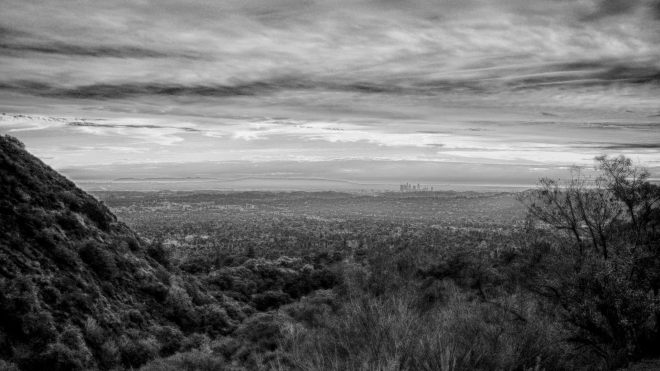
Downtown Los Angeles & Beyond

32069023832_91ee5fd6a4_k

This was an unusual day when it came to light. There was great distance visibility. But, there was also a good deal of moisture in the unsettled air. The result was a kind of soft-clarity that tended to obscure details and one’s sense of distance. It was as if the very far and the not so far away had been drawn into each other.

With winter on its inevitable approach, this photo reminds me of the kind of light that comes with the cooler and sometimes moisture-laden air of the season. It’s always been a difficult season for me to look forward to, but I’m working on it.

This was taken just beyond the Cobb Estate in the foothills above Altadena, CA.

Downtown Los Angeles & Beyond

Untitled 1: On the San Gabrielino Trail

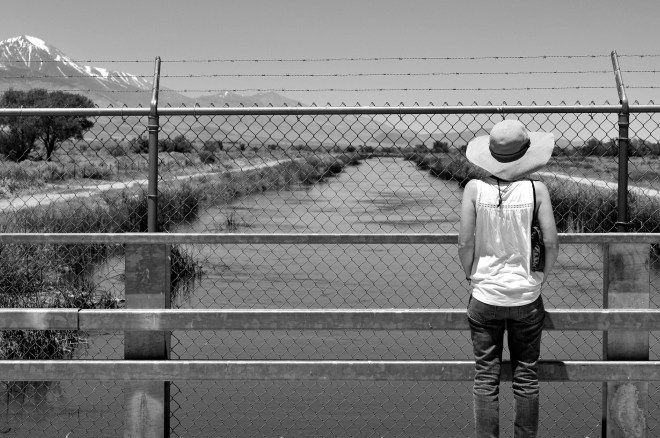
2010 was the last year before the start of the Great California Drought. That year, heavy downpours drove mud and debris down from the foothills through what are ordinarily dry, or nearly dry, river beds all the way to the Hahamongna basin.

The San Gabrielino Trail above JPL is an odd one, unless you’re from Southern California. Toward the bottom, near where this photo was taken, it’s a strangely disquieting mix of the suburban and natural worlds. There’s an asphalt walkway that gives way to a broken concrete one before direct contact between foot and mother earth finally takes over.

I caught this view through the chain link fence that keeps the locals out of the river bed on the lower part of the trail. I stood there for a quite a while, pointing my humble Panasonic LX3 between the links of the fence. I didn’t think much about the image until days later.

Maybe it’s my envisioning of the massive flow of water that came in the days and weeks before the image was taken. Maybe it is my wonderment at the idea the trees had withstood that muddy onslaught. Maybe it’s the little touch of vibrant green. I’m not sure but I always enjoy this photo when I come upon it.

1
Untitled 1
Untitled 1: On the San Gabrielino Trail

The Schaeffer Fire, Bonnevile Salt Flats, US 395 & the Sherwin Range

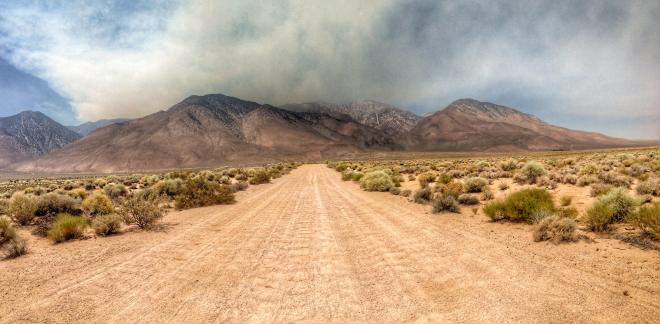
Smoke from the Schaeffer Fire

The Schaeffer Fire had been burning for well over a month by the time I caught this image on the road to US 395 west of the Cottonwood Charcoal Kilns in Inyo County. There were no fewer than three wildfires fires burning in California at the time (mid-August).

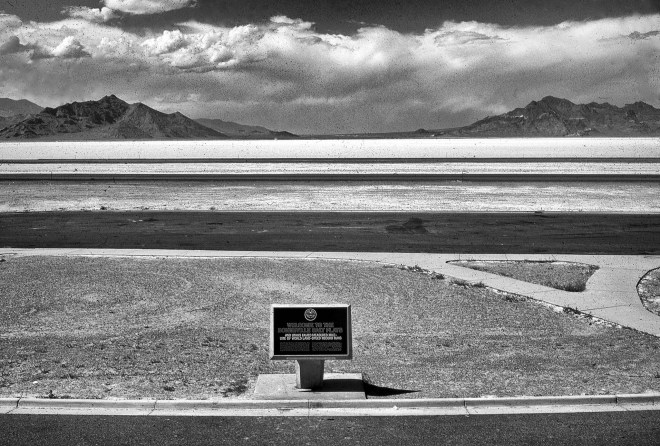
Bonnevile

When I was a kid I was fixated with the land speed record attempts that took place at Utah’s Bonneville Salt Flats. I was around eleven when I finally got a chance to see the place for myself. Much to my delight my father even took our 1966 Pontiac Bonneville (no kidding) out on the flats for a few high speed passes.

Those, indeed, were the days.

I took this photo with my father’s Argus C3 on that trip way back in the early 1970s. The negative was buried somewhere in a box of over 6,000 images left behind by my parents. Most of the images were out-of-focus castoffs, but there were a few gems among the rubble.

I’ve not been back to the flats. I’ve learned that the salt on the flats is thinning, but no one is quite sure why. It makes me want to go back to that day when the salt was flat and thick and dustless and I sat beside my father, speeding across the horizon.

395 south toward Bishop
Looking southwest toward Bishop near US 395
Sherwin Range at sunset
The Sherwin Range at Sunset

It never fails to amaze me how often the humble iPhone 5 ends up seeing duty when a better camera would have been more suitable. Just a few minutes earlier the light was even more spectacular and the lenticular clouds were nearly luminous.

The Schaeffer Fire, Bonnevile Salt Flats, US 395 & the Sherwin Range

Thinking about cameras & a quick review of the Road Runner Bags Camera Strap

Lately I’ve been thinking a lot about cameras.

Me? I love a good used camera. First of all, they’re cheap. I bought my Nikon D300 for $200. I mean, was there ever a better value in the history of the world? Second, I tend not to worry about used cameras. I always make sure the stuff I bought has seen some actual use. That way any bumps and bruises are easier to regard as marks of character rather than evidence of carelessness on my part.

The sad news is that my Fuji X100 gave up the ghost; very disappointing. Or, to channel our 45th president; sad. If I were given to complain (and I am) I would say that it’s pretty dang disappointing that Fuji is unable to fix what they regard as a professional camera that’s little more than a handful of years old. I ended up in the funny spot. Fuji could either ship back my pretty much useless X100 or I could pony up some cash and they’d sent me a brand-spankin’ new X100T.

Fine, fine, fine…here’s my credit card number.

Thing is, I knew I wasn’t going to keep the X100T. I’m kinda soured on the Fuji thing at least for now. Eventually, I may get myself another small mirrorless camera with a 1″ or m4/3 sensor but for now I’ve decided to simply toggle between my aforementioned D300 and a battle-scared old Panasonic LX3.

Sure, I used to own an LX3 (and later and LX5 and an LX7) but this little camera has me enamored for some reason.

FullSizeRender
The mighty LX3 and its new Road Runner Bags strap in olive & black…yes sir!

This little camera rocks hard. I picked it up well-used over at Fred Miranda for $55. Nearest I can tell the little fellah has over 100,000 clicks on the odometer and it works perfectly. Heck, I even bought a second Panasonic battery for it; yup, I’m going all out. The neat little Leica lens is quite sharp over its entire range and the focus and metering are spot on. If Panasonic would upsize this exact camera with the same zoom range and a 1″ sensor I’d buy it.

The cool olive & black Road Runner Bags strap was supposed to be for my repaired X100 (sniff, sniff…) but I put it on the LX3 out of spite for Fuji. Like another favorite company of mine, Courier Ware, Road Runner isn’t much on self-promotion. The strap doesn’t even have their name anywhere on it…just a small label that says, Handmade in California. The webbing that Road Runner uses is very smooth on the skin and their form-follows-function-factor is admirably high. Road Runner Bags is a neat little company. All their stuff is made right here in Los Angeles and they certainly did a fine job with their first camera strap. I’m hopeful they’ll continue to work on more bags and straps for all the two-wheeled photographers out there on the streets and trails of Los Angeles.

Check their website out today and buy something.

Anyway, I enjoyed the Fuji because it was so easy to bring along. I disliked the Fuji for the same reason everyone else did. It was rather fussy, sometimes inscrutable, and the focusing was always marginal and then it got worse. How does that even happen? I also found the X100 rather fragile feeling. I don’t know if Fuji got it right with the S or the T or the F. All I know is Fuji’s naming convention for the X100 series is going to be tough for whatever follows the X100F. I’m not off Fuji forever; then again, maybe I am.

I can’t quite get my brain around how some folks are able to get along with an iPhone as their sole camera. Of course, I wear a wrist watch. Still, I do see the appeal to less is more when it comes to cameras. With the departure of the X100 and now the sale of the X100T I’m left with the LX3 and the D300.

Both of them suit me just fine.

Thinking about cameras & a quick review of the Road Runner Bags Camera Strap

My Personal Web Domain Expired (and I didn’t notice)

That’s right, and it happened over a year ago.

Sure, I could moan about the lack of notice from the domain registration company (and that’s exactly what I did when I found out). But the fact is I didn’t notice my site was down for an embarrassingly long time and it makes me wonder why I had it in the first place.

I’m impressed by people who maintain a blog, a website, a Facebook presence and who write (and read) stuff on Twitter. Don’t get me started on Instagram.

I’ve decided to let the domain go for now and maybe forever. Sure, Tom Wolfe needs his own website but the again he’s got more than a dozen novels under his belt. A man’s got to know his limitations.

On a more optimistic note, I’ve done some work on my novel and can faintly see its completion somewhere beyond the horizon. I’ve also snapped a few humble photos so let’s a take a look.

36776053366_c8253c6b60_k
Southern Sierra Foothill Sunset
35893599754_632d69bc68_k
Untitled 11: Taken east of US 395
35749600053_2063b539d4_k
Looking West: Taken just south of Independence, CA
36298723863_2995743595_o (1)
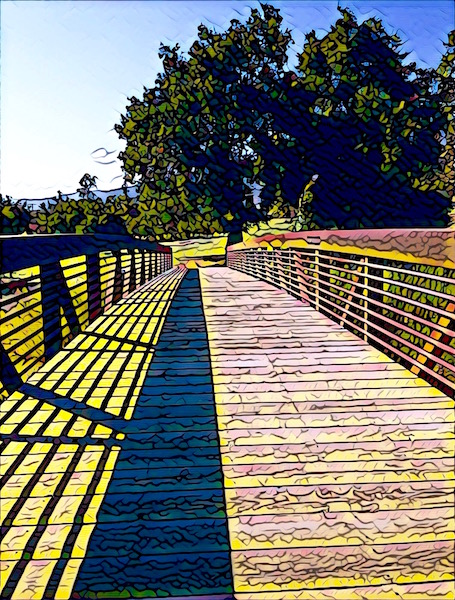
Bridge to the 9th: Soule Park Ojai, CA
36457042896_eb18cbebe1_k
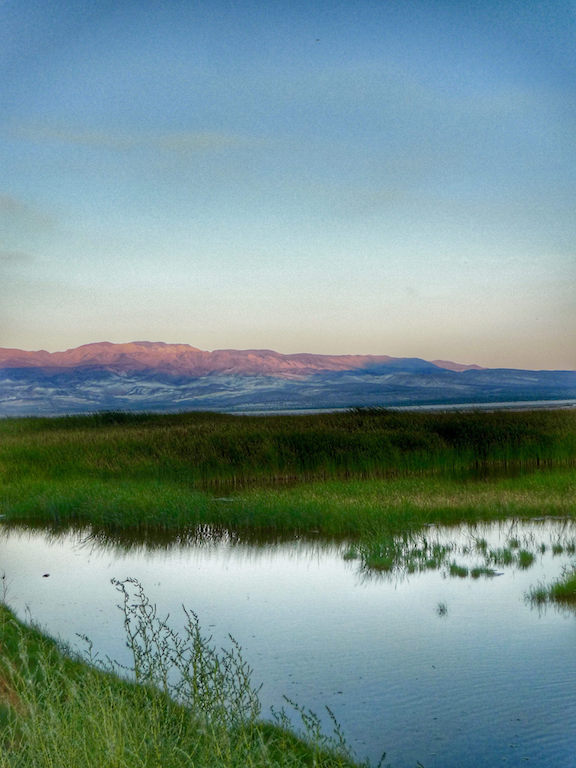
Marsh & sunset

There now; aren’t those a lot more fun than reading about my expired domain?

I should hope so.

My Personal Web Domain Expired (and I didn’t notice)

One strap, one bag; Crumpler & BBB

Man, talk about bored. Bored is the only possible motivation to write about a camera bag and a camera strap.

There you have it; I’m bored.

First the strap. You all know the Crumpler name. You know the make nice stuff, especially their somewhat unusual bags. But, did you know they made a nice strap, too?

No, not their lackluster and bulky Industry Disgrace. Today I’m talking about their very lightweight (and somewhat light duty?) Popular Disgrace. This 2.5 centimeter strap is da bomb for a lightweight camera like my aged Fuji X100. Its magic resides in its simplicity, and also the perfectly textured neoprene that covers the conventional strap material.

I hike a lot with the X100 so it spends a lot of time slung across my back. The neoprene has just the right about of traction and just the right amount of slip (dare we call it, perfect coefficient of drag). The strap material underneath is quite stout. It would be totally suitable for a larger and heavier camera, if the neoprene section were a tad wider.

IMG_2999

Me? I don’t like heavy cameras. My old Nikon D300 is as heavy as I can stand. That’s what keeps the X100 nearby so often. If you have an X100 or any other lightweight camera you might want to check out the Popular Disgrace, if you can find one.

In case you’re one of those folks who find camera bags slightly less dull than camera straps, I have a good one for you. The Bare Bones Bag (BBB hereinafter). I’m being kinda charitable to the folks at Figital Revolution. They’re not really the ones who’ve done the heavy lifting (stitching?) in the creation of the BBB. The real work was done by the hard-core, hard-asses at CourierWare.

For those of you who are even more bored than I am (come on,  you’re reading this aren’t you?) feel free to check out my review of yet another CourierWare bag here.

No, you cannot stuff a lot of shit into the BBB.

And, no, the BBB is not possessed of a great deal of padding. Heck, my version of the bag doesn’t even have a velcro closure for the top.

And, yes, the BBB may be able to pass as a purse, assuming that the woman who’s carrying it is good looking enough.

Still, for me it’s just dandy for carrying the (wait for it) Fuji X100. It holds that, my beater Panasonic LX3, both their chargers and spare batteries, my faithful Benchmade knife and a lot (but not too much) other crap. There’s a touch of padding in the bottom of the bag but the rest of the bag is just plain (if very high quality) waterproof 1000 denier Codura nylon.

If you’ve been living under a rock you may not be aware that CourierWare makes a superb bag. They are light yet totally bombproof and guaranteed for life. The care and quality of the stitching is beyond reproach. Now, the truth is that I’m not even sure that you can buy the damn thing. I got mine used and you’re never getting mine, believe me.

But, if you have a load that’s the right size for it, and if you can find one, the BBB cannot be beat. If you value function and give not one shit about style, it may be the bag for you. If you need a larger bag, check out the CourierWare website. CourierWare’s owners, Diana & Eric, are amazing, salt of the earth kind of folks and they’ll make the bag of your dreams.


One strap, one bag; Crumpler & BBB

Change of Seasons: California Oaks

Southern California is a place of slow and subtle shifts. Traffic moves slowly and the differences of our seasons can sometimes be hard to discern, especially for people from non-Mediterranean climates.

I’ve spent all my life here and can tell the different seasons by a number of different clues. I can see the how the light differs on a clear summer day and a clear day in winter. I can also smell the seasons, especially the spring & summer. As winter glides into spring I started to think about another seasonal clue.

Oaks.

We have no fewer than twenty different varieties of Oaks in California. Even in our vast urban and suburban sprawl, Oaks are common and for the most part venerated. We even like naming communities after them like Sherman Oaks, Thousand Oaks, Oak Park, Oak Hill and of course, Oakland.

The Santa Monica Mountains is home to scores of oaks and the Santa Monica Mountains Conservancy does a marvelous job of preserving the hills and valleys where the oaks thrive, often times surrounded by upscale housing developments.

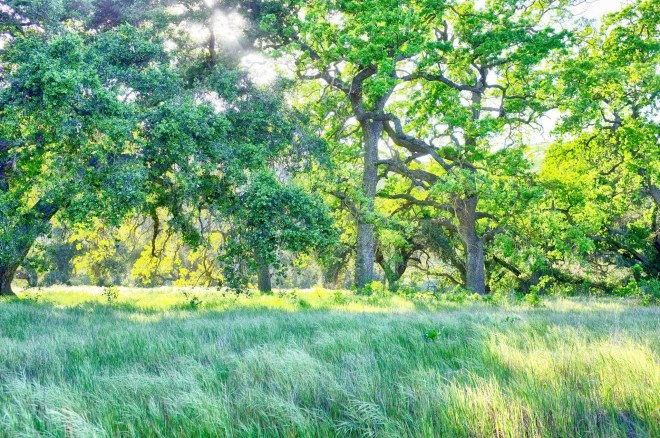
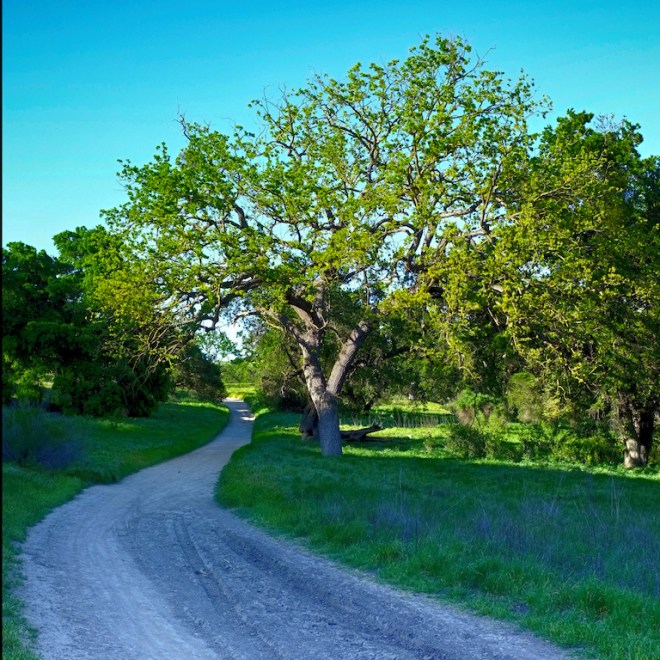
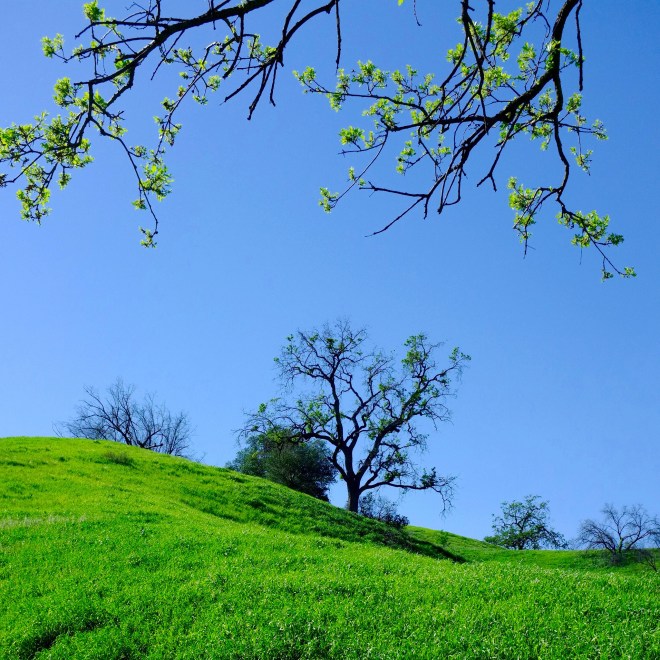
I thought it would be fun to capture the transition of some of our oaks from winter to spring, from cold to warm, from brown to green.

Allow me to start with a short poem.

Nothing Gold Can Stay

Nature’s first green is gold,
Her hardest hue to hold.
Her early leaf’s a flower;
But only so an hour.
Then leaf subsides to leaf,
So Eden sank to grief,
So dawn goes down to day
Nothing gold can stay.

– Robert Frost / 1923

Oak 8
Oak 8
DSCF5522 small
Oak 7
Oak 6
Oak 6
Oak 5
Oak 5
Oak 4
Oak 4
Oak 3
Oak 3
Oak2
Oak 2
Oak 1
Oak 1
Change of Seasons: California Oaks

Prior Recognition & Landscape Photography

Of late, I’ve been thinking a great deal about landscape photography. It’s not just because spring is drawing closer every day. In fact, the prime motivation is the fact that after eight years of using Flickr, I’ve struck up a couple of very interesting internet friendships. It happened quite out of the blue but soon I found myself exchanging emails on subjects that had previously been confined to the hollow space between my ears. To top it off, there were actually discussions about our actual photographs; imagine that.

Of course, there was a bit of the old, does my photography matter and a touch of is photography art sorts of questions. These are old and tiresome points of discussion yet somehow they can seem (briefly) new when bandied about by hopeful folks who simply love the potential of their photography. Anyway, one of the Flickrites offered the idea of his landscape photography as a kind of visual recollective of the places he’s been. I’ll admit that I cringed slightly at this idea. I thought of the millions who had come before him and the thousands of images they recorded, the vast majority possessed with the very same humble intent and I thought to myself, what is the point of that?

Now it’s true that far too much of my own landscape photography has been similarly simplistic and banal. If you have a camera, you tend to use it. If you’re standing before beauty, you record it. But, the problem, the point of a disconnect for me anyway, is the lack of the photographer’s own collective vision and intentionality effectively mating with the images that are in front of him.

Last December, I attended an exhibition of a guy I know from a local golf course. I knew the exhibit photos were from Namibia, a place I had never been. So, obviously, I was curious about the visual elements of the landscapes of Namibia. But I was wondering if I would see something more. The photographer’s name is Ding Kalis. I’d seen some of his work online but somehow that did not fully prepare me to see the richness and depth of his Namibia photographs up close and personal. Then on a cool December night, I stood gazing at this:

Ding 2
The Elements Collide © 2016 Ding Kalis

I realized at that moment that one rare element of landscape photography is the ability to see something, or even imagining if something can be seen, before a scene is witnessed. Of course, Ding knew these borders, these separations, existed before he climbed into the Cessna. This scarce and precious element of landscape photography is a kind of prior recognition that can show something that is entirely common in what is likely a wholly unexpected way. The end result is that the viewer is given a gift; the gift in seeing something new, or at least in a new way. The fact that the photo was taken tens of thousands of miles away is secondary to the novelty of the photographer’s vision. This could well have been taken on the coast of southern Oregon, or here in California, and it would still stir my imagination in the same way. It’s the way Ding saw the scene that mattered, far more than the exotic nature of the location.

Here’s another one of Ding’s photographs from the same exhibit:

Ding 1
Three Degrees © Ding Kalis 2016

Again, Ding had to have had the separations, the boundaries, between these dunes keenly in his mind before he actually witnessed and captured them. This is a huge part of good landscape photography and maybe the element with the potential to nudge this kind of photography toward art. It is, as I said before, the art of prior recognition. The scene may unfold before all of us in the very same way. But, when we have the ability to see what’s there in a way we recognize a priori, or maybe even expect before we see it, we have a fleeting chance to capture something of meaning, to ourselves at least, if possibly no one else.

I liken this to a writer settling down to write some verse. For his verse to be true, he must think before he writes. He must know what he needs to say while still striving for the best mechanism to convey it using the crude code of words. I dare say he must plan before he writes if he’s to have any chance of saying something of meaning. He cannot merely react to feelings or recollections no matter how strong they live in his consciousness. He must at once look to the future and into the past to have any chance of choosing his words in a way that matters to whoever reads them. Mere recitations of recollections, in either poetry or photography, no matter how well-crafted, simply cannot be possessed of relevance.

So this is the hurdle I see for the aspiring landscape photographer (and that includes me). He must learn to see before he sees and then, confronted with the vision he wishes to capture, must strive to recognize the relationships that were in his mind before he raises his camera and releases the shutter. If not, all of what’s regarded as the good landscape of the future will be captured by drones, hovering overhead with ideal perspectives, 24 hours a day, clicking away and recording images with perfect exposure and massive dynamic range. And, all of them will mean the same thing to those who see them. Nothing.

So now spring draws nearer still and with it comes opportunity for me to capture images of meaning and relevance. I want to thank Ding for the unspoken lessons that his Namibia photographs have instilled in me. I’m not sure the results will be visible in the images I capture this year, but I am hopeful.

Note: I sent a draft of this article to Ding and he was kind enough to add some thoughts of his own. I’m pleased & grateful to give him the last word:

Ansel Adams talked about “previsualization” though for him it meant seeing the final print in your mind’s eye and exposing for the result you had foreseen.

 I believe what you talk about is somewhat akin…but to achieve either, one needs to be very ready to grasp the image as it presents itself. The more time spent looking at everything, framing every scene, imagining every light, looking for connections, for graphics within an image, boundaries and how and where the edges of things are, the better prepared one is as a photographer to find ways of expressing the meaning one searches for …

 …This stuff starts to sound like “arty gibberish” until one finds oneself on the Cessna. 

 For me, that two hour ride was one of the more intense creative moments of a lifetime. In a short two hours I captured some fifteen images that were good. 

 That was only possible as a distillation of everything photographic that came before. No time to think about framing the image, no way to go back the next morning and get a different light. No time really to understand, just grab the image as it flies (literally) by and hope to recognize something afterwards. 

 Not to stretch a metaphor too far, but, to stretch a metaphor too far…There is no time to think of all the learning and practice that go into a golf swing between teeing up a ball and hitting it, the thing needs to be instinctive…so with photography…


Prior Recognition & Landscape Photography