Rosemark Putter Grip Review

I first heard about Rosemark grips from Jim Grundberg at SeeMore. I’ve learned to take Jim’s tips quite seriously when it comes to putting. Still, I have to say that my initial response was luke-warm at best. But, then I took a look at the Rosemark website and gradually my interested piqued. Good putting is art and science. Sometimes it can seem as if these qualities are in short supply when it comes to new products. But, when a product finally comes along that works in both realms, at the same time, the results are always exciting for me and for the rest of the market.

Jim was also kind enough to introduce me to Rosemark’s Mark Cokewell. I can’t help myself; I always wonder why someone would get into the golf business, especially these days. Mark Cokewell told me, “I am by profession a pilot. I started in the golf business by entering a contest on the Golf Channel called Fore Inventors Only. I had an idea for a long putter that was a face-on design and used a one arm pendulum stroke method. There were no grips available that worked for my putter so I designed one. The shape had to be stable for use one handed either right or left. It had to be 26 inches long so it would reach from the armpit to the palm of player’s hand with a straight arm. And, it had to be able to square the putter with one hand / arm. So I started by mapping the hand to see how it would naturally fold around a grip. My putter was called the Krutch because it anchored in your armpit. As it turned out I got quite a positive response to my grip and in 2012 had two players on the Champions Tour sign contracts with me to play my grip. J.L. Lewis and Keith Fergus. At the end of 2012, the USGA proposed ruling out anchoring and that put an end to my putter. In late 2013, I re-tooled to make my grip for standard putters.

In may of 2014 I brought the grip onto the Champions Tour and got good play by several guys including Kenny Perry and Colin Montgomerie. In 2015 I took my grip to the PGA and LPGA tour and did very well. In 2015, Colin Montgomerie won the Senior PGA at French Lick with my 1.25 grip. Lydia Ko started playing my 1.52 MFS grip at the US Women’s Open. She has won two majors with it, eight tournaments, and a Silver Medal in the Olympics. Russell Knox won the Travelers this year with our 1.25 MFS grip.”

I would describe that as one heck of a lot of success, especially when you consider the hit Cokewell took with the USGA’s anchor ban earlier this year.

The Rosemark grip was compelling to me for at least three reasons. First, is the use of the six-sided, patented shape. The second is the use of the silicone beads for good grip and the third is the wonderful smoothness of the microfiber. According to Cokewell, “We feel like the greatest benefits to our grips are the ability of the player to relax the tension and maintain full control of the putter throughout the stroke. And, be confident that the putter will remain square even with a light grip pressure.”

I consider myself a better than average putter. My results come from a good amount of hard work and devotion to the SeeMore approach to putter design and use. That said, when I’m under the gun and putting for par, my grip tension increases. If I’m on top of it, I can throttle it back. But, that is a kind of second-guessing when you think about it. I can find myself wondering what the proper level of grip pressure is, especially if the putt is meaningful.

The Rosemark grip minimizes my tendency to ramp up pressure. The putter always feels secure in my hands, especially over the ball. Again, it feels like the cross sectional shape and the two different textures work at once to encourage a constant and light grip. What a simple recipe to making more putts.

Just as important, but not often talked about, is a grip’s feel at impact. I’m a feel and sound junkie. That’s why I prefer my old brass SeeMore head to my new stainless steel SeeMore. It’s not better, but it is different. Some putter grips tend to deaden sound and feel. I hate this. It serves only to break down the putter’s connection to the guy doing the putting; me.

When it comes to the materials Rosemark uses Cokewell said, “The MFS microfiber silicone is the result of us wanting to offer a more durable and washable grip to our customers. We made our grips, originally, in the industry standard (think SuperStroke) PU material. This material has some excellent benefits and we do offer our 1.25 and 1.52 grip in this material, but it gets dirty quickly and tends to lose its tackiness. It’s also not very durable in hot humid weather areas. Our MFS material lasts twice as long and resists dirt better so it stays tackier longer. Plus it’s washable. It has excellent durability in all weather. We are working to improve its playability when cold and wet as the silicone stiffens a bit when cold.”

My older Rosemark has gotten some very heavy use over the last four months and it still looks and feels great.I requested the second grip to compare its feel to the older grip.You can see from this photo that the black has faded a touch, but the feel is identical to the new blue grip in the photo.  I would say that usual care is in order. Keep your putter out of the trunk of your car and the Rosemark should last a very long time.

rosemark

I asked Cokewell if Rosemark had plans to get into grips, beyond grips exclusively for putters. He said, “Rosemark is working on a material that would completely change the grip market. It’s in early development and of course it’s a secret at this point. If we’re able to make it work we will expand to all grips not just putter grips.

Soon, we will have samples of our new Elite grip which will be 13 inches and weigh approximately 60 grams. We’re very excited about this grip. Several pros have had input in this grip design.”

Again, I want to thank Jim Grundberg at SeeMore and Mark Cokewell at Rosemark for turning me on to a product that has already helped my game. Like Mark Cokewell says, “Putting is stressful enough without fighting your equipment!”

I couldn’t agree more. You owe it to yourself to try a Rosemark grip over the off season.

Your game will be better when the new season arrives.

Rosemark Putter Grip Review

Edel Golf: A Master Putter Maker in the Wooded Wilds of Oregon

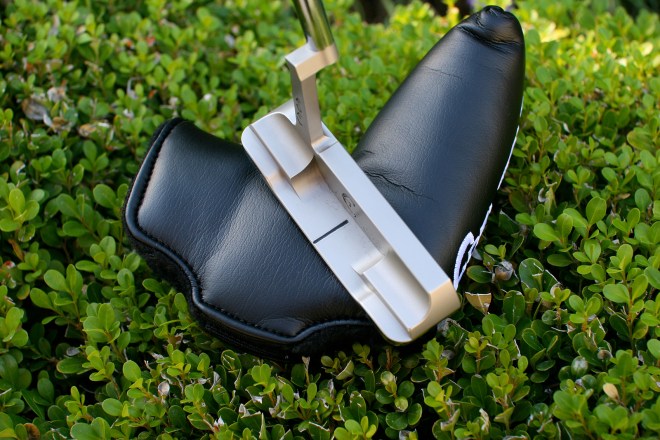
Readers are forgiven if they have yet to hear of Edel Golf. David Edel is a very different breed than the average teaching pro, club fitter or putter maker. Our initial correspondence hit on a lot of subjects that won’t be brought into this article, but suffice it to say that Edel is one of the most interesting and forward thinking men that I have come across in the golf industry.

In a world of copycats, of the both subtle and overt persuasions, Edel is the kind of guy who is always on the prowl for a better way of doing things and is willing to travel some hard roads to reach his destinations.

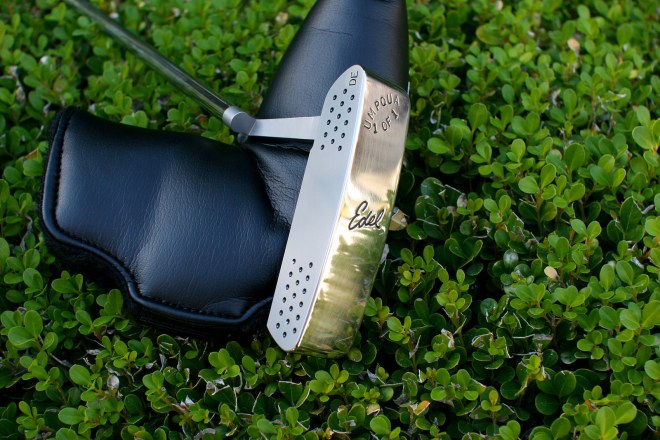
9463208370_21708b61d5_h

9463205422_08d303f773_h

9463201482_7e801ea4c7_h

The golf industry needs guys like him to maintain its vitality. Let’s hope his work is well rewarded…

PC: What are some common mistakes that golfers make when they buy putters off the rack?

David Edel: First off, the most common mistake buying a putter off the rack is not knowing where it aims. All putters aim differently. Some vary more than others, but none are equal. The buyer should first know how their current putter aims. Based on this knowledge they can look for something that either cures their aim bias, or matches it; matching it, as the stroke is biased to that aim. If you do not want to change your stroke, then find a putter that matches it. For example, if you aim eight inches left, then don’t buy a putter that aims dead center, because your stroke will not match your aim. It would not seem logical to play with something that aimed you crooked, but most do. Our studies have concluded that only four in a hundred can aim their putters dead on, while fifteen out of hundred can only manage to aim within the hole (two inches off center) and with loft issues. Dead on meaning for average speed greens the laser at 6 feet is center cut and six inches off the ground (2.5 deg loft)

When someone buys a putter that they want, it may not be what they need. Grabbing a putter off the rack without understanding how the putter aims is harmful. With simple lasers and a mirror, you could check and see “Does this putter aim well?” I have people in the fitting process say, I aim this putter really well or That line helps me aim and I evaluate them and they aim a foot left. So what people want to believe and what they do are often very different.

PC: As a follow-up, can these buying mistakes lead players to develop poor putting technique?

David Edel: Yes, poor putting technique is related to many factors. Some are directly related to the putter and some not. Putting can be broken down to what we call the Triad: Aim, Path, & Speed. What you do with those three things relates to ready greens and execution. If your putter aims a foot left, then you better make compensation a foot right. Sometimes this is done with path, or speed. Path pushing to the right, or speed –hitting it harder to take a higher line. The player starts to get multiple factors compensating for erroneous aim. This can set into sub routines like: If I forward press my hands, take it inside, or I go to a short back stroke and accelerate.

Compensation is the only honest thing that we do, and many try to go against what they know they need to do it. Like, if you aim right, you better take is outside on the backstroke, have a long backstroke short finish, or close the face manually. But our friends or teachers say, we better fix that outside move, yet they don’t fix the aim or even understand where they aim. Many say, “So what if you aim at address, you may not be there at impact.” My thought is…no kidding Sherlock.

But, our studies have shown that a reduction in the standard deviation of a putter stoke reduced by 38% in 19 of 22 categories. With areas improving up to 63% immediately after the fit. If you start from a better place then chances are you will return to that place. Putting is similar to the full swing, yet much less dynamic. The inclined plane is the boss. It is possible to move the putter during the stroke to the same place it started. If the putter does not aim correctly or has other factors like poor weight, length, lie, loft, then the mind will work away from those issues.

PC: What do you think most players understand better, their full swing or their putting stroke?

David Edel: I am not sure players understand the swing. I think they have an understanding of what they need to do to get the job done, but understanding the full swing or putter motion, I am not sure. I have been a PGA member since 1994 and a pro since 1990, and have worked with some of the best teachers in the world. I think I have a really good understanding of full swing motion, but I still think I don’t know anything.

We’re talking about people and that is the issue. Every person processes information differently than others. I think the missing link in most people’s games stems from lack of basics. Understanding the laws of physics of how the base golf motion works and other basics like how the mind works and processes information. People get so caught up in methods like Single Plane or Stack and Tilt etc. Not that those are wrong, but if you work for a while on a concept and jump to the next, that’s sure to cause confusion. Like if you play a putter for two months and switch again and again, each has multiple distinctions in playing characteristics, and the players develops a habit of grabbing for something when it hits the fan.

PC: What affects the player more, the putter design or how well (or poorly) he has been fit for the putter?

David Edel: I think it is important to understand the word fitting as it relates to putters. There are three forms of fitting as I see it:

Static
Dynamic
Effective

Static fitting is measuring a person’s lie angle, length, loft to name a few. It deals mainly without motion, figuring out general variables that influence set up. Many companies have offered a system that deals with this form of fitting.

Dynamic fitting evaluates via monitoring systems the movement of the putter, body and makes changes in the putter to alter impact. Systems like SAM, Tomi, and Icub have complex systems designed to evaluate the motion of the putter and give great data. Video based systems are also used during dynamic fitting. My perception of this form of fitting is to change variables so they produce the correct impact position. Often instruction is involved and it can be difficult to distinguish a fitting from a lesson.

Effective fitting is a process that is more interactive with the player. Effective meaning true angles like 4 degrees loft, processed and changed to an effective angle like 2 degrees. Effective angles are terms used by fitters to describe what the player does with the club to change the true angle. Effective fitting is a process and or system that allows the fitter to accommodate the player’s personal perceptions during the fitting. If I put a mallet in their hands and they aim it more right and I combine it with another variable and it elicits a different response then that’s effective fitting.

We also incorporate dynamic variables like length, head weight, loft, counter weight, shaft flex, and grip type to their value to speed control. So if you aim in correctly, and can control speed more precisely, then your probably going to have much cleaner path and you’ll also be able to feel your path better.

That is what I call effective fitting and that is what we do at Edel Golf. So my answer to your question is, yes; design or shape of a putter can be a preference, but is more an obligation as it relates to aim. Some people want an Anser style head, but aim it totally left. What they want and need are totally opposite. Depending on the style of the fitting process, getting fitted may not apply to desired result. Education is paramount for people to make informed decisions.

PC: What led you to build your putters in a workshop where you live?

David Edel: What led me to build putters where I live is simple. There are huge stores of German stainless here. No, seriously, I grew up here. I have family businesses here. I left teaching the full swing to dedicate myself to making putters. Getting started was a slow process. I started making my first putter in late 1996. Everyone told me not to do it, that it was too difficult. I obviously did not listen. I built a small workshop next to my home here on the river. I ran my family business during the day, and when I had free time, or made time, I made putters.

It could be the worst place to have a putter business and for this reason I am trying to move to Ft. Worth, Texas. We have done a lot of good work here mostly developing and prototyping products etc. but for people to come directly and get a fitting is very complex. I am looking to develop a large facility that incorporates manufacture and has a large inside putter studio with a monster putting green. A place to do schools and educational seminars, etc. Someday…hopefully soon.

PC: How do the professional players you work with putt differently than amateurs?

David Edel: Professionals do not putt all that differently than good amateurs. Some amateurs putt better than pros. Tour players are a different animal. The difference lies mainly in speed control. Professionals have more time to practice speed control. Most professionals aim left. I think this is predisposed to the putters they choose. Most professionals and good amateurs select the same styles of putters, mainly Anser or blade style putters. A lot of high handicap amateurs aim right, which is mostly to do with poor set up fundamentals and a lack of routine. I believe the full swing and the putter swing is governed by the same laws, so if the putter and fear-set is don’t go left then the motions are often the same.

PC: Which other putter makers do you respect?

David Edel: I think I respect anyone that can make a living at making golf clubs. It is hard to do. There are so many variables to contend with, namely money. Big companies have the advantage, because they have clout. Small guys like me are using your own finances to make world-class product. My advantage is the willing to do what the big dogs do not. I think what Mr. Cameron has done is incredible. The machine he has developed deserves respect. Karsten Solheim is the man. That guy did it all. We are all posers. T.P. Mills was the father of making tour quality unique custom putters. I remember the waiting list times were six to eight months for a putter. That is great. Tom Slighter has a nice following. He is making really nice custom putters like how you want it. Kirk Currie started the custom fitting/Aim process so I have to say he is in there. Kevin Burns has come up with some nice designs. He sure had a nice run.

I have to say that I think what we are doing is a continuation of a lot of past knowledge. I don’t make the best putter in the world. That is hard to quantify. I think we configure the best putter in the world. When you can get past the Circle T hand-stamping stuff or this tour player uses this or that and get into it’s different, but I can aim it then hands down I think I offer more to people than any other maker past or present.

Besides, we hand make every putter for each player. We have over 50 million combinations to manufacture on a daily basis. That is custom. There is big difference between custom and handmade. Nothing is hand made. I hand-machine putters but they can take two days to make. Everything is CNC with lots of handwork involved. hope that does not sound cocky, that is not the intention. The fact is I do not know anyone who is doing what we do.

PC: I have to tell you how refreshing it is that you recognize Karsten Solheim. It’s getting to be that people are all to willing to believe their own press releases. Everyone is so quick to tell you about their designs but all too often their designs are Solheim’s. It is the design equivalence of plagiarism so it doesn’t sit well with me at all. Which other putter designs (either modern or classic) do you admire?

David Edel: I really like the Karsten Anser style head. I can’t use it, but I think it has a great profile. I liked Kevin Burns and T.P. Mills / Anser style heads. Those looked clean. I think less is more. There is too much shit on putters these days. Between colors, funky shapes, lines, and weight ports it is total confusion. That stuff should aim, right? People get lost in all that geometry and most of the time cannot hit a barn with their aim. The Bullseye is hands down the best aimer. Pretty simple design. John Reuter did a great job with that one. The Two Ball works for some, but is not for everyone. I wish I came up with that one from a financial standpoint.

PC: Are you working on anything new right now or working to refine your fitting technique?

David Edel: We are always working on something new. Since I have been developing new fitting systems and methods for the last 11 years, our focus has been very different than much of the industry. This focus has enabled us to think about a new box. I have had relative ease getting some patents, because the line of thinking opens different doors. We are working on redefining the fitting model and fitter education. Creating school formats for people to get all three sides of the Triad (Aim, Path, Speed = Reading Greens) going. People do not want putters. They want results. I think the group that we have working together is going to change the face of putter fitting and instruction.

We have come out with a new putter called Variable loft Vari-loft. It has removable face technology with weight ports. Combined with aim value, this is a huge asset to the refined player. These putters take a combined machine/hand effort of over 11 hours to manufacture. When a player is educated on how to use it, it is hands down most versatile putter out there. Since few know about the value of what we do, our attention is focused towards education. Making new designs to keep up with large manufactures is not the solution. Figuring out how to inform players of other options, getting past bias, and overcoming objections from the current power structure is objective #1.

PC: David, I’d like to thank you for taking the time to talk to me. Your candor is refreshing and I hope this interview helps a few more people to find you and take advantage of your ability to help their games. Is there anything we haven’t covered, or anything you’d like to add in closing?

David Edel: We are very proud of our product and process that we have developed. My head styles are very basic and classic. The fact is we offer so many variables not because it sounds big, but people need them. Our fitting process allows for us to individually analyze each variable as it relates to the next. When the total package is put together, then it’s yours and yours only. We seldom make the same variation twice, something is always different. 95% of your thought happens at a subconscious level, and we build a putter that aims using the 5% of your conscious and its interface with the other 95%.

Aim is the one solid tangible that you can triangulate your game from. From aim you can evaluate your path, speed, and the combination of all three is your technique. If you’re confused, get fit. If you’re happy now, stay away. One saying that I have always loved is, “If you don’t need a haircut, then don’t go to the barber.” If you’re reading this, then you’re probably looking for help. We’re here if you need it.

Edel Golf: A Master Putter Maker in the Wooded Wilds of Oregon

Tiger Woods “Performance Reasons” at the Safeway Open in Napa, CA

Tiger Woods has cited “performance reasons” in withdrawing from this week’s Safeway Open in Napa, CA.

His back is fine but his game still suffers and Woods won’t return until it’s ready to go.

The now 40 year old Tiger Woods is missing a piece of the equation. His game will never be ready (by his old standards) again. He’ll never again be the player who won the 1997 Masters or the one who blitzed the PGA Tour in 2001 or even the one who won his last major in 2008.

Woods keeps looking in the mirror expecting to see those younger versions of himself and instead keeps seeing that 40 year old guy with a twice-surgically repaired back.

Ouch.

He also sees the rest of the Safeway field, where the highest ranked player is world number 12 Paul Casey, yet he still doesn’t like his chances.

Ouch times two.

This all goes back to my fundamental belief about the deepest fear in Tiger Woods’ heart; the fear of being just another really good tour player. He doesn’t want to go toe to toe with Dustin Johnson, Rory McIlroy, Jordan Spieth and Jason Day.

He wants the young players of today to lay down for him like the now 50+ year old, 1990s under-achieving-used-to-beens did through the early and mid 2000s. But, today’s 20 and 30-somethings aren’t going to do it for him, so Woods will stay home and his 40 year old game can remain in hiding.

So much for moving the needle.


Tiger Woods “Performance Reasons” at the Safeway Open in Napa, CA

Titleist DT TruSoft Review

Earlier this year I struck gold and bought two dozen TaylorMade Project (a) at 40% off.

I love that TM ball; soft, plenty of spin and the sucker flies.

I finally ran out last week and I decided to try the new Titleist DT TruSoft at $21 a dozen at Golfsmith.

The cover didn’t look right to my eye at first. It was a tad too white and a little hard looking compared to the Project (a) but I decided to play it anyway.

Now this is a very, very good cheap golf ball.

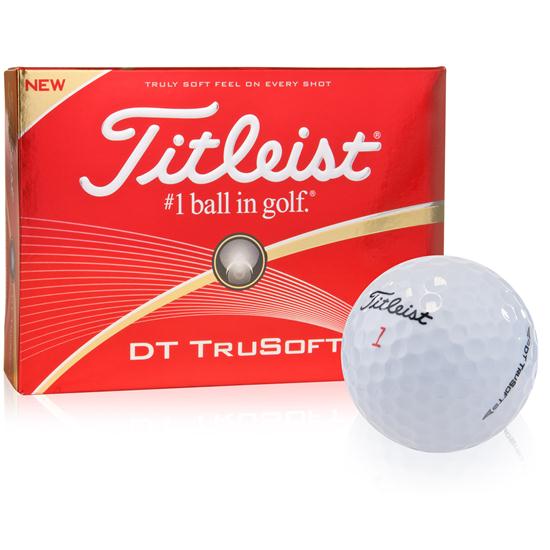
Titleist-DT-TruSoft-Golf-Balls_Default_ALT10_550

If your irons balloon on you from time to time, this ball will surely flatten your ball flight. The Project (a) seemed to fly high on pretty much everything but not so the humble little DT TruSoft.

This little white sucker likes to fly low!

The spin off the driver would seem to be a little less than the TM which is fine by me. Carry and roll seemed about the same, maybe a little longer. Who knows?

There seems to be proportionally more spin with the mid to short irons than the driver. It feels soft around the greens but not that mushy kind of soft you get from other low compression balls. My sense is that Titleist really did get the combination of the cover and the core just right with this ball. I’m a stickler for the sound of ball off the putter face. If it’s too clacky, I won’t play it. This cheap little Titleist sounds excellent off the putter; crisp but not clack.

I actually prefer everything about this ball over the more expensive NXT Tour but the look of the cover. By the end of the round I even got used to the look of the cover. It’s not really bworse, it’s just different. And, the cover appears to be pretty durable. I used one ball for 18 holes and once I cleaned it I couldn’t tell it from the new ones.

Anyway, you may want to check this ball out.

Titleist DT TruSoft Review

EDC comparison & review: Benchmade Mini Griptillian versus Kershaw Link

A while back I realized I didn’t really have a stout yet lightweight knife for general (and especially hiking) use. I scoured the internet and the local knife shops. Chinese made knives were plentiful as were very expensive one-offs and custom knives.

I set a budget or $100 and decided on the Benchmade Mini Griptillian. Its lightweight caught my attention when I was shopping and when the knife arrived I was very impressed with its finish, solid lock up and light weight. The opening and closing mechanism is light, smooth and secure.

DSC_0969

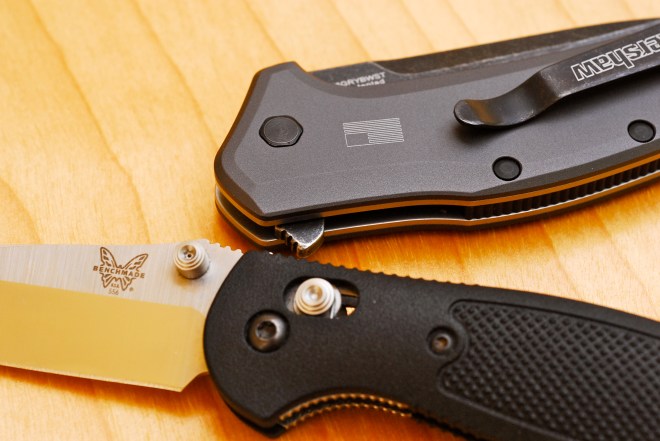
This photo shows the Benchmade’s lock button on the frame and the opening assist button on the blade. Both are perfectly located and operate with precision and a lightness of feel that is unmistakable and lacking in the Kershaw.

The Link’s opening assist tab is show above and it works OK. I’m not wild about the spring that causes the blade to settle into a halfway position. The movement is smooth but bit heavy compared to the Benchmade. Where the Kershaw is really let down is by it’s unlock mechanism which is buried on the underside of the blade. I found it to be fiddly if secure. I may get used to it in time, but I don’t like it much so far.

DSC_0966

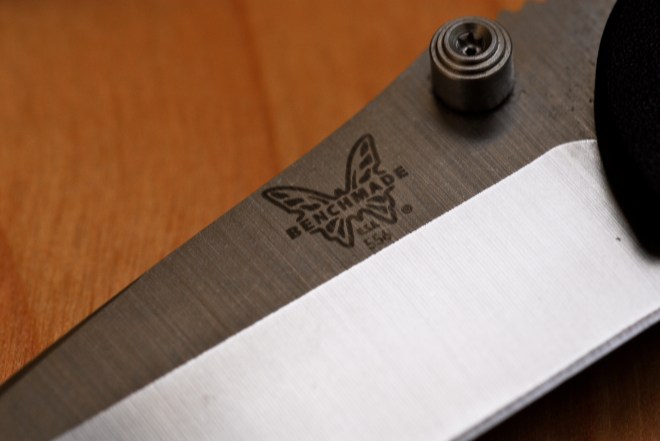
I bought the Link as a slightly heavier alternative to the Benchmade. Plus, I also wanted a serrated edge for a greater versatility. The blade finish on the Link is not my favorite. My guess is the finish will wear with use when the point seems to look worn and grizzled even when it’s new. I much prefer the finish on the Benchmade.

DSC_0964DSC_0965

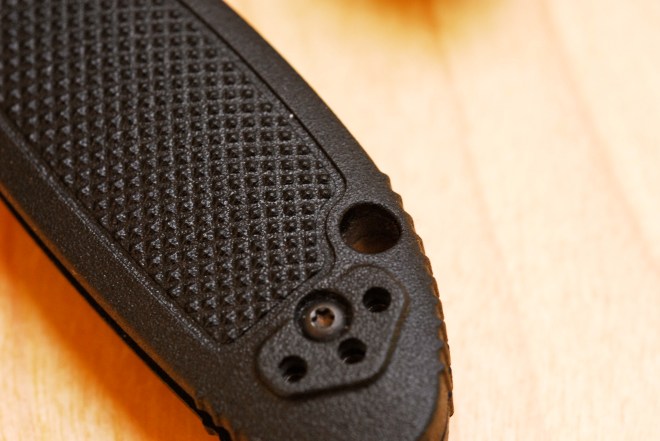
I like the fact that the Kershaw is thinner than the Benchmade but the knife is let down by being significantly heavier and less grippable. The Benchmade has serrations on the top of the knife that enhance grip further especially when cutting heavier material. My thumb rides those serrations perfectly and the knife feels very secure in use.

DSC_0968

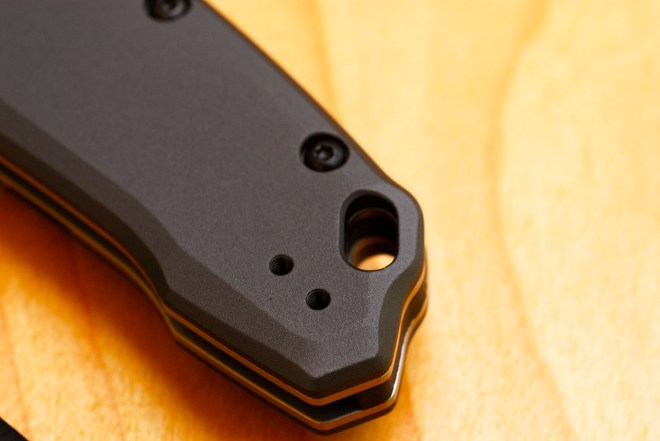
I have yet to use the Kershaw with its clip. You can see it uses two rather than Benchmade’s three screws. The Benchmade’s clip looks a little more common than the Kershaw’s and I found it to be a quite tight in use. Worse, the little Benchmade had an unfortunate tendency to try to open on its own when removed from a pocket. I haven’t really come up with a configuration that deals with this problem yet.

DSC_0958

DSC_0959

One area where the Kershaw scores a clear win is with the size and shape of the its lanyard opening. I am tired of lanyard openings that are more vestigial than practical. Quite simply, it should be easy to get a decent size lanyard through a lanyard hole or there’s no point in having one. Kershaw got it right while Benchmade dropped the ball.

DSC_0961DSC_0962

Everyone gets excited about edges but let’s just say that both the Kershaw and the Link have edges that are plenty sharp and quite well ground right out of the box. I’m not sure which will hold its edge better but the look of the Benchmade’s edge and steel make me think that it could be slightly more durable that the Kershaw but only time will tell.

DSC_0960DSC_0967

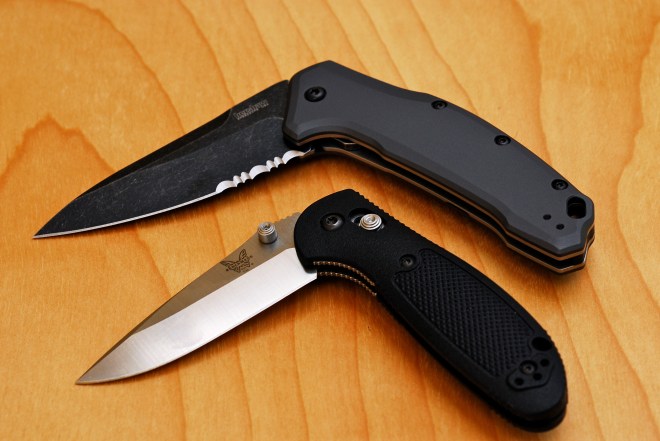
These are two well made, well designed knives and I like them both. I do see the Benchmade to be a bit more focused on function while still possessing a clean form. The Kershaw seems a little balanced in toward style over function. It is almost as if Kershaw wanted to create a knife that looked the part. Then, they set about to making it work as well as possible. Either way, these are two excellent US made knives that are well worth their price.

I’m glad I own both.


EDC comparison & review: Benchmade Mini Griptillian versus Kershaw Link

Initial impressions of the Rosemark Putter Grip

I was very excited to find a new Rosemark putter grip on my front porch yesterday.

These grips use a hexagonal cross section shape that was developed using biomechanical mapping of the hand. The goals were a shape and texture that encouraged a light but secure grip and the ability to keep the putter face square through impact.

In putting, tension is your enemy.

I requested the 1.25″ grip in black and it looks and feels superb. The grip does indeed feel very stable when gripped and the surface material, especially on the flat front of the grip is very smooth on the skin.

RM1

You can see the profile of the Rosemark grip’s unusual silicone beads in this photo. The beads work together with the microfiber wrap to create a truly unique feeling putter grip.

I will be posting more detailed comments on the Rosemark soon once I get the chance to roll some putts with it later on today.


Initial impressions of the Rosemark Putter Grip

SeeMore Corona Del Mar FGP

I get emails from time to time asking me if SeeMore putters are truly as good as I say they are. It is a tad frustrating since there’s no way for me to prove SeeMore’s superiority or, for that matter, the superiority of any other product I have ever used.

Some things simply need to be learned first hand.

Still, what I have done is to come to see the SeeMore FGP as a tool rather than a mere golf club. Do you know how it is to reach for the exact tool that you need? Maybe it’s a #00 Phillips head screwdriver. If you reach for that but end up with a #2 Phillips you’re not going to get that screw tightened (or loosened, as the case may be). But, if you need the #00 and that’s what ends up in your hand, your job just got a lot easier. That’s the best way to extol the virtues of the SeeMore FGP. Whenever I reach for it, I know I’m reaching for the right tool for the job.

A while back I was looking at the SeeMore website and I saw their new SeeMore Corona Del Mar FGP and I simply loved the finish. I wasn’t too sure about the TPU insert but I knew I wanted to try it to find out if the folks at SeeMore had found a way to make a superb tool even more effective.

DSC_0917

Yes, this is a very good looking putter for sure.

DSC_0918

The TPU insert is milled similarly to the rest of the putter’s face which adds a little extra visual impact.

It’s all good news since the Corona Del Mar shares its visual profile at address with my trusty vintage FGP.

DSC_0921

One interesting difference between these two SeeMores is the internal profile of the head. You can easily see what I’m describing in the next two photos.

DSC_0926

DSC_0927

The internal profile of the Corona Del Mar is obviously squared off where the original FGP has a nearly round profile behind the face. I’ve been trying to decide which would be better in an absolute sense. The newer putter obviously puts a lot more mass behind the ball whereas the original FGP distributes what mass it has toward the top and bottom of the face. You can also see that Corona Del Mar has some added mass on heel and toe of the sole that the older FGP lacks. I asked Jim Grundberg of SeeMore about this and he said that the lighter weight of the TPU insert allowed them to move some mass around relative to the original FGP. The head weight on original FGPs averages around 335 grams while the Coronna Del Mar tips the scales to right around 355 grams.

Many of you will know that my original FGP was a purchase of sheer luck. I had been putting abysmally for quite some time and I needed a change from the Anser-style putter I had favored for many years. In rooting through the used putter barrel I came across a well-worn FGP. The bad news was that the old SeeMore grip had split with age and was slicker than slick. The good news was that it was very, very inexpensive. I took the time to read up on what I call the SeeMore method and put the FGP directly into my bag. I’ve never looked back. The question at hand is how well the Corona Del Mar measures up.

My initial concerns were these:

Does the TPU insert change the putter’s sound or feel relative to the original brass FGP? 

Do the rest of the Corona Del Mar’s materials change the putter’s mass and balance?

First, the TPU: It feels great and sounds far better than I expected. The Corona Del Mar has  a somewhat more crisp sound and feel at impact.

I like it. The putter feels smooth but lively.

This lively feel of the Corona Del Mar is offset by what I believe (I’m too lazy to weigh them) is greater head weight and probably greater swing weight than the FGP. The combination makes the Corona Del Mar especially well suited to the kind of faster greens I play on in the summer months.

The Corona Del Mar is an easy putter to control and pretty much every putt feels as if it’s been struck solidly.

DSC_0923

DSC_0921

I wouldn’t be much of a reviewer if I failed to come up with even a single complaint. The lower painted section of the older FGP is painted a matte black which the corresponding section on the Corona Del Mar is slightly glossy. Initially I convinced myself that the glossy paint could cause glare in bright sunlight but upon my first round under the Southern California sun I found this problem to be nonexistent. On a happy note, though, SeeMore does now offer this section painted in a variety of different colors if you’re more into color than I am. Me? I like basic black.

There are very few classic, timeless golf clubs. There are even fewer golf clubs that approach an ideal of concept and utility. SeeMore FGP models accomplish both of these rare feats. I congratulate everyone at SeeMore for recognizing the brilliance of the FGP design and all of the ways that it can consistently benefit golfers, whether they play on the PGA Tour or their local muny.  The SeeMore Corona Del Mar is truly a worthy successor to the original FGP. It’s easy for me to recommend SeeMore to everyone who wants to improve their putting. SeeMore gives players both a proven technique and a proven product. If you use a SeeMore putter the way it was designed you will make more putts.

It’s that simple so get out there and start making more putts.


SeeMore Corona Del Mar FGP

SeeMore Triangulator Review

There isn’t a putter on the planet who is immune from problems with aim. And, let’s face it, if you don’t know exactly where you’re aimed knowing exactly how much a putts breaks and having the speed of a putt perfectly judged still means a missed putt.

Break varies…

Speed varies…

But, the ability to aim your putter blade precisely at the hole is a skill anyone can develop.

The SeeMore Triangulator will help.

Let’s be clear. The SeeMore Triangulator is simple and it’s brilliant. Its use is totally intuitive. You simply pick something to aim at (I started out in my living room). Then, you set up your putter and aim at the target. Now comes the part when you’ll need an assitant. While holding your putter blade in the alignment that shows where you’re aimed, your assistant will place the Triangulator against your putter plade and then pull the white string toward the target, thereby showing where you’re actually aimed. Voila!

Well, almost voila…

If your set up and tendency for alignment is consistent you’ll see that you consistently aim right or left. This may be related to your eyes being inside, directly over the ball or even a tad outside your line at address. But, no matter how you set up to the ball, as long as you do it consistently, you should see a pattern to your aim that the Triangulator will help you to correct.

It’s no secret that I’m a true believer in SeeMore putters. Ever since I began using them I see more putts (sorry) fall into the hole. The Triangulator is the perfect tool to help you develop the ability to aim your putter blade right where you want it, rather than where you only think you want it.

So, for less than the price of a sleeve of premium balls you can have something light enough and small enough to store in your golf bag that will keep your aim sharp and the putts falling.

Buy one today. You’ll be surprised to learn where you’re truly aiming and pretty soon you’ll end up making more putts!

The SeeMore Triangulator


SeeMore Triangulator Review

Golf’s Major Championships

US Open: Tour players are seldom embarrassed and I enjoy it when the USGA’s motive over four days is to do just that. A little humility is a good thing especially when you’re driving courtesy cars every week. I find must-make par putts far more interesting than a procession of makable putts for birdie and eagle.

The Open Championship: The R&A doesn’t have the same flair for penal setups as the USGA and their rota is a bit tiring. Still, I love the spectacle, the weather and the galleries. Bring on the wind and rain, preferably both at the same time.

The Masters: As much as I admire Bobby Jones, I despise the patrician and elitist nature of Augusta National. But, the back 9 is an amazingly good theater every year. If I had been Rickie Fowler and some AN clown told me to turn my hat around I would have told him to pack sand.

The PGA Championship: The PGA has no identity. It’s just another event that’s called a major. Many of the courses are ho-hum and so are a lot of the winners. I think they should make it back into a match play event but the potential loss of TV money means that will never happen. They could have two days of stroke play and take the top guys and play 18 hole matches on Saturday and have a 36 hole championship match just to maximize the suffering.

Golf’s Major Championships

The Glorious Art of the Backyard Flop Shot

This happens every few family get togethers, usually in my brother in law Dave’s backyard, and it’s fantastic in its subtle variety and fundamental consistency.

Dave, must, at some point, peer out of window that opens into his backyard.

He sees me and his son Andy, marking out a shot. There’s a (real) golf ball on the ground and a 60 degree sand wedge on the scene.

A cold chill slides down Dave’s spine…

Andy and I can play, so there’s little chance of breakage.

Plus, we’re hitting a doable shot.

“I’m thinking just short of the bird feeder. If it clears the lawn border it’s OB.”

“Got it, I’m in…you go first.”

“Gotta give me a tough lie.”

Andy settles in after putting the ball in a low spot of turf. It’s not an easy lie, but it’s not impossible either.

He takes the 60 back and catches the ball just a little heavy. But, the slight miss-hit works great; the ball hits short and bounds toward the target, stopping within three feet.

I shake my head. “I can’t beat that one.”

The wedge is unfamiliar in my hand and the lie is dicey. I’m not sure where to land the ball and how it might release. I, too, catch the big ball before the little ball but my shot lands at the target line before hopping over the OB boundary.

“Tough bounce,” says Andy.

Now we move the target further across the yard and we leave ourselves a tricky side hill lie from inconsistent turf.

We both walk forward to get a look at what the landing area around the hole looks like, trying to gauge whether the ball will release or hold.

Andy goes first. He makes better contact this time, too good in fact, and the ball runs well past the hole.

Ah, an opening!

I settle in, now getting a feel for the 60 and the shot. I catch the ball perfectly. It hits the up slope and grabs four feet right of the target.

Even!

Andy looks across the yard.

“OK, big boy shot. Mandatory flop and it has to stop short of the OB and closest to the line of the bird feeder.”

“Yeow, tough one…show me, stud.”

Andy perches his ball in the fluffy grass until the lie looks like the type that will allow an open-faced wedge to slide under the ball and loft it into the air before it lands with all of the forward momentum of a sand bag tossed by a four-year old girl.

He takes a huge swing. If he were to hit the ball flush it would fly well over ninety yards but here Andy was trying to make the ball fly no further than thirty feet.

He strikes the ball with near perfection. There’s no sound of impact, just the slicing of the club through the damp spring grass and the subtle foof sound of the grass being caught between the club face and the ball.

The ball stops three feet from the bird feeder!

I think to myself, you can hit this shot, but I know I can’t or at least I won’t.

I decide to up the difficulty rating by giving myself a thin lie, the kind of lie poor players fear…the kind of lie that demands perfect impact. I open the face of the 60 and take a decent swing, but I lacked the courage to bring the club into the ball with the kind of authority that would cause the ball to travel a lesser distance than many people would believe possible. The result is a semi-flop that never gains full elevation and thuds harmlessly into the ivy.

“You da man, Andis.”

About then, Tom and John emerge from the slider. They’re ready to join the game and me and Andy encourage them to take a turn at the shots.

This gets Dave’s attention immediately. In his yard were twin retirees holding golf clubs but what he saw was a pair of identical seven year olds playing with matches surrounded by dry grass. He had to make his move quickly.

He came into the yard smiling the smile of a man who could imagine a battle scarred Titleist driven through a window or into the forehead of the retired municipal court judge who lived next door and likes to enjoy his back porch swing on just this kind of perfect spring afternoon.

“John can hit this shot,” Tom said confidently.

John stepped forward, examining the wedge and the balls for signs of imperfection that could spoil the expert precision of the coming shot.

He raked the ball into a clean lie and swung.

It was a toed and screeched hard right, catching the edge of the swimming pool. The old ball yawned into a high arching flight before splashing into the middle of the pool.

John was undeterred. “Bad lie,” he muttered.

Dave’s desperation crept into his voice. “Hey, let’s try that shot again but let’s use one of these old tennis balls!” He stood there while his dog leaped excitedly in anticipation of a rousing game of fetch.

By then, John was back over the ball. He had never heard a word Dave said.

Andy and I wisely stepped to the rear. Barring the most amazing bounce, we were determined not to wind up as collateral damage in Dave’s backyard.

John was taking dead aim now. Harvey Penick would be proud.

Andy couldn’t resist. “Dad, your BBQ is a goner!”

As Dave held up the tennis ball John lashed at the ball and caught it squarely. The ball whistled past the bird feeder and missed the glimmering BBQ by mere inches.

Now Tom and John are taking turns taking practice swings while the family dog darts between them. Only their feckless swings and amazing canine reflexes prevent disaster.

“Now it’s my turn,” says Tom.

Andy and I step back another step trying to triangulate the path a cruel but perfect mishit could create. We call for the dog and hold on to her as Tom takes his shot.

The club face is shut at address and there can only be one result. The ball is bladed and hurtles toward the chain link fence. It nails the fence post dead center and streaks back at the hapless Tom, catching him right on the shin.

“Nice,” says John.

No one goes to see if Tom is OK but he limps back toward the ping pong table under his own power so all must be well.

But now the juices are flowing now; blood has been shed.

Andy looks at me and says, “One full swing…8-iron?”

I nod. “Do it!”

Seconds later Andy’s got his father’s 8-iron and is it aiming up the steep hill behind his parent’s house.

“Think you can get to the ridge?”

“Don’t think so…”

John’s got his phone out by now and is wondering how far the nearest houses are.

No way he’s worried… he’s just curious.

Dave’s calmer now. He knows Andy won’t hit it sideways and he knows the houses past the ridge line are well out of reach.

Still, though, there’s a glorious moment of dread and fascination as all of Andy’s six foot three inch frame lashes at the ball.

The ball is pured and it soars on the penetrating flight only a fine player can create.

It streaks effortlessly toward the ridge line as we all wonder where it will land.


The Glorious Art of the Backyard Flop Shot